


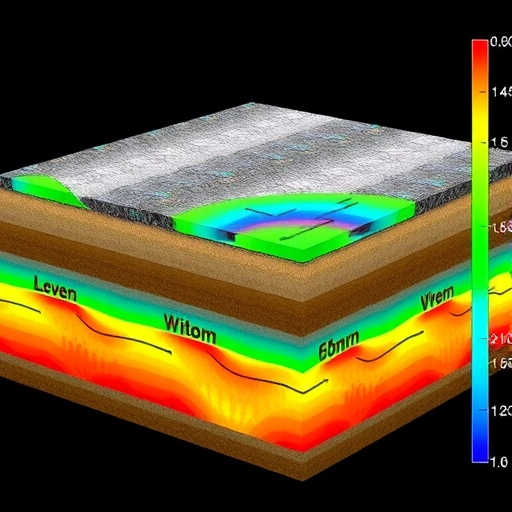
In the rapidly evolving landscape of energy resource extraction, understanding the geological formation of hydrocarbons plays a pivotal role. Among these formations, shale has emerged as a prominent source of free hydrocarbons, making it a focal point for researchers. In the recent study conducted by Liu, Zhou, Liu, and their team, an innovative stacking ensemble model is proposed to predict the free hydrocarbons content in shale formations, delineating a substantial leap in reservoir characterization methodologies.
The study aligns with contemporary demands for efficient hydrocarbon exploration, given the increasing global energy demands and the pressing need for sustainable resource management. By introducing a novel approach that combines interpretability with predictive capabilities, the researchers aim to bridge the gap between complex geological data and actionable insights for energy companies. The importance of this research lies not just in its methodological advancements, but also in its potential to optimize exploration strategies. As industries seek to enhance the accuracy of their predictions, the implications of such models could be profound in steering investment decisions and operational strategies.
The stacking ensemble method proposed in the study synthesizes various predictive models, thereby leveraging their strengths while mitigating individual weaknesses. Unlike traditional predictive models that may rely heavily on specific variables, this approach adopts a more holistic perspective by integrating multiple algorithms. This integration facilitates a more nuanced understanding of the factors contributing to the hydrocarbon content, accounting for numerous geological variables that may influence output results. The adaptability of the model makes it particularly suitable for the diverse geological characteristics that shale formations exhibit globally.
Moreover, interpretability stands out as one of the key features of this newly developed model. In a field often criticized for its “black box” nature, this model allows geologists and engineers not only to obtain predictions but also to understand the reasoning behind those predictions. This transparency is crucial for building trust among stakeholders, including decision-makers at energy companies who must justify their investments based on data-driven insights. The emphasis on model interpretability is set to reshape the communication of geological data, making it more accessible and comprehensible.
The researchers employed a comprehensive dataset representing various shale formations to train and test their stacking ensemble model. By utilizing a wide range of input features, the model demonstrates significant versatility. This feature is particularly noteworthy as shale formations can vary dramatically in composition, structure, and geological history. Traditional methods often falter when confronted with this variability, leading to inconsistent predictions. In contrast, the stacking ensemble model effectively accommodates these differences, yielding more reliable assessments of hydrocarbon content across diverse formations.
Field applications of the model can yield immediate benefits. For instance, energy companies can accurately assess the viability of prospects before investing in extensive drilling activities. This capability could lead to a reduced financial risk profile, enabling more strategic deployment of resources in exploration and production. By enhancing the precision of hydrocarbon estimations, the model could potentially improve the overall sustainability of extraction practices. Such advancements hold promise in minimizing environmental impacts while maximizing resource recovery, aligning with societal expectations for responsible energy development.
In addition to practical applications in hydrocarbon exploration, the interpretability aspect fosters an educational platform for training upcoming geoscientists. By unpacking the complexities of geological modeling, the study can serve as a valuable resource for academia. Educators could integrate these methodologies into curricula, providing students with hands-on experience in data analysis and geological interpretation. Building the next generation of geoscientists equipped with advanced tools and an understanding of model transparency contributes to the long-term vitality of the industry.
The broader implications of this research extend to policy-making as well. As governments grapple with energy transition and sustainability issues, data-driven insights into hydrocarbon reserves can inform regulations and resource management strategies. A framework that accurately predicts hydrocarbon availability can contribute to national security by promoting energy independence. Such insights could guide public policy decisions and investments in renewable energy sources, contributing to balanced energy portfolios that fulfill economic and environmental objectives.
As we progress through an era marked by technological advancement, the fusion of artificial intelligence and geology represents a significant frontier. The stacking ensemble model not only exemplifies potential growth in the intersection of these fields but also encourages further interdisciplinary collaboration. The synergy between machine learning, data science, and geological exploration illustrates how cross-domain partnerships can yield innovative solutions to complex challenges faced by the energy sector.
The study by Liu et al. sets the stage for subsequent research possibilities. Future work could refine the model further, exploring the integration of real-time data and machine learning techniques to enhance predictive accuracy. Investigating the model’s application across varying scales—local, regional, and even global—could provide comprehensive insights into the hydrocarbon potential of shale formations worldwide.
With each passing day, the significance of effective resource management in the face of climate change escalates. Thus, the contributions of such cutting-edge research cannot be overstated. As energy companies adopt more sustainable practices, the implementation of innovative predictive models will inevitably play a crucial role in shaping the future of energy resource extraction.
In summary, Liu, Zhou, Liu, and colleagues’ research promises to revolutionize the way hydrocarbons in shale are predicted, enhancing the efficacy of resource management. Their stacking ensemble model, characterized by its interpretability, holds transformative potential for both industry practitioners and the scientific community. By tackling the pressing challenges of accurate hydrocarbon prediction, this study fosters a proactive approach toward meeting energy demands and advancing toward a more sustainable future.
The findings are set to be published in Nature Resources Research, marking a critical advancement in the field of geosciences and energy management. The intersection of data analysis and geology posits a future where predictive modeling not only enhances operational efficiency but also is foundational in achieving ecological sustainability and energy security.
Cite Scienmag News
Violet Maxwell. (October 4, 2025). New Stacking Model Predicts Hydrocarbon Levels in Shale. Scienmag. https://scienmag.com/new-stacking-model-predicts-hydrocarbon-levels-in-shale/
Violet Maxwell. "New Stacking Model Predicts Hydrocarbon Levels in Shale." Scienmag, 4 October 2025, https://scienmag.com/new-stacking-model-predicts-hydrocarbon-levels-in-shale/. Accessed 5 September 2026.
Violet Maxwell. "New Stacking Model Predicts Hydrocarbon Levels in Shale." Scienmag. October 4, 2025. https://scienmag.com/new-stacking-model-predicts-hydrocarbon-levels-in-shale/


