


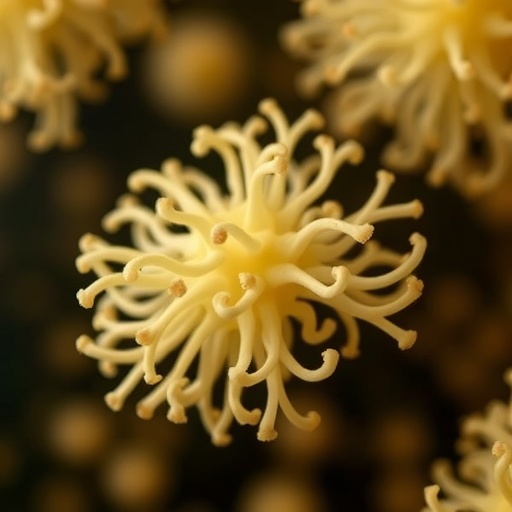
In a groundbreaking development that could revolutionize our approach to bacterial infections, a recent clinical trial has demonstrated the safety and potential therapeutic benefits of deliberately colonizing humans with a non-toxigenic strain of Clostridioides difficile (NTCD). The study, led by Hensen, Harmanus, Verbeek-Menken, and colleagues and published in Nature Communications, challenges decades of convention by exploring a novel prophylactic strategy against one of the most troublesome hospital-acquired infections. This landmark research could pave the way for innovative microbiome-based interventions, offering hope to millions vulnerable to recurrent C. difficile infections.
Clostridioides difficile is notoriously known as a cause of severe and sometimes fatal colitis, particularly in hospitalized patients who have undergone antibiotic treatment. The bacterium produces potent toxins, which disrupt the intestinal lining and trigger intense inflammation. Until now, therapeutic approaches have largely focused on eradicating the pathogenic strains using antibiotics or fecal microbiota transplantation (FMT). However, these methods often carry risks such as antibiotic resistance and the unpredictability of microbiota outcomes. The new trial deliberately colonizes the gut with a non-toxigenic variant of C. difficile that lacks the genes encoding harmful toxins, aiming to occupy ecological niches within the microbiota and prevent colonization by virulent strains.
The placebo-controlled randomized clinical trial enrolled a cohort of healthy volunteers, carefully screening for prior infection history and ensuring the absence of underlying gastrointestinal conditions. Participants were administered either the NTCD spores or placebo, and their colonization status, immune responses, and microbiome compositions were monitored longitudinally over several months. The trial’s rigorous design allowed for precise evaluation of NTCD’s colonization dynamics and safety profile in humans, an area previously explored predominantly in animal models or observational contexts. The safety of the approach was of paramount interest, given the inherent risks of introducing any bacterial strain into the human gut.
Remarkably, the study demonstrated that NTCD colonized the intestinal tract of participants efficiently and sustainably without eliciting any adverse symptoms or detectable inflammatory responses. The colonization was confirmed through quantitative PCR and culture methods, which verified the persistence of the non-toxigenic strain in stool samples over extended periods. These findings are particularly noteworthy as they suggest that NTCD can establish a stable presence within the competitive environment of the human gut microbiota without triggering the pathogenic cascade characteristic of toxigenic strains. This observed resilience indicates the potential of NTCD to act as a biological barrier against disease-causing C. difficile.
Moreover, preliminary immunological assessments revealed that colonization with NTCD may prime the host’s immune system, inducing a state of immune tolerance or protective readiness against subsequent exposure to toxigenic C. difficile. Such immune modulation could provide a dual mechanism of protection: direct competitive exclusion of harmful strains combined with enhanced mucosal immunity. This finding is consistent with emerging paradigms that leverage the immune-microbiome axis to develop next-generation prophylactics against enteric pathogens. Further immunoprofiling could elucidate the molecular pathways engaged during NTCD colonization, potentially guiding vaccine or therapeutic adjunct development.
From a mechanistic perspective, the study hypothesizes that NTCD occupies critical ecological niches within the gut microbiota that would otherwise be vulnerable to toxigenic C. difficile colonization. Antibiotic-driven dysbiosis often leads to reduced microbial diversity, creating opportunities for opportunistic pathogens. By introducing NTCD spores during such windows of vulnerability, researchers envision a biological form of ‘filling the niche,’ which could effectively outcompete or inhibit pathogen establishment. Detailed metagenomic analyses performed during the trial characterized shifts in microbial community structures, suggesting that NTCD colonization might also favor the restoration of beneficial commensals, further enhancing colonization resistance.
The implications of this research extend beyond immediate therapeutic potential and beckon a paradigm shift in infectious disease management. Instead of aiming solely to eradicate pathogens, the field may benefit from strategies embracing microbial ecology principles—utilizing benign or beneficial microbes to preempt pathogen invasion. This approach aligns with a broader movement towards sustainable infection control, minimizing antibiotic dependence and mitigating the acceleration of antimicrobial resistance, which poses a critical global health threat. NTCD colonization could represent a pioneering model of microbial therapeutics, underpinning a more nuanced interplay between hosts and their resident microorganisms.
While the findings are promising, the authors acknowledge limitations and emphasize the necessity for extended clinical studies involving at-risk populations, such as elderly patients, immunocompromised individuals, and those with prior recurrent C. difficile infections. The current trial’s focus on healthy volunteers establishes an essential safety baseline but does not fully simulate the complex immunological and microbiota landscapes present in vulnerable cohorts. Future trials must rigorously evaluate efficacy, dosing regimens, and potential long-term ecological impacts within these populations before NTCD-based interventions can enter routine clinical practice.
In addition, careful regulatory scrutiny will be critical as NTCD colonization introduces live microorganisms into patients, raising questions regarding manufacturing standards, quality control, and monitoring for potential horizontal gene transfer events. Engineered or naturally occurring NTCD strains must be free of residual virulence factors or antibiotic resistance determinants to ensure patient safety. The establishment of comprehensive surveillance frameworks and standardized protocols for microbial therapeutics represents an urgent need to accompany advancements in this promising field.
Notably, this study contributes to an expanding corpus of evidence emphasizing the gut microbiota’s central role in human health and disease, reinforcing microbiome research’s potential to transform medicine. It also highlights the importance of interdisciplinary collaboration between microbiologists, immunologists, clinicians, and bioengineers in developing innovative solutions to persistent infectious diseases. Cutting-edge technologies such as next-generation sequencing, metabolomics, and systems biology approaches were integral to elucidating the complex host-microbe interactions underpinning NTCD colonization outcomes.
The research team envisions future applications extending beyond C. difficile infection, potentially inspiring similar colonization strategies using non-pathogenic strains for other problematic bacterial infections, such as vancomycin-resistant enterococci or multidrug-resistant Klebsiella pneumoniae. Furthermore, personalized microbial therapeutics tailored to individual microbiome profiles could emerge from this foundational work, opening new frontiers in precision medicine. Integration with existing treatments, including antibiotics or immunotherapies, may optimize efficacy while minimizing collateral damage to beneficial microbiota.
This pioneering clinical trial marks a significant milestone by proving the conceptual and practical feasibility of intentional human colonization with non-toxigenic C. difficile. Its success underscores the potential of harnessing microbial ecology and adaptive immunity to devise resilient defenses against infectious diseases. As the global burden of C. difficile infections continues to climb, innovative approaches like NTCD colonization offer hope for safer, more sustainable, and effective disease prevention strategies, affirming the immense promise of microbiome-centered therapies in modern medicine.
Cite Scienmag News
Morgan Morrow. (June 13, 2026). Human Trial Tests Non-Toxic C. difficile Colonization. Scienmag. https://scienmag.com/human-trial-tests-non-toxic-c-difficile-colonization/
Morgan Morrow. "Human Trial Tests Non-Toxic C. difficile Colonization." Scienmag, 13 June 2026, https://scienmag.com/human-trial-tests-non-toxic-c-difficile-colonization/. Accessed 4 September 2026.
Morgan Morrow. "Human Trial Tests Non-Toxic C. difficile Colonization." Scienmag. June 13, 2026. https://scienmag.com/human-trial-tests-non-toxic-c-difficile-colonization/


