


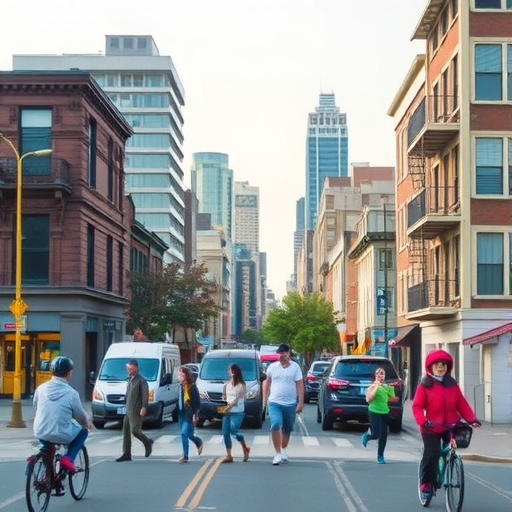
In contemporary urban settings, the voices and needs of young people have persistently been marginalized, with increasing evidence pointing to a systemic adult-centrism embedded in the design and governance of cities. This phenomenon, where urban environments prioritize adult perspectives and experiences, often leads to the exclusion of youth from meaningful participation and access to urban resources. Recent research has begun to shed light on the pervasive nature of this issue, revealing not only how young individuals are sidelined but also the broader implications this holds for sustainable urban development and social cohesion.
At the heart of the discussion lies the concept of adult-centrism, a deeply ingrained bias that privileges adult worldviews in the planning and use of urban spaces. Unlike adults, young people have distinct spatial needs, social behaviors, and cultural expressions, all of which are frequently overlooked. Urban environments, through policies, spatial design, and normative frameworks, often fail to recognize these differences, effectively patronizing youth as passive subjects rather than active agents of urban life. This patronizing attitude impedes the potential for youth to shape their own urban experiences and futures.
One of the most striking manifestations of youth exclusion is the way public spaces are regulated. Rules that restrict the presence of young people—such as curfews, loitering bans, and the absence of youth-friendly zones—serve to limit their freedom of movement and social interaction. These regulations are often justified under the guise of maintaining safety or order but end up reinforcing social hierarchies and spatial segregation. The spatial consequence is that cities become fragmented, with certain territories designated as ‘adult-only,’ thereby excluding youth from vital urban hubs.
Moreover, the built environment itself poses challenges for young inhabitants. Infrastructure and amenities tailored for adults dominate cityscapes; this includes seating arrangements, transportation facilities, and recreational areas that do not consider youth preferences or needs. The lack of inclusive design diminishes the opportunities for young people to engage in cultural, social, and physical activities, which are crucial for their development and wellbeing. The neglect of youth-specific urban design not only alienates this demographic but also reduces the vibrancy and dynamism typically associated with youth culture.
Governance structures in cities further perpetuate youth exclusion. Decision-making processes related to urban development rarely incorporate inputs from youth, reinforcing their marginal status. While some cities have initiated participatory platforms, these often remain tokenistic, failing to grant genuine influence or address the concerns raised by young people. Such exclusion diminishes trust in civic institutions and discourages youth from participating in urban governance, perpetuating a cycle of disenfranchisement and disengagement.
Critically, the exclusion of youth from urban life has broader social consequences. Young people are frequently at the forefront of innovation and social change; their alienation thus risks stagnating urban evolution. Cities that do not harness the creativity and energy of youth miss opportunities to cultivate inclusive, adaptive, and resilient urban systems. Furthermore, youth exclusion is linked with increased social problems, including mental health issues, crime, and social isolation, highlighting that urban adult-centrism is not only a justice issue but also one of public health.
Understanding the mechanisms behind youth exclusion requires interdisciplinary approaches that blend urban sociology, planning, and youth studies. Scholars emphasize the need to reconceptualize urban environments as shared spaces where various age groups coexist with equal legitimacy. This implies reforms in policy, design, and governance that dismantle adult-centric norms and actively foster youth inclusion. Practically, this can involve the creation of youth councils with real power, the redesign of spaces to reflect youth interests, and the relaxation or rethinking of restrictive regulations that marginalize young people.
Technological advancements also play a role in reshaping urban youth experiences. Digital platforms offer new modes of participation and expression, enabling young people to navigate and contest urban adult-centrism. Digital urban activism and virtual placemaking are emerging trends that challenge traditional power dynamics in cities. However, technological solutions must complement, not replace, physical transformations and inclusive governance practices to achieve meaningful change.
The challenge of integrating youth into urban life is compounded by socio-economic disparities. Marginalized youth, especially those from lower-income backgrounds or minority groups, face amplified exclusion due to intersecting factors of poverty, discrimination, and geographic segregation. Addressing youth exclusion thus necessitates an equity-focused lens that prioritizes vulnerable populations and tackles systemic injustices embedded within urban systems.
International case studies illustrate that progressive urban policies can successfully counteract youth exclusion. Cities adopting comprehensive youth engagement strategies report improvements in social integration, urban vitality, and governance legitimacy. These examples underscore that when cities invest in youth as co-creators rather than passive recipients, the entire urban fabric benefits. Furthermore, such approaches align with the goals of sustainable urban development, as youth-inclusive cities are better positioned to meet diverse community needs and adapt to future challenges.
On a practical level, urban planners and policymakers must confront ingrained assumptions about who cities are for and whose voices matter. This includes re-evaluating zoning laws, investing in youth-oriented public spaces, and fostering intergenerational dialogue. Education and awareness campaigns targeting adult citizens and officials can dismantle prejudices that frame youth as problems rather than assets. Cultivating empathy and shared understanding across generations is crucial for building cities that genuinely welcome and empower young residents.
The intersection of youth exclusion and environmental sustainability presents another dimension warranting attention. Young people globally demonstrate heightened concern for climate change and urban resilience; however, their exclusion from urban decision-making silences vital contributions towards sustainable futures. Integrating youth perspectives into environmental planning can bridge gaps between sustainability goals and social realities, creating cities that are not only greener but more just and inclusive.
In conclusion, tackling adult-centrism in urban environments is imperative for building equitable, vibrant, and sustainable cities of the future. Recognizing and rectifying the systemic exclusion of youth demands a fundamental shift in how urban life is conceptualized and practiced. It calls for a comprehensive re-imagination of urban spaces, policies, and governance that honors the diverse ways young people inhabit and contribute to cities. Only through such transformative efforts can the next generations fully partake in the urban promise and drive progressive social change.
As the debate around urban futures intensifies, the inclusion of young people stands out as both a moral imperative and a pragmatic strategy. Future research and policy must deepen engagements with the lived realities of youth, employing innovative methodologies and participatory frameworks to uncover invisible barriers and co-create solutions. The potential to redefine cities as intergenerational spaces of opportunity hinges on dismantling the patronizing structures that have long sidelined young voices.
Ultimately, embracing youth as active urban stakeholders enriches the social fabric, fosters creativity, and cultivates resilience against emerging urban challenges. The path forward contains complex social, technical, and political negotiations, but the benefits promise to reshape cities into equitable hubs where all generations coexist, thrive, and co-create a shared urban destiny.
Cite Scienmag News
Courtney Benton. (June 13, 2026). Adult-Centric Cities: How Urban Spaces Exclude Youth. Scienmag. https://scienmag.com/adult-centric-cities-how-urban-spaces-exclude-youth/
Courtney Benton. "Adult-Centric Cities: How Urban Spaces Exclude Youth." Scienmag, 13 June 2026, https://scienmag.com/adult-centric-cities-how-urban-spaces-exclude-youth/. Accessed 3 September 2026.
Courtney Benton. "Adult-Centric Cities: How Urban Spaces Exclude Youth." Scienmag. June 13, 2026. https://scienmag.com/adult-centric-cities-how-urban-spaces-exclude-youth/


