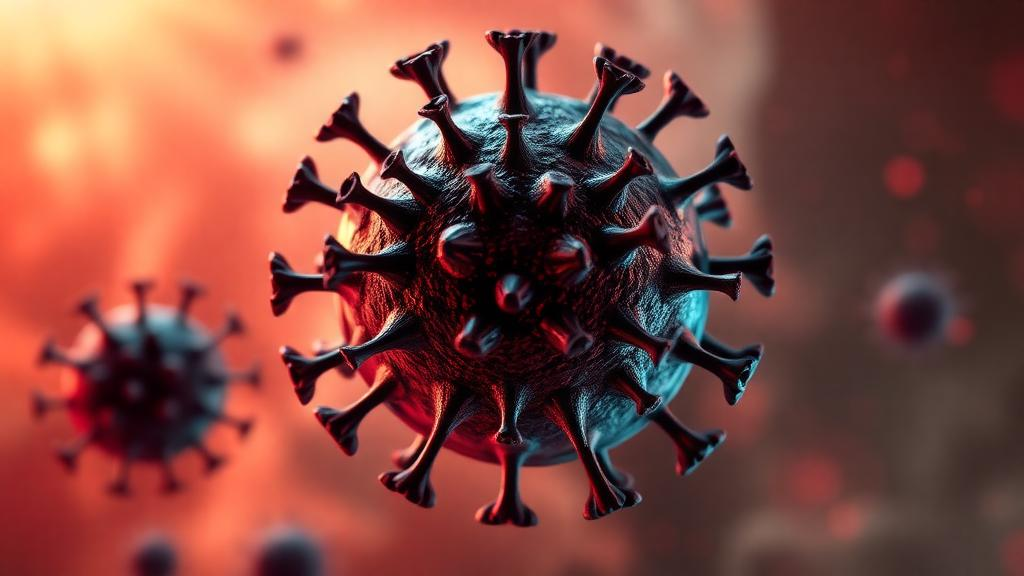
Human immunodeficiency virus type 1 carries one of the most versatile weapons in virology: a small accessory protein called Vpr that commandeers a cellular destruction machine to eliminate host defense factors. A new structural study published in PLOS Pathogens by Dianhong Wang, Weijia Ding, Jingwei Xu, Ruofan Li, Tamino Cairoli, Qi Liu, Yiying Zhu and Ye Xiang now reveals, at atomic resolution, how this viral protein manages to recruit substrates of wildly different shapes and sizes into the same degradation pathway. The work, published on January 10, 2026, provides the most detailed picture yet of the molecular architecture that underlies this remarkable flexibility, and it points toward new strategies for engineering targeted protein degradation as a therapeutic tool.
The machine in question is the CUL4-RING E3 ligase, or CRL4, a multi-component enzyme complex that normally serves as the cell’s quality-control apparatus. E3 ligases are the recognition modules of the ubiquitin-proteasome system: they bind specific target proteins and catalyze the attachment of ubiquitin chains, molecular tags that mark a protein for destruction by the proteasome. CRL4 accomplishes this through a scaffold protein called CUL4, a catalytic RING protein, and an adaptor known as DDB1, which in turn docks a substrate receptor that determines what gets destroyed. In uninfected cells, this system helps regulate DNA replication, DNA repair and other essential processes.
HIV-1 subverts this machinery with elegant economy. Rather than building its own degradation apparatus, the virus deploys Vpr, which binds to a cellular substrate receptor called VprBP, also known as DCAF1. Once Vpr docks onto VprBP, the viral protein acts as a mutable adaptor that can recruit a shifting cast of host proteins into the CRL4(VprBP) complex, delivering them to the catalytic core for ubiquitination and proteasomal degradation. Among the confirmed victims are restriction factors and regulators such as UNG2, a uracil-DNA glycosylase involved in DNA repair, and TET2, an enzyme that chemically modifies DNA. By degrading these factors, Vpr helps the virus counteract innate and intrinsic immune defenses and manipulate the cellular environment to favor replication.
What has puzzled structural biologists for years is how a single receptor-adaptor pair can accommodate substrates as chemically and structurally divergent as UNG2 and TET2. The new study addresses this question by determining cryo-electron microscopy structures of the DDB1-VprBP substrate recognition unit on its own and in complex with different Vpr-substrate assemblies. These structures capture the machinery in multiple conformational states, allowing the researchers to trace how the complex physically reorganizes itself to grip targets of different stoichiometries and dimensions.
The first key finding concerns the architecture of the receptor itself. VprBP is a large protein containing several domains, including a LisH domain and two Armadillo-like repeat domains, often abbreviated ARM-like domains, which form elongated, curved surfaces well suited to protein-protein interactions. The structures show that the LisH domain of VprBP is responsible for mediating dimerization of the DDB1-VprBP unit. This dimerization is not a trivial detail: it doubles the number of binding surfaces available and creates a symmetric platform on which two copies of a substrate can be engaged simultaneously. The LisH domain, a motif named for the Lis1 homology region where it was first characterized, has previously been implicated in oligomerization in other proteins, and this study confirms its structural role as the dimerization engine of the VprBP receptor unit.
The second and perhaps most striking discovery is the conformational plasticity of the ARM-like domains. In the structures, these domains are seen adopting two distinct orientations, which the authors describe as an up conformation and a down conformation. When the complex is bound to UNG2, a relatively small substrate, the two ARM-like domains in the up position wrap around and directly contact two symmetrically arranged UNG2 molecules, one on each side of the dimerized receptor unit. This arrangement effectively clamps the small substrate between the curved ARM-like surfaces, explaining how the complex achieves high-affinity recognition of a compact target.
When the researchers examined the complex bound to a larger fragment of TET2, however, the picture changed dramatically. The ARM-like domains swung into the down conformation, repositioning themselves to accommodate the bulkier substrate. This switch illustrates a structural principle that has emerged from studies of other multidomain receptors: conformational dynamics, rather than rigid lock-and-key binding, can allow a single scaffold to recognize chemically unrelated targets. In the case of VprBP, the up-to-down transition of the ARM-like domains appears to be the mechanical solution that lets the CRL4(VprBP) complex handle substrates ranging from compact enzymes to larger multi-domain proteins.
The implications for HIV biology are significant. Vpr’s ability to degrade diverse host factors is central to several aspects of viral pathogenesis, including the manipulation of the cell cycle, the modulation of DNA damage responses and the evasion of restriction factors. By showing exactly how Vpr-bound substrates are presented to the receptor, the new structures provide a mechanistic framework for understanding how the virus co-opts the host ubiquitin system. They also suggest that the flexibility of the ARM-like domains may be a general feature that permits Vpr, and possibly related viral proteins such as Vpx in HIV-2 and SIV, to recruit an evolving repertoire of substrates as the virus adapts to different host environments.
Beyond virology, the study has direct relevance to the booming field of targeted protein degradation. Pharmaceutical researchers have increasingly sought to repurpose E3 ligases as engines for degrading disease-causing proteins, designing bifunctional molecules that tether a target protein to an E3 ligase so that the cell destroys it. The CRL4(VprBP) system is particularly attractive for such efforts because Vpr demonstrates that the receptor can be induced to accept many different substrates. The new structures, by revealing the binding surfaces and conformational states that enable this promiscuity, could guide the structure-guided design of degraders that exploit VprBP to eliminate therapeutic targets, from oncogenic proteins to other disease drivers.
The work also underscores how much remains to be learned about the structural logic of viral hijacking. Each new structure of a hijacked E3 ligase reveals a different strategy: some viral proteins mimic natural substrate receptors, others insert themselves as adaptors, and still others remodel the receptor to change its specificity. The Vpr-VprBP system now stands as a textbook example of the adaptor strategy, with the added twist that the receptor itself is conformationally dynamic. As structural biologists continue to capture these machines in action, the boundary between viral manipulation and therapeutic engineering grows thinner, and the same molecular flexibility that HIV-1 exploits to evade immunity may one day be harnessed to treat human disease.
Subject of Research: Structural mechanism of substrate recruitment by the HIV-1 Vpr-hijacked CRL4(VprBP) E3 ubiquitin ligase
Article Title: Structural basis of diverse substrate recruitment by the HIV-1 Vpr-hijacked CRL4(VprBP) E3 ligase
Article References: Wang, D., Ding, W., Xu, J., Li, R., Cairoli, T., Liu, Q., Zhu, Y., & Xiang, Y. (2026). Structural basis of diverse substrate recruitment by the HIV-1 Vpr-hijacked CRL4(VprBP) E3 ligase. PLOS Pathogens, 22(10), e1014610. https://doi.org/10.1371/journal.ppat.1014610
Image Credits: AI Generated
DOI: 10.1371/journal.ppat.1014610
Keywords: HIV-1, Vpr, VprBP, CRL4, E3 ligase, DDB1, UNG2, TET2, cryo-EM, protein degradation, ubiquitin-proteasome system, targeted protein degradation
Cite Scienmag News
Drew Townsend. (October 11, 2026). How HIV-1’s Vpr Protein Hijacks a Human Degradation Machine to Destroy Diverse Targets. Scienmag. https://scienmag.com/how-hiv-1s-vpr-protein-hijacks-a-human-degradation-machine-to-destroy-diverse-targets/
Drew Townsend. "How HIV-1’s Vpr Protein Hijacks a Human Degradation Machine to Destroy Diverse Targets." Scienmag, 11 October 2026, https://scienmag.com/how-hiv-1s-vpr-protein-hijacks-a-human-degradation-machine-to-destroy-diverse-targets/. Accessed 11 October 2026.
Drew Townsend. "How HIV-1’s Vpr Protein Hijacks a Human Degradation Machine to Destroy Diverse Targets." Scienmag. October 11, 2026. https://scienmag.com/how-hiv-1s-vpr-protein-hijacks-a-human-degradation-machine-to-destroy-diverse-targets/