


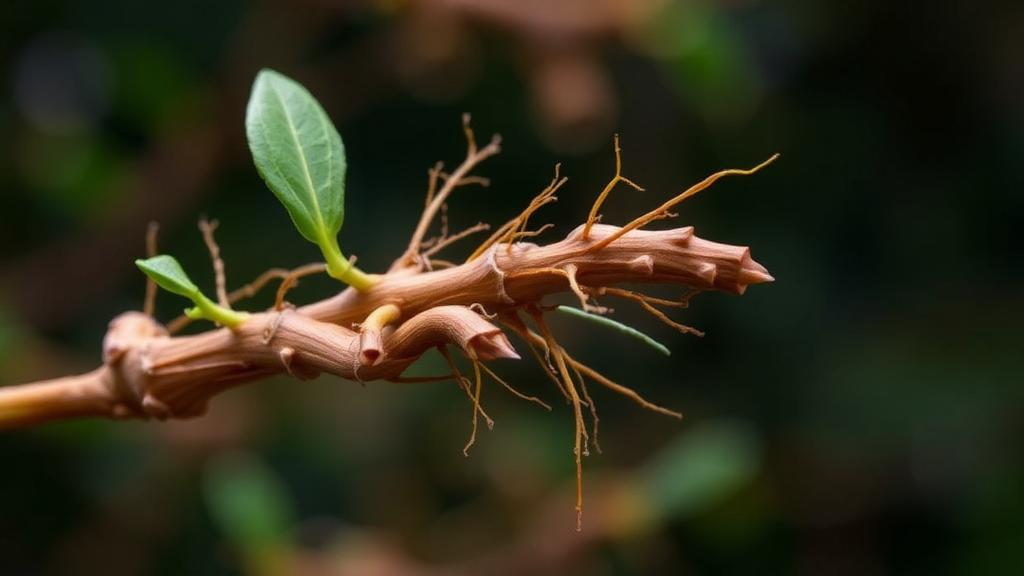
For centuries, traditional Chinese medicine has turned to the root of Panax ginseng to restore energy and stamina in the exhausted. Now a team of researchers in China has mapped, at the molecular level, exactly how the legendary plant may deliver on that promise. In a study published in Molecular Biology Reports, investigators from Army Medical University and its affiliated hospitals report that ginseng relieves fatigue in mice by suppressing excessive autophagy, the cellular recycling process that, when it spirals out of control, can strip skeletal muscle of the protein machinery it needs to contract. The key, they found, is the reactivation of a well-known growth and survival pathway called PI3K/AKT/mTOR, which acts as a molecular brake on autophagy and helps muscle fibers maintain their size and strength.
Fatigue is far more than a subjective feeling of tiredness. Clinicians and researchers define it as a measurable decline in the capacity to generate force or sustain activity, and it accompanies conditions ranging from cancer and chronic kidney disease to liver failure and simply growing old. At the tissue level, persistent fatigue is often mirrored by wasting of skeletal muscle, the body’s largest protein reservoir. Understanding what drives that wasting, and how to reverse it, has become a major goal of translational physiology. The new study tackles the question with an animal model of hyperammonemia, a condition in which ammonia accumulates in the blood, as happens in severe liver disease, and is known to trigger profound muscle dysfunction and fatigue.
The research team, led by corresponding authors Qian Wang and Xiaodan Lai, induced fatigue in mice through hyperammonemia and then treated the animals with Panax ginseng. To assess whether the treatment worked, they deployed a battery of behavioral and physiological tests. Rotarod experiments measured how long the animals could keep their balance on a rotating rod, open field tests quantified spontaneous movement and exploration, grip strength tests gauged forelimb force, and tail suspension tests captured the characteristic immobility that signals exhaustion. Across all of these measures, ginseng-treated mice performed significantly better than their untreated counterparts, showing enhanced exercise tolerance and reduced fatigue-like behavior.
The benefits were visible in the blood as well. Hyperammonemic mice typically show elevated serum ammonia along with increased levels of creatine kinase, blood urea nitrogen, lactate dehydrogenase, and disturbed blood glucose, all biochemical fingerprints of muscle damage and metabolic stress. Ginseng treatment restored these markers toward normal values. Under the microscope, hematoxylin and eosin staining of muscle tissue revealed that the treatment ameliorated skeletal muscle fiber atrophy, the shrinkage of individual muscle cells that underlies weakness. Taken together, the physiological data established that ginseng was not merely masking symptoms but appeared to be protecting muscle tissue itself.
With the therapeutic effect confirmed, the team turned to the harder question of mechanism. They combined three complementary analytical strategies: transcriptomics, which profiles changes in gene expression; proteomics, using data-independent acquisition to quantify shifts in the protein landscape; and network pharmacology, a computational approach that maps the interactions between a drug’s many active compounds and the disease-related targets they influence. This triangulation is increasingly favored in studies of traditional Chinese medicines, whose complex mixtures of ginsenosides and other constituents can act on dozens of molecular targets simultaneously, making single-gene approaches inadequate.
The integrated analysis converged on a single suspect: dysregulated autophagy, governed by the PI3K/AKT signaling pathway. Autophagy is a fundamental housekeeping process in which cells engulf damaged organelles and misfolded proteins in double-membraned vesicles called autophagosomes and deliver them to lysosomes for degradation and recycling. In healthy muscle, a basal level of autophagy is essential, clearing debris and maintaining quality control. But when autophagy becomes excessive, as prior work on hyperammonemia suggests it does, the process begins consuming structural proteins faster than they can be replaced, tipping the muscle into a catabolic spiral of atrophy and weakness. Previous studies have shown that autophagy is required to maintain muscle mass, and that ammonia-lowering interventions can reverse sarcopenia by restoring skeletal muscle proteostasis, the delicate balance between protein synthesis and degradation.
To validate the omics predictions, the researchers used immunohistochemistry, immunofluorescence, and Western blotting to examine key proteins in muscle tissue. Their results confirmed that ginseng activates the PI3K/AKT/mTOR cascade. In this pathway, phosphatidylinositol 3-kinase and protein kinase B (AKT) transmit growth signals downstream to mammalian target of rapamycin (mTOR), a central nutrient and energy sensor. When mTOR is active, it phosphorylates targets that suppress the initiation of autophagy and promote protein synthesis. By boosting this cascade, ginseng effectively re-engages the brake on runaway autophagy, allowing the muscle to rebuild its protein balance. The team also tracked markers such as phosphorylated eIF2α and myostatin, a negative regulator of muscle growth, consistent with a restoration of proteostatic equilibrium.
The findings fit neatly into a growing body of literature on ginseng’s pharmacology. Ginsenosides, the plant’s signature steroidal saponins, have been studied for effects spanning neuroprotection, cardioprotection, and metabolic regulation, and earlier work showed that ginseng improves physical recovery and energy utilization in chronically fatigued rats through the same PI3K/AKT/mTOR axis. Notably, a companion study by several of the same authors found that ginsenoside Rg3, one of the root’s most intensively researched compounds, attenuates fatigue in ammonium chloride-treated C2C12 muscle cells by restoring autophagic homeostasis through the identical pathway. The new in vivo results now extend that cellular story to whole animals, strengthening the case that autophagy modulation is a genuine anti-fatigue mechanism rather than a tissue-culture artifact.
Why does this matter beyond the laboratory? Hyperammonemia-driven muscle wasting is a devastating complication of cirrhosis and other liver diseases, contributing to the sarcopenia that worsens outcomes in hepatic patients. More broadly, if excessive autophagy proves to be a common final pathway in fatigue syndromes, from chronic fatigue syndrome to age-related frailty, then interventions that tune the PI3K/AKT/mTOR axis could have wide reach. A meta-analysis of ginseng supplements has already suggested efficacy against disease-related fatigue in clinical settings, though the field still lacks the large, rigorous human trials needed to translate these mouse findings into medical practice. The authors note that their data and supplementary materials are available for further inquiry, and that the animal work was approved by the Laboratory Animal Welfare and Ethics Committee of Army Medical University.
Cautions remain. The study used a specific hyperammonemia model, and fatigue arising from other causes, such as mitochondrial dysfunction, inflammation, or central nervous system mechanisms, may involve different biology. Ginseng is a complex mixture, and the precise ginsenosides responsible for the effect, along with optimal dosing, remain to be fully defined. Nevertheless, the study offers something rare in the world of herbal medicine: a mechanistic chain of evidence running from behavioral improvement to serum chemistry to muscle histology to a defined signaling pathway. For a remedy that has been prescribed for millennia, science is finally beginning to explain, molecule by molecule, why the ancient root may genuinely restore what exhaustion takes away.
Subject of Research: Mechanism of ginseng's anti-fatigue effect through autophagy regulation via the PI3K/AKT/mTOR pathway in skeletal muscle
Article Title: Ginseng alleviates fatigue by inhibiting autophagy via activation of the PI3K/AKT/mTOR signaling pathway
Article References: Liu, H., Xiong, R., Zhang, S., Zhang, P., Wang, L., Wang, Q., & Lai, X. (2026). Ginseng alleviates fatigue by inhibiting autophagy via activation of the PI3K/AKT/mTOR signaling pathway. Molecular Biology Reports, 53(1), Article 1707. https://doi.org/10.1007/s11033-026-12902-8
Image Credits: AI Generated
DOI: 10.1007/s11033-026-12902-8
Keywords: Panax ginseng, fatigue, autophagy, PI3K/AKT/mTOR pathway, skeletal muscle, hyperammonemia, ginsenosides, proteostasis, muscle atrophy, transcriptomics, proteomics, network pharmacology
Cite Scienmag News
Drew Townsend. (October 13, 2026). Ginseng Fights Fatigue by Switching Off Runaway Autophagy in Muscle Cells. Scienmag. https://scienmag.com/ginseng-fights-fatigue-by-switching-off-runaway-autophagy-in-muscle-cells/
Drew Townsend. "Ginseng Fights Fatigue by Switching Off Runaway Autophagy in Muscle Cells." Scienmag, 13 October 2026, https://scienmag.com/ginseng-fights-fatigue-by-switching-off-runaway-autophagy-in-muscle-cells/. Accessed 13 October 2026.
Drew Townsend. "Ginseng Fights Fatigue by Switching Off Runaway Autophagy in Muscle Cells." Scienmag. October 13, 2026. https://scienmag.com/ginseng-fights-fatigue-by-switching-off-runaway-autophagy-in-muscle-cells/


