


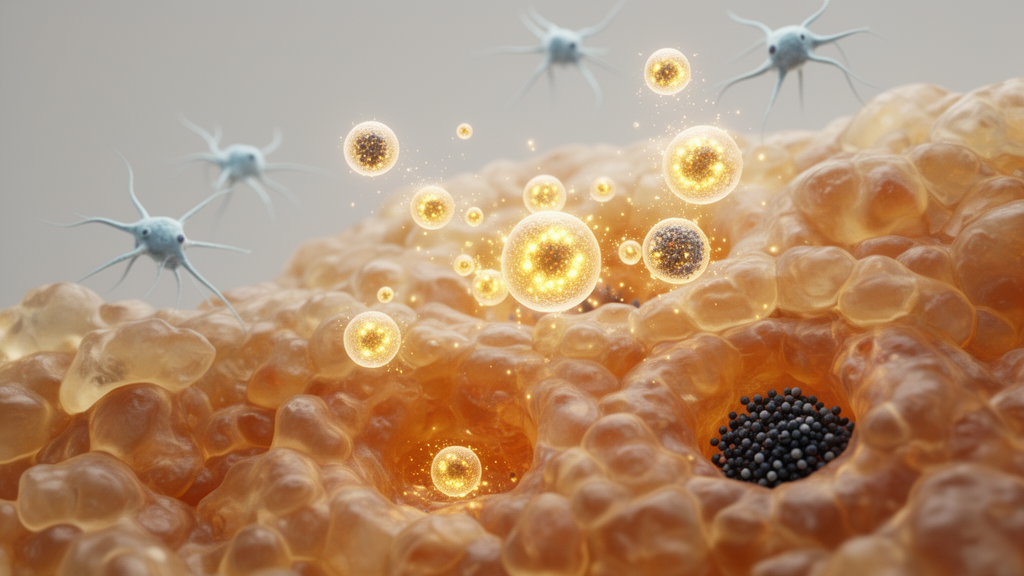
Extracellular vesicles, the tiny membrane-bound particles that cells release into their surroundings, are moving from the margins of cancer biology to its center. A new editorial published in Frontiers in Oncology on 27 October 2026, in the section Cancer Immunity and Immunotherapy, argues that the field has passed an important inflection point. Research on these vesicles is no longer confined to cataloguing the molecular cargo they carry.
Instead, investigators are increasingly asking how vesicles shape the evolution of tumor states, how they steer immune responses, and how they determine whether therapies succeed or fail. The editorial, authored by Yu Fu, Tianzhao Du, Huizhe Xu and Shenglong Li of the Cancer Hospital of Dalian University of Technology and the Chinese University of Hong Kong, introduces a Research Topic that gathers studies organized around three interlocking themes: vesicles and tumor progression, vesicles in immune regulation and therapeutic resistance, and vesicles as therapeutic tools. The first theme addresses the relationship between vesicle biology and the heterogeneity that defines malignant disease.
The editorial highlights a review by Xu and colleagues on extracellular vesicle-mediated intercellular crosstalk in hepatocellular carcinoma. That work describes how noncoding RNAs, proteins and other bioactive molecules can be packaged into vesicles and delivered to neighboring or distant cells, influencing tumor growth, metabolic reprogramming, invasion, metastasis and interactions with the stromal microenvironment that surrounds the tumor. In this view, vesicles function as a molecular postal system that allows cancer cells to coordinate their behavior without direct contact.
Two single-cell studies featured in the Research Topic push this idea further by connecting vesicle biology to specific malignant cell states. Li and colleagues identified a subpopulation of melanoma cells driven by the transcription factor ETV5 and marked by the C3 and ID4 genes. Fan and colleagues, working in multiple myeloma, identified a population of ASS1-positive malignant plasma cells enriched in relapsed and refractory disease.
The editorial is careful to note an important limitation of these single-cell analyses. Both studies inferred the involvement of extracellular vesicles primarily from transcriptomic signatures and patterns of intercellular communication rather than from direct observation of vesicle production, cargo composition or functional effects on recipient cells. Transcriptomic features associated with vesicle biology do not by themselves prove that vesicle-mediated transfer is occurring.
The authors therefore call for further direct analyses that measure vesicle release, characterize the molecules packaged within individual vesicle subpopulations and test their effects on target cells experimentally. This distinction between correlation and demonstrated mechanism runs throughout the editorial and shapes its recommendations for future research. At a broader mechanistic level, Liu and colleagues described a bidirectional regulatory relationship between vesicle biology and acetylation modifications, the chemical additions of acetyl groups to proteins and chromatin that regulate gene expression and metabolism.
This theoretical framework links vesicle-mediated intercellular communication to metabolic flexibility, transcriptional plasticity and epigenetic state changes in tumor cells. Taken together, the studies in this first theme suggest that vesicles do more than ferry individual molecules between cells. They may serve as a connective tissue linking tumor heterogeneity with the adaptive changes in cellular state that allow cancers to evolve under the selective pressure of treatment and immune attack.
The second theme examines how vesicles regulate antitumor immunity and therapeutic resistance, an area where the clinical stakes are highest. Wang and colleagues reviewed how glioma-derived vesicles reprogram multiple immune cell populations through checkpoint molecules, noncoding RNAs, metabolites and other regulatory cargo. The consequences they describe include T-cell dysfunction, the emergence of immunosuppressive myeloid cell phenotypes, impaired antigen presentation and resistance to immunotherapy.
Extending the concept to bone tumors, Yang and colleagues proposed an ecosystem model of chemoresistance in osteosarcoma. The unifying message of these studies, according to the editorial, is that therapeutic resistance should not be viewed as a property of individual tumor cells alone. Rather, it is a multicellular adaptive process in which vesicles coordinate tumor-intrinsic survival programs with immune and stromal remodeling.
A tumor that survives chemotherapy is not simply a cell with the right mutations; it is a community that has been reorganized, in part through vesicle traffic, to support continued growth. The third theme turns this biology against the tumor. The same properties that allow vesicles to transport tumor-promoting signals can be exploited therapeutically.
Ortiz-Bonilla and colleagues demonstrated that when bladder cancer cells internalize Bacillus Calmette-Guerin, the live bacterial vaccine used as standard therapy for non-muscle-invasive bladder cancer, the cells increased their release of vesicles and altered vesicle cargo. The editorial emphasizes that these findings establish treatment-induced vesicles as active mediators of antitumor immunity specifically in the context of BCG therapy, a finding with a defined scope rather than a general claim about all cancers. From an engineering perspective, Fang and colleagues reviewed exo-nanomaterials, hybrid platforms that combine the biocompatibility and natural trafficking properties of vesicle membranes with the loading capacity and programmability of synthetic nanomaterials.
The editorial stresses, however, that most evidence for these platforms remains preclinical, meaning it has been generated in laboratory and animal models rather than in patients. In a parallel vein, Xu and colleagues discussed the use of engineered vesicles to deliver regulatory RNAs that restore therapeutic sensitivity and promote treatment-associated cell death. Together, the editorial argues, these approaches represent a conceptual shift from inhibiting pathological vesicle signaling to deliberately redirecting vesicle-mediated communication for therapeutic purposes.
The editorial closes with a sober assessment of what the field must do next. Future studies should move beyond descriptive profiling of vesicle cargo to establish causal relationships among specific tumor cell states, vesicle subpopulations, recipient cells and treatment conditions. Vesicle-associated transcriptomic signatures must be distinguished from experimentally demonstrated vesicle-mediated functions, and the cellular origin, biodistribution and recipient cell specificity of functional vesicle populations require more precise characterization.
For clinical translation, the authors identify standardized vesicle characterization, scalable production, reproducible cargo loading and rigorous evaluation of safety and in vivo behavior as essential prerequisites. The overarching question is when vesicle-mediated signaling should be inhibited, when it should simply be monitored, and when it can be harnessed. Answering that question, the authors conclude, will support the development of more precise vesicle-based strategies for cancer treatment, turning one of the tumor's communication channels into a point of therapeutic leverage.
Subject of Research: The roles of extracellular vesicles in tumor immunity, drug resistance and therapeutic engineering
Article Title: Editorial: Unlocking the potential of extracellular vesicles in tumor immunity and drug resistance
Article References: Fu, Y., Du, T., Xu, H., & Li, S. (2026). Editorial: Unlocking the potential of extracellular vesicles in tumor immunity and drug resistance. Frontiers in Oncology, 16, Article 2031751. https://doi.org/10.3389/fonc.2026.2031751
Image Credits: AI Generated
DOI: 10.3389/fonc.2026.2031751
Keywords: extracellular vesicles, tumor immunity, drug resistance, tumor microenvironment, exosomes, immunotherapy, hepatocellular carcinoma, melanoma, multiple myeloma, osteosarcoma, BCG therapy, exo-nanomaterials
Cite Scienmag News
Nathaniel Bowman. (October 27, 2026). Extracellular vesicles emerge as dual players in tumor immunity and drug resistance. Scienmag. https://scienmag.com/extracellular-vesicles-emerge-as-dual-players-in-tumor-immunity-and-drug-resistance/
Nathaniel Bowman. "Extracellular vesicles emerge as dual players in tumor immunity and drug resistance." Scienmag, 27 October 2026, https://scienmag.com/extracellular-vesicles-emerge-as-dual-players-in-tumor-immunity-and-drug-resistance/. Accessed 27 October 2026.
Nathaniel Bowman. "Extracellular vesicles emerge as dual players in tumor immunity and drug resistance." Scienmag. October 27, 2026. https://scienmag.com/extracellular-vesicles-emerge-as-dual-players-in-tumor-immunity-and-drug-resistance/


