


Clean water technology may be entering a new era in which molecular architecture, rather than simply chemical composition, determines how efficiently pollution can be destroyed. In a study published in Nature Communications, Xiao, He, Yang and colleagues report a strategy for engineering “N-site isomerism” in donor–acceptor covalent organic frameworks, or COFs, to create more effective materials for Fenton-like water purification. The work focuses on a deceptively small structural change—the precise location of nitrogen atoms inside an organic framework—and shows how that change can influence the electronic behavior and catalytic performance of the entire material.
Fenton chemistry is one of the most widely studied approaches for breaking down persistent organic contaminants. In its classical form, iron reacts with hydrogen peroxide to generate highly reactive hydroxyl radicals. These short-lived species can attack complex molecules, including dyes, pharmaceuticals and other industrial pollutants, ultimately converting them into smaller and potentially less harmful compounds. Yet conventional Fenton systems often work best under acidic conditions, may produce iron-containing sludge and can suffer from limited catalyst stability. Fenton-like processes attempt to overcome these limitations by using alternative catalytic materials capable of activating oxidants without relying entirely on dissolved iron.
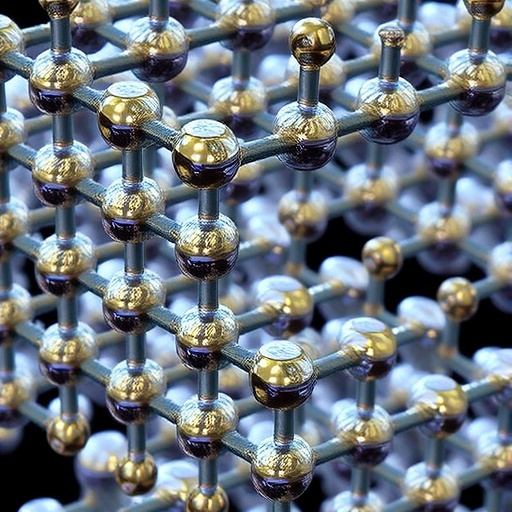
The new platform is based on covalent organic frameworks, porous crystalline materials assembled from molecular building blocks linked by strong covalent bonds. Their structure can be designed with remarkable precision, allowing researchers to control pore size, chemical functionality and the arrangement of electron-rich and electron-poor components. This tunability makes COFs attractive for environmental catalysis: pollutants can enter their pores, reactive molecules can be concentrated near catalytic sites and electron transfer can be directed through the framework rather than occurring randomly in solution.
The researchers’ central innovation is the deliberate control of nitrogen positions within the COF architecture. Nitrogen atoms can act as electron donors, coordination sites and chemically active centers, but their influence depends strongly on where they are located. Two frameworks may contain the same elements and have similar overall compositions while displaying very different catalytic properties because their atoms occupy different positions. This phenomenon, known as positional or site isomerism, is particularly important in extended materials, where a local change can alter charge distribution across long-range networks.
By engineering donor–acceptor relationships into the framework, the study seeks to improve the movement of electrons generated during catalytic reactions. Donor units tend to release electron density, while acceptor units draw it toward themselves. When these components are connected in an ordered COF, the resulting internal electronic polarization can facilitate charge separation and transport. In a Fenton-like reaction, more efficient electron flow may help activate an oxidant such as hydrogen peroxide, producing reactive oxygen species capable of attacking contaminants in water.
This electronic design offers a potential answer to one of the biggest challenges in advanced oxidation technologies: generating reactive species efficiently while limiting unwanted side reactions. If electrons are trapped or rapidly recombine within a catalyst, much of the oxidant is wasted. A carefully arranged donor–acceptor framework can, in principle, provide a pathway that keeps charges separated for longer and directs them toward the chemical steps required for pollutant degradation. The location of nitrogen atoms becomes crucial because it can modify local electronegativity, energy levels, adsorption behavior and the accessibility of active sites.
The porous nature of the COFs may provide a second advantage. Organic pollutants moving through contaminated water can be concentrated inside the material’s channels, placing them closer to reactive oxygen species as they form. At the same time, the framework’s ordered pores can allow oxidants and water molecules to diffuse toward catalytic centers. This combination of molecular recognition, adsorption and catalytic activation could make the material more selective and efficient than systems in which all components remain dispersed in bulk solution.
The study also highlights a broader principle for materials science: performance can be governed not only by which atoms are present, but by their exact coordinates. In conventional catalyst development, researchers often change composition by adding a new element or functional group. Engineering N-site isomerism introduces a finer level of control, enabling scientists to preserve the overall chemical formula while changing the electronic landscape. Such precision could help explain why apparently similar porous materials sometimes show sharply different behavior in environmental reactions.
For water treatment, the implications are significant. Persistent contaminants are difficult to remove through conventional filtration or biological processes, especially when they are chemically stable or present as complex mixtures. Catalytic oxidation offers a route to destroy pollutants rather than merely transferring them into another waste stream. A robust COF-based Fenton-like system could potentially be integrated into treatment reactors, filtration membranes or recoverable catalytic modules, although practical deployment will depend on long-term stability, cost, regeneration and performance in real wastewater containing salts, natural organic matter and competing substances.
The research arrives as scientists worldwide search for cleaner and more controllable ways to eliminate emerging pollutants from water. Its most important message is that the next generation of environmental catalysts may be designed at the level of atomic placement. By combining porous architecture, donor–acceptor electronics and intentional nitrogen-site isomerism, Xiao, He, Yang and their colleagues present a molecular engineering strategy that could expand the capabilities of Fenton-like purification. The work does not simply add another catalyst to the growing catalogue of water-treatment materials; it suggests that rearranging the same atoms may be enough to unlock entirely different chemical performance.
Cite Scienmag News
Denise Maddox. (August 7, 2026). Engineering N-Site Isomerism in Covalent Organic Frameworks Enhances Fenton-Like Water Purification. Scienmag. https://scienmag.com/engineering-n-site-isomerism-in-covalent-organic-frameworks-enhances-fenton-like-water-purification/
Denise Maddox. "Engineering N-Site Isomerism in Covalent Organic Frameworks Enhances Fenton-Like Water Purification." Scienmag, 7 August 2026, https://scienmag.com/engineering-n-site-isomerism-in-covalent-organic-frameworks-enhances-fenton-like-water-purification/. Accessed 3 September 2026.
Denise Maddox. "Engineering N-Site Isomerism in Covalent Organic Frameworks Enhances Fenton-Like Water Purification." Scienmag. August 7, 2026. https://scienmag.com/engineering-n-site-isomerism-in-covalent-organic-frameworks-enhances-fenton-like-water-purification/


