


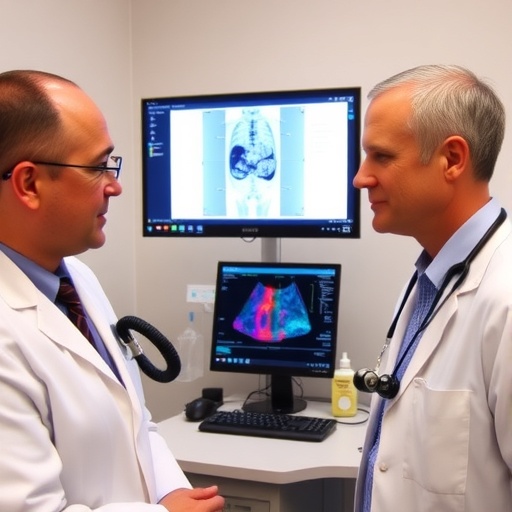
Portal hypertension, a dangerous consequence of chronic liver disease, may be moving toward a less invasive future. A new review published online in Portal Hypertension & Cirrhosis examines how imaging technologies, blood-based biomarkers, clinical scoring systems, and artificial intelligence are being combined to identify elevated pressure in the portal venous system without relying exclusively on catheter-based measurements.
The portal vein transports blood from the stomach, intestines, spleen, and pancreas to the liver. When scarring, inflammation, or vascular resistance obstructs the normal flow of blood through the liver, pressure begins to rise. This condition can remain clinically silent until serious complications develop, including esophageal or gastric variceal bleeding, spontaneous bacterial peritonitis, ascites, and hepatorenal syndrome. Once variceal hemorrhage occurs, the long-term outlook can be poor; in untreated patients, five-year survival has been reported to remain below 50 percent.
The reference standard for assessing portal pressure is the hepatic venous pressure gradient, or HVPG. During this procedure, a catheter is introduced through a vein in the neck or groin and advanced into the hepatic circulation. Clinicians measure the difference between free hepatic venous pressure and wedged hepatic venous pressure, the latter serving as an indirect estimate of sinusoidal pressure within the liver. Clinically significant portal hypertension is generally associated with an HVPG of at least 10 mmHg in appropriate disease settings. Although the method is highly informative, it requires specialized expertise, hospital resources, and an invasive procedure, limiting its availability for routine monitoring.
The review, led by Dr. Ling Yang of the Division of Gastroenterology at Union Hospital, Tongji Medical College, Huazhong University of Science and Technology in China, describes a growing portfolio of non-invasive alternatives. These methods do not measure portal pressure directly. Instead, they detect its structural and physiological consequences, such as increased liver stiffness, splenic enlargement, reduced platelet counts, and changes in blood flow through the portal venous system. Used together, these signals can provide a more complete picture of disease progression than any single measurement.
Elastography is among the most extensively studied approaches. Transient elastography uses mechanical vibrations to generate shear waves that travel through the liver or spleen, while ultrasound-based shear wave elastography measures tissue stiffness in real time. Magnetic resonance elastography uses externally generated mechanical waves and magnetic resonance imaging to map the propagation of those waves throughout an organ. Fibrosis can make the liver stiffer, but portal hypertension itself can also alter vascular congestion and tissue mechanics, meaning that stiffness measurements must be interpreted in the context of the patient’s underlying liver disease.
Spleen measurements are particularly valuable because portal hypertension affects the organ downstream of the liver. Elevated portal pressure can enlarge the spleen and increase splenic sequestration of platelets, producing thrombocytopenia. A low platelet count, increased spleen diameter, and elevated liver or spleen stiffness can therefore act as indirect markers of portal hypertension. Their usefulness, however, depends on disease etiology, obesity, inflammation, congestion, technical factors, and the quality of the imaging examination.
The review also highlights the Baveno VII criteria, a set of consensus-based recommendations designed to translate non-invasive findings into clinical decisions. In selected patients with compensated advanced chronic liver disease, combinations of liver stiffness and platelet measurements can help identify individuals unlikely to have clinically significant portal hypertension. This may allow some patients to avoid screening endoscopy, an invasive examination used to detect varices at risk of bleeding. Such strategies are intended to reduce unnecessary procedures while preserving surveillance for people whose risk is substantial.
Artificial intelligence is adding another layer to this diagnostic framework. Machine-learning models can analyze relationships among demographic characteristics, laboratory results, elastography values, imaging findings, and clinical outcomes that may be difficult to capture with conventional scores. Rather than asking whether one test is positive or negative, an algorithm can generate an individualized probability of clinically significant portal hypertension or future complications. The technology could eventually support earlier referral, more frequent monitoring for high-risk patients, and more efficient use of endoscopy and specialized care.
Yet the review emphasizes that these systems remain complementary to HVPG rather than universal replacements for it. AI models may perform well in the populations used to develop them but lose accuracy when applied to patients with different causes of liver disease, imaging equipment, ethnic backgrounds, or stages of illness. Elastography results can also vary between operators and devices, while blood markers may be influenced by conditions unrelated to portal pressure. Standardized protocols, external validation, transparent reporting, and prospective clinical trials will be essential before these tools can be adopted broadly.
Dr. Yang and her colleagues argue that the future of portal hypertension diagnosis will likely depend on integration rather than competition between technologies. A clinician may combine platelet counts, spleen and liver stiffness, ultrasound findings, and a validated predictive model to estimate risk, reserving HVPG for complex cases or situations in which treatment decisions require direct hemodynamic information. As these approaches become more standardized, they could make earlier detection safer and more accessible, helping clinicians intervene before portal hypertension triggers bleeding or organ failure.
News Publication Date:
23 July 2026
Web References:
https://doi.org/10.1002/poh2.70060
References:
Yang L. et al., “Diagnosis of Portal Hypertension: Advancing Towards Non-Invasive Solutions,” Portal Hypertension & Cirrhosis, DOI: 10.1002/poh2.70060.
Cite Scienmag News
Ophelia Keating. (August 7, 2026). Researchers advance noninvasive diagnosis of portal hypertension. Scienmag. https://scienmag.com/researchers-advance-noninvasive-diagnosis-of-portal-hypertension/
Ophelia Keating. "Researchers advance noninvasive diagnosis of portal hypertension." Scienmag, 7 August 2026, https://scienmag.com/researchers-advance-noninvasive-diagnosis-of-portal-hypertension/. Accessed 5 September 2026.
Ophelia Keating. "Researchers advance noninvasive diagnosis of portal hypertension." Scienmag. August 7, 2026. https://scienmag.com/researchers-advance-noninvasive-diagnosis-of-portal-hypertension/


