


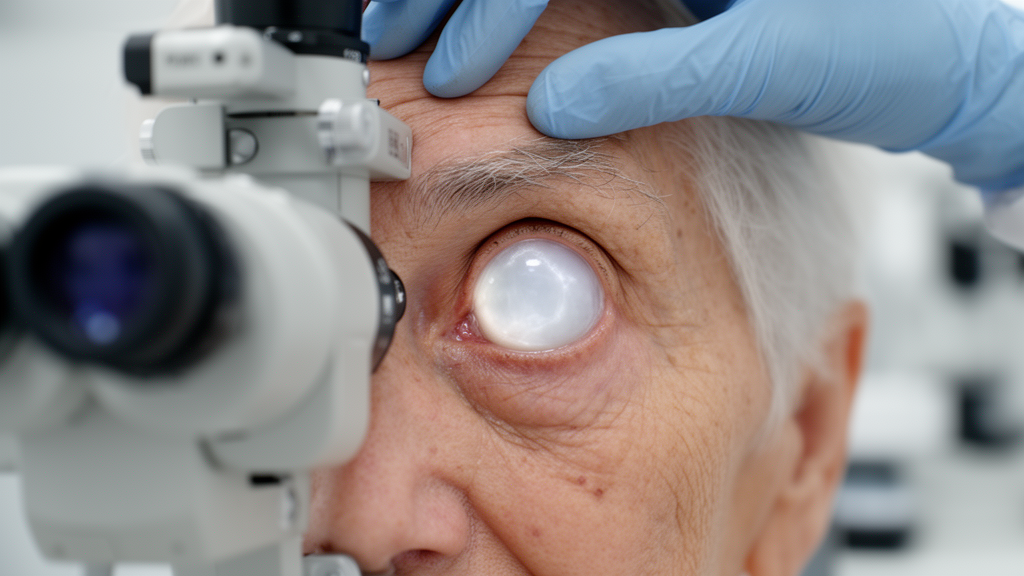
For the hundreds of millions of people living with diabetes worldwide, clouding of the eye’s lens is one of the most common and disabling complications. Diabetic cataract develops faster and more aggressively than the ordinary age-related form, and the only widely available treatment remains surgical removal of the clouded lens. Now a team of ophthalmology researchers at Sun Yat-sen University’s Zhongshan Ophthalmic Center in Guangzhou, China, has mapped a specific molecular chain reaction that links high blood sugar to inflammatory destruction of the lens — and shown that breaking that chain can keep lenses clearer, at least in experimental models.
The study, published in Cell Death Discovery, focuses on lens epithelial cells, the thin layer of cells that covers the front of the lens and maintains its transparency throughout life. When these cells die or become inflamed, the structural integrity and clarity of the lens suffer. The researchers suspected that a form of inflammatory cell death called pyroptosis might be a key driver of the damage, and they traced the process back to one of the immune system’s most sensitive alarm systems: the detection of stray DNA inside the cell.
Under normal conditions, DNA belongs in the nucleus and in mitochondria, the cell’s energy-producing compartments. When fragments of genetic material appear in the cytoplasm — the fluid surrounding these compartments — it usually signals danger, either from an invading pathogen or from internal injury. A protein called cyclic GMP-AMP synthase, or cGAS, acts as the cytoplasmic DNA sensor. Upon binding stray DNA, cGAS produces a small messenger molecule that activates a protein on the endoplasmic reticulum known as STING, which in turn switches on inflammatory signaling pathways. This cGAS-STING system is a cornerstone of innate immunity, but when it fires inappropriately it can turn a cell’s own tissues into targets.
The first evidence came from human tissue. Examining anterior lens capsules removed from patients with diabetic cataract, the team found that the lens epithelial cells showed significantly elevated levels of cGAS, STING, NLRP3, caspase-1, and gasdermin D — a lineup of proteins that together define the inflammatory pathway the researchers wanted to interrogate. NLRP3 is the sensor component of a multiprotein assembly called the NLRP3 inflammasome, which assembles in response to cellular stress. Once assembled, the inflammasome activates caspase-1, an enzyme that both processes inflammatory signaling molecules and cleaves gasdermin D, the executioner protein of pyroptosis.
Pyroptosis is a particularly destructive form of programmed cell death. Unlike the quiet, tidy dismantling of apoptosis, pyroptosis ends with gasdermin D punching large pores in the cell membrane. The cell swells, bursts, and spills its contents — including mature forms of the inflammatory messengers interleukin-1β and interleukin-18 — into the surrounding tissue. This release amplifies inflammation, recruiting and activating neighboring cells and potentially damaging the extracellular matrix that keeps the lens transparent. Lactate dehydrogenase, an enzyme normally confined inside healthy cells, leaks out through these pores and serves as a convenient laboratory marker of membrane rupture.
To test whether high glucose could trigger this entire cascade in lens cells, the researchers exposed human lens epithelial cells to elevated sugar concentrations in culture. The exposure produced exactly the sequence they predicted: DNA accumulated in the cytoplasm, including fragments released from damaged mitochondria; cGAS-STING signaling switched on; the NLRP3 inflammasome and its adaptor protein ASC accumulated; caspase-1 and gasdermin D were cleaved into their active forms; lactate dehydrogenase leaked into the culture medium; and the cells secreted elevated amounts of interleukin-1β and interleukin-18. In short, high glucose transformed the lens epithelium’s own protective cells into casualties of an innate immune response gone awry.
The causal question remained: was the inflammasome actually responsible for the cell death, or merely a bystander? The team answered it with small interfering RNAs, synthetic molecules that silence specific genes. When they knocked down NLRP3 in lens epithelial cells under high-glucose conditions, the pyroptotic response collapsed. Levels of ASC, cleaved caspase-1, and cleaved gasdermin D fell, lactate dehydrogenase release dropped, and secretion of interleukin-1β and interleukin-18 diminished. Silencing cGAS or STING produced a similar protective effect and, critically, suppressed activation of the NLRP3-caspase-1-gasdermin D axis. That placement — upstream of the inflammasome — suggests that the DNA-sensing pathway acts as an initiator that feeds into and drives inflammasome activation in the diabetic lens.
Cell culture experiments, however convincing, cannot capture the complexity of a living eye. The researchers therefore turned to a diabetic rat model, in which elevated blood sugar produces lens clouding resembling the human condition. Delivering small interfering RNAs targeting cGAS, STING, or NLRP3 to the animals significantly reduced lens opacity and improved the histopathological appearance of the lens epithelium and cortex under the microscope. The improvement across all three molecular targets strengthens the argument that the pathway operates as an integrated axis in vivo, rather than as isolated biochemical events, and demonstrates for the first time in a living system that interrupting this signaling at multiple points can preserve lens clarity.
The findings carry real therapeutic weight. Current drug development efforts against inflammatory diseases increasingly target cGAS-STING and NLRP3, and inhibitors of both pathways are in various stages of preclinical and clinical evaluation for conditions ranging from gout to neurodegeneration. The new work suggests that such compounds — or gene-silencing approaches like the siRNAs used here — could one day complement glucose control as a strategy to slow or prevent diabetic cataract. Because the pathway was validated at three separate nodes in animal models, it offers several potential points of pharmacological intervention, each of which might be exploited depending on safety and delivery considerations.
Important caveats remain before the laboratory results can inform clinical practice. The animal work used rats, whose lenses differ in some respects from human lenses, and the duration of intervention was limited relative to the years over which diabetic cataract develops in patients. Delivering RNA therapeutics or small-molecule inhibitors to the lens in a safe, sustained way is an unsolved engineering problem, and innate immune pathways such as cGAS-STING perform essential protective functions elsewhere in the body, so systemic suppression carries risks that local, eye-targeted approaches would need to avoid. Nevertheless, by identifying cytosolic DNA accumulation as the trigger and tracing a complete signaling route from cGAS through STING and the NLRP3 inflammasome to gasdermin D–mediated rupture of lens epithelial cells, the study reframes diabetic cataract not simply as a passive consequence of sugar-induced protein damage, but as an active, targetable inflammatory disease — a conceptual shift that could reshape how researchers search for the first true drug treatment for this blinding complication.
Subject of Research: The role of cGAS-STING signaling and NLRP3 inflammasome-mediated pyroptosis in high glucose-induced diabetic cataract
Article Title: Inhibition of cGAS-STING signaling and NLRP3 inflammasome-mediated pyroptosis reduces lens opacity and inflammation in high glucose-induced cataract
Article References: Yu, Y., Chen, H., Hu, L., Gao, S., Xiao, Y., Wu, X., Yu, M., Lin, H., & Liu, Z. (2026). Inhibition of cGAS-STING signaling and NLRP3 inflammasome-mediated pyroptosis reduces lens opacity and inflammation in high glucose-induced cataract. Cell Death Discovery. https://doi.org/10.1038/s41420-026-03382-7
Image Credits: AI Generated
DOI: 10.1038/s41420-026-03382-7
Keywords: diabetic cataract, cGAS-STING, NLRP3 inflammasome, pyroptosis, lens epithelial cells, gasdermin D, caspase-1, mitochondrial DNA, interleukin-1β, siRNA, inflammation, lens opacity
Cite Scienmag News
Ophelia Keating. (October 17, 2026). Cataract Clouding in Diabetes Traced to a DNA-Sensing Inflammatory Chain Reaction. Scienmag. https://scienmag.com/cataract-clouding-in-diabetes-traced-to-a-dna-sensing-inflammatory-chain-reaction/
Ophelia Keating. "Cataract Clouding in Diabetes Traced to a DNA-Sensing Inflammatory Chain Reaction." Scienmag, 17 October 2026, https://scienmag.com/cataract-clouding-in-diabetes-traced-to-a-dna-sensing-inflammatory-chain-reaction/. Accessed 17 October 2026.
Ophelia Keating. "Cataract Clouding in Diabetes Traced to a DNA-Sensing Inflammatory Chain Reaction." Scienmag. October 17, 2026. https://scienmag.com/cataract-clouding-in-diabetes-traced-to-a-dna-sensing-inflammatory-chain-reaction/


