


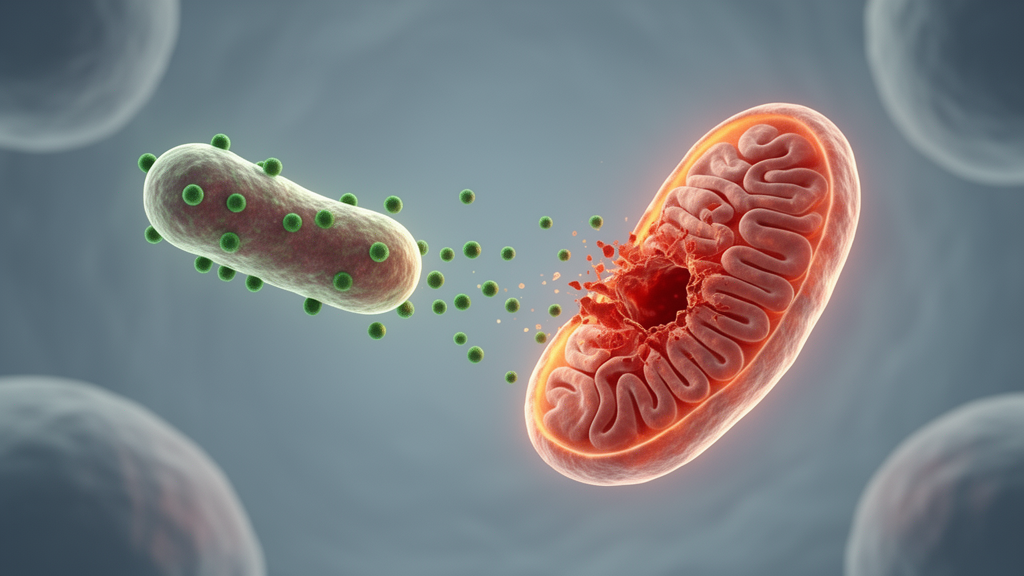
A virulence factor secreted by Staphylococcus aureus, one of the most stubborn causes of mastitis in dairy herds, has been shown to sabotage mitochondria in a way that pushes infected cells into ferroptosis, an iron-dependent form of cell death. The finding, published in PLOS Pathogens, traces a complete molecular itinerary from the bacterial enzyme at the cell surface to the collapse of antioxidant defenses inside the cell, and it identifies a chain of events that could be interrupted at several points to protect mammary tissue.
The virulence factor in question is sphingomyelin phosphodiesterase, abbreviated Sph, an enzyme that S. aureus deploys among its diverse arsenal of tissue-damaging proteins. Previous work had established Sph as an important contributor to the bacterium’s ability to invade and disrupt host tissues, but its specific role in mastitis, the inflammation of the mammary gland that imposes enormous economic losses on the dairy industry, had remained poorly defined. The new study set out to determine whether Sph contributes to the disease process and, if so, through what cellular machinery.
The researchers began with a genetic approach, generating bacterial strains that lacked a functional Sph gene and comparing their effects on host cells with those of the wild-type pathogen. The result was striking: when Sph was absent, S. aureus-induced ferroptosis was significantly suppressed. Ferroptosis is a regulated cell death program defined by the catastrophic oxidation of lipid membranes, and its emergence as a player in bacterial pathogenesis has drawn growing attention. The observation that a single bacterial enzyme could govern this process suggested that Sph was not merely a bystander but an active driver of the cell death that accompanies mammary infection.
To understand how Sph accomplishes this, the team turned its attention to the mitochondria, the organelles that house the machinery of cellular respiration and, crucially, carry their own circular genome known as mitochondrial DNA. Using structural and biochemical analyses, the investigators found that Sph physically interacts with Mic60, a core component of the mitochondrial contact site and cristae-organizing system, or MICOS. Mic60 is central to maintaining the architecture of cristae, the folded inner membranes where the respiratory chain is organized. By engaging Mic60, Sph disrupts these cristae, destabilizing the compartmentalization that normally keeps mitochondrial DNA safely enclosed within the organelle.
The consequence of this architectural sabotage is the escape of mitochondrial DNA into the cytosol, the fluid interior of the cell. In healthy cells, mitochondrial DNA is sequestered and its release is a potent alarm signal. The cytosolic sensor cyclic GMP-AMP synthase, or cGAS, recognizes the misplaced DNA and catalyzes the production of a second messenger that activates STING, an adaptor protein on the endoplasmic reticulum. Activation of the cGAS-STING pathway is well known as a trigger of innate immune and inflammatory responses, but the new work shows that in this context it does something more specific and more destructive: it initiates a sequence that depletes the cell’s primary defense against ferroptosis.
That defense is glutathione peroxidase 4, or GPX4, the only mammalian enzyme capable of reducing oxidized phospholipids within membranes and therefore the essential brake on lipid peroxidation. Cells that lose GPX4 are exquisitely vulnerable to ferroptosis. The study demonstrates that STING signaling triggers the recruitment of GPX4 into the autophagy-lysosome pathway, the cellular disposal system in which cargo destined for degradation is enveloped in autophagosomes and delivered to lysosomes. In effect, the bacterium coerces the cell into digesting its own antioxidant shield, leaving membrane lipids undefended against oxidative attack.
This mechanism links three fields that have largely developed in parallel: bacterial virulence, mitochondrial biology, and regulated cell death. The idea that a secreted bacterial enzyme could reach the mitochondrial inner membrane and physically dismantle cristae through a named interaction with a MICOS component is a notable mechanistic advance. Equally significant is the demonstration that the cGAS-STING axis, usually discussed in the context of antiviral immunity and sterile inflammation, can be repurposed by a pathogen as a delivery system for sending a survival protein to its destruction.
The implications for mastitis are considerable. S. aureus mastitis is notoriously difficult to treat and prevent, partly because the bacterium possesses an unusually broad repertoire of virulence factors and partly because chronic infections establish themselves deep within glandular tissue. If Sph-mediated ferroptosis contributes meaningfully to tissue damage and inflammation during infection, then interventions aimed at the pathway described here could complement antibiotic therapy. The authors highlight Sph itself as a potential therapeutic target, and the downstream nodes, including the Sph-Mic60 interaction, cGAS-STING signaling, and the autophagic degradation of GPX4, each represent a point at which protective drugs might intervene.
It is worth emphasizing what the study establishes and what remains open. The evidence connects Sph to cristae disruption, mtDNA release, cGAS-STING activation, GPX4 autophagic degradation, and ferroptosis in the context of S. aureus-induced mastitis, and it shows that Sph deficiency suppresses the cell death program. Translating these findings into therapies will require further work to determine how central this pathway is among the many mechanisms the pathogen employs, how it operates across the full complexity of mammary tissue in vivo, and whether blocking it improves clinical outcomes without compromising the host’s ability to clear the infection. The authors frame Sph as a potential therapeutic target rather than a validated one, a distinction that future preclinical studies will need to address.
For researchers studying ferroptosis, the work adds a microbial dimension to a cell death pathway first characterized in the context of cancer and neurodegeneration. For microbiologists, it illustrates how a single virulence factor can act at the intersection of organelle architecture and innate immune signaling to shape the course of disease. And for the dairy sector, where mastitis remains one of the most costly and persistent health problems, the study offers a molecular map of a damage pathway that has, until now, been poorly understood. By revealing how S. aureus turns a cell’s own quality-control systems against it, the research opens a route toward interventions that could protect the mammary gland not by killing the bacterium directly, but by denying it the means to destroy the cells it invades.
Subject of Research: Mechanism of Sph-mediated mitochondrial DNA release and autophagy-dependent ferroptosis in Staphylococcus aureus-induced mastitis
Article Title: Sph-mediated mtDNA release and autophagy-dependent ferroptosis contribute to Staphylococcus aureus -induced mastitis
Article References: Wei, Y., Zhao, X., Yin, Z., Zhang, Y., Zhai, Y., Zhan, B., Wang, Y., He, J., Wang, J., Deng, X., Xu, L., & Feng, H. (2026). Sph-mediated mtDNA release and autophagy-dependent ferroptosis contribute to Staphylococcus aureus-induced mastitis. PLOS Pathogens, 22(9), e1014644. https://doi.org/10.1371/journal.ppat.1014644
Image Credits: AI Generated
DOI: 10.1371/journal.ppat.1014644
Keywords: Staphylococcus aureus, mastitis, sphingomyelin phosphodiesterase, mitochondrial DNA, cGAS-STING, GPX4, ferroptosis, autophagy, Mic60, MICOS, mitochondrial cristae, virulence factor
Cite Scienmag News
Drew Townsend. (October 9, 2026). Bacterial Toxin Hijacks Mitochondria to Trigger Fatal Cell Death in Bovine Mastitis. Scienmag. https://scienmag.com/bacterial-toxin-hijacks-mitochondria-to-trigger-fatal-cell-death-in-bovine-mastitis/
Drew Townsend. "Bacterial Toxin Hijacks Mitochondria to Trigger Fatal Cell Death in Bovine Mastitis." Scienmag, 9 October 2026, https://scienmag.com/bacterial-toxin-hijacks-mitochondria-to-trigger-fatal-cell-death-in-bovine-mastitis/. Accessed 9 October 2026.
Drew Townsend. "Bacterial Toxin Hijacks Mitochondria to Trigger Fatal Cell Death in Bovine Mastitis." Scienmag. October 9, 2026. https://scienmag.com/bacterial-toxin-hijacks-mitochondria-to-trigger-fatal-cell-death-in-bovine-mastitis/


