


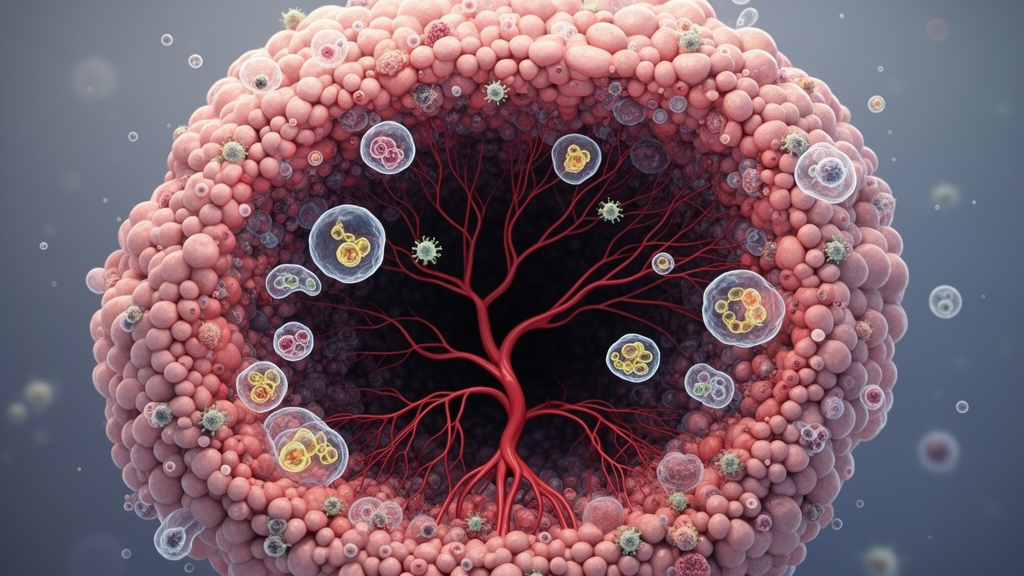
A 2026 research collection concludes that autophagy can suppress early tumor formation while also supporting the survival, progression and treatment resistance of established solid tumors. Comprising five reviews and one original tissue-expression study, the collection examines why the same cellular quality-control process can have opposing effects in different cancers, disease stages and treatment settings. Rather than presenting autophagy as a uniform drug target, the authors argue that future strategies must specify which form of autophagy is active, which cellular compartment contains it and what role it plays in a particular tumor.
Autophagy maintains metabolic and proteostatic homeostasis under physiological and stressful conditions, but its relationship with cancer is highly context-dependent. According to the editorial, its effects can vary with tumor type, genetic background, disease stage and therapeutic pressure. Autophagy may restrain early tumorigenesis, yet promote survival, adaptation, progression and resistance once a tumor is established.
The collection therefore emphasizes patient selection, treatment timing, biomarker development and a more precise definition of the relevant autophagic process. The pathway is closely integrated with several networks that control growth, metabolism, cell death and stress responses. The editorial highlights interactions with PI3K/AKT/mTOR and AMPK signaling, apoptosis and mitochondrial quality control.
Such connections can help malignant cells adapt to hypoxia, nutrient deprivation, chemotherapy, targeted therapy and other forms of stress. This biological integration helps explain the difficulty of therapeutic targeting, but it also identifies potential combination strategies. The collection considers pairing autophagy-directed interventions with targeted drugs, chemotherapy, stress-inducing agents, apoptosis-related interventions or approaches directed at mitochondrial function.
These are investigational concepts, not clinical approaches established by the collection alone. A review by Tiwari and colleagues examines chaperone-mediated autophagy, or CMA, a selective process that recognizes soluble proteins bearing KFERQ-like motifs and delivers them to lysosomes for degradation. The review places CMA within a wider set of cancer-related functions, including sustained proliferative signaling, resistance to cell death, metabolic reprogramming, invasion, metastasis, immune evasion, genome instability and tumor-promoting inflammation.
It also links the process to cellular plasticity and cancer stem-cell maintenance, both associated in the review with tumor progression and therapeutic resistance. The authors interpret these findings as evidence that targeted degradation of key regulatory proteins can affect tumor biology, while cautioning that the context-dependent functions of CMA require appropriate biomarkers and therapeutic windows before clinical translation. Autophagy also appears to change function as thyroid cancer advances, according to a review by Fang and colleagues covering papillary, follicular, medullary and anaplastic thyroid carcinomas.
The authors propose that a transition from tumor-suppressive to tumor-supporting autophagy may accompany disease progression and may represent a largely directional shift toward an adaptive state rather than a simple reversible equilibrium. Major thyroid-cancer drivers, including BRAF V600E, RAS and RET, regulate autophagy through different mechanisms, indicating that genotype may influence a tumor’s dependence on the pathway. The review presents autophagy primarily as an adaptive resistance mechanism rather than a principal oncogenic driver, consistent with the absence of established autophagy-gene mutations as major thyroid-cancer drivers.
It supports biomarker-enriched, hypothesis-driven trials of autophagy inhibitors combined with treatments that impose metabolic or cellular stress, including investigation of hydroxychloroquine with tyrosine kinase inhibitors, particularly in anaplastic thyroid carcinoma. A mini-review by Yan and colleagues focuses on mitophagy, the selective elimination of damaged mitochondria, and its relationship to treatment resistance in solid tumors. Mitochondria regulate energy production, metabolism, redox balance and apoptosis, so their quality control becomes important when malignant cells encounter therapeutic stress.
By removing damaged mitochondria, mitophagy can preserve mitochondrial fitness and support survival in unfavorable conditions. The review summarizes evidence linking this process with tumor survival, proliferation and resistance to anticancer treatments. Its therapeutic implication depends on identifying the mechanisms that make mitophagy critical in a particular cancer and treatment context.
The article does not establish a universal target or demonstrate clinical benefit, but it frames mitochondrial quality control as a possible source of exploitable dependence. The relationship between autophagy and apoptosis is particularly prominent in non-small cell lung cancer in a review by Qin and colleagues. Autophagy and apoptosis are distinct but interconnected processes, and their balance can influence whether a stressed tumor cell survives or undergoes cell death.
The authors review the molecular mechanisms and major points of crosstalk between the two pathways, then examine natural products investigated for effects on both. Four representative agents receive more detailed attention because of their range of biological activities and their capacity to influence multiple molecular targets. The review identifies an avenue for further investigation, not an established clinical substitute for existing lung-cancer treatment.
Glioblastoma supplies a specific example of adaptive resistance to pathway-targeted therapy. A review by Xia and colleagues examines autophagy-mediated resistance to PI3K/AKT/mTOR inhibition in this aggressive, highly treatment-resistant tumor, where the signaling axis is frequently activated. Pharmacological inhibition of the pathway can activate autophagy as a cytoprotective response, potentially contributing both to treatment effects and to the later survival of residual tumor cells.
The authors assess the rationale for combining autophagy inhibitors with PI3K/AKT/mTOR inhibitors to counter that response. The strategy specifically targets a survival mechanism that may be induced by treatment, but its value depends on demonstrating that autophagy is a critical dependency in the relevant glioblastoma context. It remains a therapeutic hypothesis requiring rigorous testing.
p>The collection’s only original study links virus-associated changes in autophagy-related gene expression with clinical outcomes in nasopharyngeal carcinoma. Alanazi and colleagues assessed messenger RNA expression of nine autophagy-related genes by quantitative PCR in 35 nasopharyngeal carcinoma specimens and five non-cancerous nasopharyngeal mucosa controls, while immunohistochemistry was used to evaluate protein expression. ATG3, ATG4D, ATG4C, ATG4A, ATG2B and ATG5 showed higher expression in Epstein–Barr virus-positive tumors, suggesting that viral infection may be associated with altered regulation of the autophagy machinery.
ATG3 and ATG4C protein expression was also more frequent in virus-positive tumors. Elevated ATG4B and ATG4D expression was associated with reduced distant metastasis, whereas reduced ATG4D messenger RNA levels were associated with increased metastatic rates and shorter distant metastasis-free survival. The small sample and need for validation in larger cohorts limit the conclusions, but the findings identify candidate molecules for further study as potential indicators of disease stratification and outcomes.
Taken together, the studies portray autophagy as a network of selective processes with distinct mechanisms and consequences rather than as a single switch that should always be activated or inhibited. The reviewed evidence spans protein quality control, mitochondrial maintenance, metabolism, inflammation, immune regulation, cellular plasticity, tumor progression and resistance to several treatment classes. The collection’s most consistent conclusion is methodological: researchers should identify the form and location of autophagy, the cells in which it operates, the disease stage and the treatment pressure under examination.
Combination approaches may reveal hidden tumor dependencies, but the editorial does not establish clinical efficacy for any of them. Rigorous biomarker development, validation in larger cohorts and carefully designed clinical trials will be needed to determine which patients and treatment settings could benefit from strategies directed at autophagy.
Subject of Research: Context-dependent roles of autophagy in solid tumors, inflammation and therapeutic resistance
Article Title: Editorial: Autophagy in solid tumors and inflammation: mechanisms and therapies
Article References: An, Z., Larafa, S., & Vega Rubin de Celis, S. (2026). Editorial: Autophagy in solid tumors and inflammation: mechanisms and therapies. Frontiers in Oncology, 16, Article 2016779. https://doi.org/10.3389/fonc.2026.2016779
Image Credits: AI Generated
DOI: 10.3389/fonc.2026.2016779
Keywords: autophagy, solid tumors, cancer, therapeutic resistance, chaperone-mediated autophagy, mitophagy, inflammation, thyroid cancer, glioblastoma, nasopharyngeal carcinoma, Editorial, solid
Cite Scienmag News
Nathaniel Bowman. (October 20, 2026). Autophagy’s Context-Dependent Roles Shape Solid-Tumor Treatment Strategies. Scienmag. https://scienmag.com/autophagys-context-dependent-roles-shape-solid-tumor-treatment-strategies/
Nathaniel Bowman. "Autophagy’s Context-Dependent Roles Shape Solid-Tumor Treatment Strategies." Scienmag, 20 October 2026, https://scienmag.com/autophagys-context-dependent-roles-shape-solid-tumor-treatment-strategies/. Accessed 20 October 2026.
Nathaniel Bowman. "Autophagy’s Context-Dependent Roles Shape Solid-Tumor Treatment Strategies." Scienmag. October 20, 2026. https://scienmag.com/autophagys-context-dependent-roles-shape-solid-tumor-treatment-strategies/


