

Tuesday, October 20, 2026
Science
No Result
View All Result
  • Login
  • HOME
  • SCIENCE NEWS
  • CONTACT US
  • HOME
  • SCIENCE NEWS
  • CONTACT US
No Result
View All Result
Scienmag
No Result
View All Result
Home Science News Technology and Engineering

Wastewater DNA mapping improves corrosion-risk screening in sewer network

October 20, 2026
in Technology and Engineering
Denise Maddox
By Denise Maddox Scienmag Editorial Profile - Mechanical Engineering
Reading Time: 3 mins read
0
Wastewater DNA mapping improves corrosion-risk screening in sewer network

Wastewater DNA mapping improves corrosion-risk screening in sewer network

65
SHARES
587
VIEWS
Share on FacebookShare on Twitter
ADVERTISEMENT

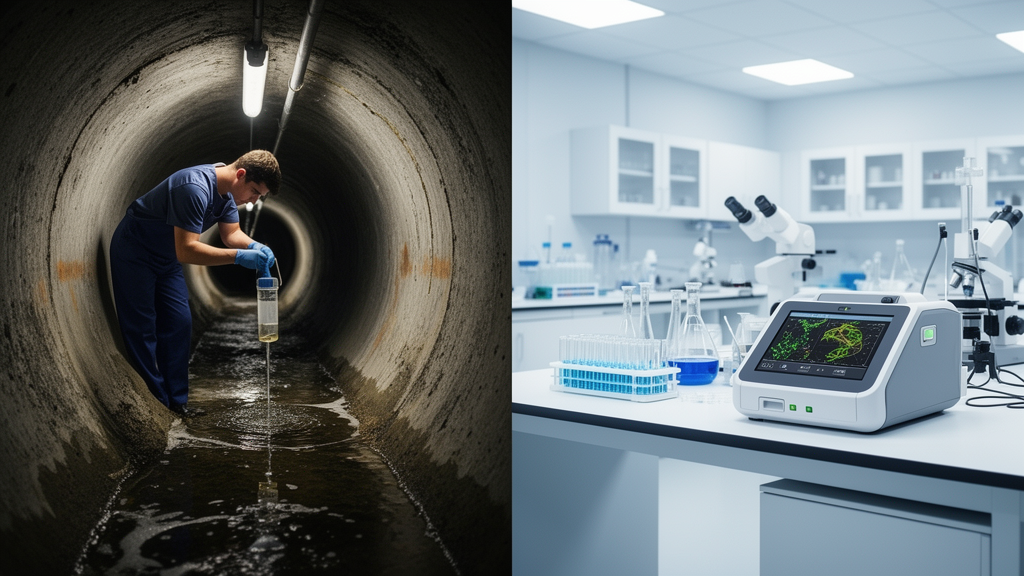
Researchers at Tohoku University have developed and tested a screening method that combines environmental DNA from sewer wastewater, ecological modeling and machine learning to identify pipe sections at elevated risk of severe corrosion. The study took place in a residential sewer network, where the approach was evaluated against inspection records covering 3,498 pipe sections. Adding microbial information improved the model’s ability to distinguish severely corroded pipes from other sections, providing municipalities with a potential way to prioritize inspection of hidden infrastructure.

Underground sewer pipes are difficult to access, making their condition hard to monitor, while conventional camera inspections are costly and time-consuming. Damaged pipes can leak wastewater and contaminate surrounding water, and severe failures can damage infrastructure above them, including causing sinkholes in city streets. Regular inspections are therefore important for aging sewer networks, but the new study addresses the practical challenge of deciding where inspections should be concentrated when resources and access are limited.

For the field test, the researchers collected wastewater samples from 40 manholes across the residential network. They measured DNA associated with sulfate-reducing bacteria, a group that can contribute to pipe corrosion. Information on pipe slope and the area of upstream buildings was used to estimate where these organisms were more likely to occur across the sewer system. These ecological estimates of bacterial habitat potential were then combined with sewer-network characteristics—pipe age, diameter and slope—and entered into a Random Forest machine-learning model. Among the bacteria studied, Desulfobulbus showed the strongest relationship with pipe deterioration and was the most important microbial predictor. Professor Daisuke Sano said the team was surprised by how useful it was for predicting corrosion and noted that among all the biological factors tested, its predictive importance ranked second only to pipe age.

The model was tested against inspection records for 3,498 pipe sections, and the results showed that adding the wastewater-derived microbial information improved its ability to identify severely corroded pipes. Rather than directly examining the condition of every buried pipe, the method uses biological signals detected in wastewater to create geographic estimates that can be compared with the sewer network. The approach thus converts microbial DNA measurements into a network-scale screening tool. It also reduces the need to treat each manhole sample as an isolated observation: the ecological model estimates potential bacterial habitat between sampling locations, while the machine-learning model relates those estimates to pipe characteristics and known inspection outcomes.

The findings support wastewater monitoring and habitat mapping as tools for directing further inspection toward sections that may warrant closer attention. Municipalities could compare the modeled risk areas with existing infrastructure records to focus camera inspections and other assessments on pipes with a higher likelihood of severe corrosion. The study tested the method in one residential sewer network using samples from 40 manholes and validation against 3,498 pipe-section inspection records, so its reported performance is specific to that setting. The method remains a screening and prioritization strategy rather than a substitute for direct inspection, which is still required to evaluate the condition of individual pipes. As Sano explained, combining wastewater DNA with ecological modeling converted invisible biological signals into geographic maps that may help cities identify high-risk areas and allocate limited inspection resources more efficiently.

Subject of Research: Environmental DNA and ecological modeling for network-scale screening of sewer-pipe corrosion risk.

Article Title: AI and wastewater DNA-based mapping helps identify sewer pipes at risk of corrosion

Article References: AI and wastewater DNA-based mapping helps identify sewer pipes at risk of corrosion. Original publication (Bibliographic details unavailable.)

Image Credits: AI Generated

DOI: Not provided

Keywords: sewer corrosion, wastewater DNA, environmental DNA, sulfate-reducing bacteria, Desulfobulbus, species distribution modeling, machine learning, Random Forest, infrastructure monitoring, pipe inspection, wastewater, DNA-based

Cite Scienmag News

Denise Maddox. (October 20, 2026). Wastewater DNA mapping improves corrosion-risk screening in sewer network. Scienmag. https://scienmag.com/wastewater-dna-mapping-improves-corrosion-risk-screening-in-sewer-network/

Denise Maddox. "Wastewater DNA mapping improves corrosion-risk screening in sewer network." Scienmag, 20 October 2026, https://scienmag.com/wastewater-dna-mapping-improves-corrosion-risk-screening-in-sewer-network/. Accessed 20 October 2026.

Denise Maddox. "Wastewater DNA mapping improves corrosion-risk screening in sewer network." Scienmag. October 20, 2026. https://scienmag.com/wastewater-dna-mapping-improves-corrosion-risk-screening-in-sewer-network/


Tags: advanced techniques for underground pipe condition assessmentcorrosion risk screening in urban water networksDesulfobulbusDNA-basedecological modeling in wastewater managementenvironmental DNAenvironmental DNA-based infrastructure assessmentinfrastructure monitoringMachine learningmachine learning for sewer pipe corrosion predictionmicrobial detection in sewer systemsmicrobial influence on sewer pipe deteriorationmicrobial markers for sewer pipe healthnon-invasive sewer inspection methodspipe inspectionRandom Forestresidential sewer network monitoringsewer corrosionsewer infrastructure maintenance prioritizationspecies distribution modelingsulfate-reducing bacteriawastewaterwastewater DNAWastewater DNA analysis for corrosion risk
Share26Tweet16
Previous Post

Research report: Biogeographical affinities of the aquatic community of Refugio Cave, a newly discovered Astyanax cave

Next Post

Cross-modal AI links speech and text for Alzheimer’s detection

Related Posts

Cross-modal AI links speech and text for Alzheimer’s detection
Technology and Engineering

Cross-modal AI links speech and text for Alzheimer’s detection

October 20, 2026
Research report: Designer Moiré Quantum Materials Enabled by Freestanding Oxide Membranes in Twisted and Hybrid Bilayers
Technology and Engineering

Research report: Designer Moiré Quantum Materials Enabled by Freestanding Oxide Membranes in Twisted and Hybrid Bilayers

October 20, 2026
Directed assembly of cathode interlayers enables efficient binary organic solar cells
Technology and Engineering

Directed assembly of cathode interlayers enables efficient binary organic solar cells

October 20, 2026
Review maps antioxidant biohybrid matrices for organ repair
Science News

Review maps antioxidant biohybrid matrices for organ repair

October 20, 2026
Free-electron laser demonstrates attosecond hard X-ray pulses
Technology and Engineering

Free-electron laser demonstrates attosecond hard X-ray pulses

October 20, 2026
Lab study tests magnetic Fe3O4 chitosan membrane for isopropanol dehydration
Technology and Engineering

Lab study tests magnetic Fe3O4 chitosan membrane for isopropanol dehydration

October 20, 2026
Next Post
Cross-modal AI links speech and text for Alzheimer’s detection

Cross-modal AI links speech and text for Alzheimer’s detection

  • Mothers who receive childcare support from maternal grandparents show more optimized

    Mothers who receive childcare support from maternal grandparents show more parental warmth, finds NTU Singapore study

    27656 shares
    Share 11059 Tweet 6912
  • University of Seville Breaks 120-Year-Old Mystery, Revises a Key Einstein Concept

    1061 shares
    Share 424 Tweet 265
  • Bee body mass, pathogens and local climate influence heat tolerance

    682 shares
    Share 273 Tweet 171
  • Researchers record first-ever images and data of a shark experiencing a boat strike

    546 shares
    Share 218 Tweet 137
  • Groundbreaking Clinical Trial Reveals Lubiprostone Enhances Kidney Function

    531 shares
    Share 212 Tweet 133
Science

Embark on a thrilling journey of discovery with Scienmag.com—your ultimate source for cutting-edge breakthroughs. Immerse yourself in a world where curiosity knows no limits and tomorrow’s possibilities become today’s reality!

RECENT NEWS

  • Five dimensions reveal how elite sport creates—and sacrifices—value
  • Cross-modal AI links speech and text for Alzheimer’s detection
  • Wastewater DNA mapping improves corrosion-risk screening in sewer network
  • Research report: Biogeographical affinities of the aquatic community of Refugio Cave, a newly discovered Astyanax cave

Categories

  • Agriculture
  • Anthropology
  • Archaeology
  • Athmospheric
  • Biology
  • Biotechnology
  • Blog
  • Bussines
  • Cancer
  • Chemistry
  • Climate
  • Earth Science
  • Editorial Policy
  • Marine
  • Mathematics
  • Medicine
  • Pediatry
  • Policy
  • Psychology & Psychiatry
  • Science Education
  • Science News
  • Social Science
  • Space
  • Technology and Engineering

Subscribe to Blog via Email

Enter your email address to subscribe to this blog and receive notifications of new posts by email.

Join 5,150 other subscribers

© 2025 Scienmag - Science Magazine

Welcome Back!

Login to your account below

Forgotten Password?

Retrieve your password

Please enter your username or email address to reset your password.

Log In
No Result
View All Result
  • HOME
  • SCIENCE NEWS
  • CONTACT US

© 2025 Scienmag - Science Magazine

Discover more from Science

Subscribe now to keep reading and get access to the full archive.

Continue reading