


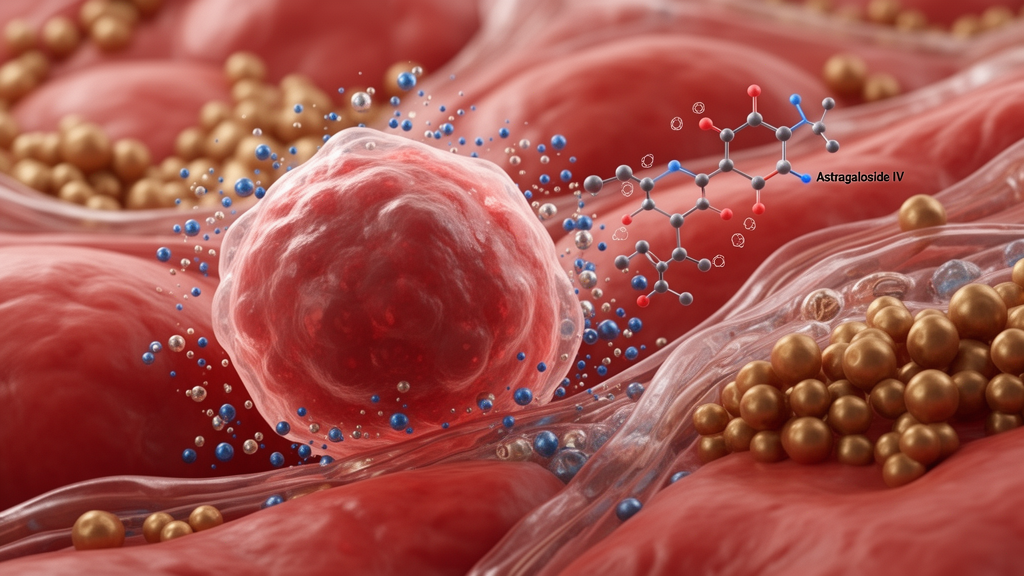
Pathological cardiac hypertrophy begins as an adaptive response to pressure overload, neurohormonal stimulation, metabolic disease or prolonged stress, but persistent enlargement of the heart can progress into fibrosis, impaired contraction and heart failure. A new review identifies a potentially important missing link between established cardiac effects of astragaloside IV, a major bioactive saponin from Astragalus species, and ferroptosis, an iron-dependent form of regulated cell death. The authors say the convergence is biologically compelling, but emphasize that it remains a hypothesis: no experiment has yet shown that suppression of ferroptosis mediates the anti-hypertrophic effect of astragaloside IV in a pathological cardiac hypertrophy model.
Ferroptosis differs from apoptosis and other canonical cell-death programs. It emerges when bioavailable iron, oxidizable phospholipids and inadequate antioxidant defenses combine to drive extensive lipid peroxidation. Cardiomyocytes are particularly exposed because their high energy demand makes them vulnerable to disturbances in mitochondrial function, iron handling and redox balance. Yet the presence of iron accumulation, oxidized lipids or depleted glutathione in a diseased heart is not, by itself, sufficient evidence that ferroptosis caused the observed remodeling. The most persuasive studies combine biochemical measurements, tissue or cellular context, and rescue experiments using ferroptosis-selective compounds or genetic interventions.
Several central defense mechanisms regulate ferroptosis. The system xc−–glutathione–GPX4 axis imports cystine, supports glutathione production and enables GPX4 to neutralize phospholipid hydroperoxides. Additional protection comes from the FSP1–coenzyme Q10 and GCH1–tetrahydrobiopterin pathways, while Nrf2 coordinates antioxidant and iron-handling programs. On the damaging side, transferrin-receptor-mediated iron uptake, ferritinophagy, and the availability of polyunsaturated phospholipids influence susceptibility. ACSL4 and LPCAT3 help create oxidation-prone membrane substrates, and p53 and BACH1 can weaken glutathione synthesis, iron storage or export under particular conditions. These interconnected systems offer several plausible points at which a drug could alter ferroptosis risk.
Experimental cardiac models support involvement of ferroptosis in hypertrophic disease, although the strength of the evidence differs by model. Cardiomyocyte-specific deletion of the ferritin heavy-chain gene produced severe cardiac injury under a high-iron challenge, with glutathione depletion, lipid peroxidation and hypertrophic cardiomyopathy; ferrostatin-1 and cardiomyocyte-specific Slc7a11 overexpression offered protection. Pressure-overload, angiotensin II, phenylephrine and particulate-matter models have also linked altered lipid metabolism, iron accumulation or impaired GPX4 defense with adverse remodeling. In one pressure-overload model, cardiomyocyte-specific Acsl4 deletion reduced ferroptosis-associated injury and remodeling, while ACSL4 overexpression worsened the phenotype. These interventions strengthen the case that ferroptosis can contribute to cardiac damage, but they do not establish ferroptosis as a universal driver of hypertrophy.
Astragaloside IV, also known as astragaloside A, is a cycloartane-type triterpene saponin with antioxidant, anti-inflammatory, antifibrotic and metabolic effects in experimental cardiovascular disease. Its anti-hypertrophic activity has been reported across pressure-overload, inflammatory, β-adrenergic, hypoxic, developmental and diabetic models. The compound has been linked to calcium–calcineurin and NFAT signaling, NF-κB/PGC-1α metabolic regulation, calpain-1/mTOR and calpain-1/CaMKII pathways, and EGR1–SIRT1–PPARα–SCAD signaling. In mice subjected to aortic constriction, for example, astragaloside IV reduced cardiac enlargement, collagen deposition and loss of function while affecting the SIKE–TBK1/PI3K/AKT pathway. These findings establish a broad anti-remodeling effect, but they do not identify ferroptosis as its mechanism.
Direct cardiac evidence does show that astragaloside IV can suppress ferroptosis-associated injury in diseases other than pathological hypertrophy. In rats with adriamycin cardiotoxicity, treatment reduced oxidative injury and ferroptosis-related changes while activating Nrf2 and increasing GPX4. In diabetic cardiomyopathy, it lowered myocardial lipid accumulation, intracellular ferrous iron and lipid peroxidation; forced expression of the fatty-acid transporter CD36 weakened these protective effects, implicating lipid handling. In chronic heart failure after coronary ligation, astragaloside IV increased glutathione, SLC7A11 and GPX4 while reducing p53, lipid peroxidation and myocardial iron. During ischemia–reperfusion injury, it was associated with preserved mitochondrial function and regulation of GPX4 stability through 14-3-3η. Evidence from brain, lung, kidney, liver, retina and other tissues adds biological plausibility, but cannot substitute for hypertrophy-specific testing.
The proposed mechanism brings these two literature streams together at several recurring molecular nodes. Astragaloside IV may strengthen Nrf2-centered antioxidant defense, restrain p53-associated suppression of SLC7A11/GPX4, reduce CD36-dependent lipid uptake, preserve GPX4 stability and protect mitochondria. Its established actions in hypertrophy also overlap with pathways that influence lipid and redox environments, including calcium–calcineurin signaling, calpain-CaMKII activity, inflammatory stress and fatty-acid metabolism. The authors propose that this combination could lower ferroptotic susceptibility, preserve stressed cardiomyocytes and thereby limit maladaptive remodeling. A further dimension involves fibroblasts: human heart-failure analyses have linked a fibroblast-enriched ferroptosis signature to activation and fibrosis, although it is unknown whether astragaloside IV alters ferroptosis in cardiac non-myocyte populations.
Testing the idea will require experiments designed to establish direction and necessity rather than merely find correlated markers. Astragaloside IV should be tested in mechanistically distinct hypertrophy models, including transverse or abdominal aortic constriction, isoproterenol and angiotensin II, with dose-response and exposure measurements. Ferroptosis assessment should combine iron status, C11-BODIPY or other lipid-peroxidation probes, the GSH/GSSG ratio, GPX4 and SLC7A11, and proteins such as ACSL4, PTGS2 and FTH1. Researchers could then impair GPX4/SLC7A11 defense or Nrf2 selectively in cardiomyocytes, induce ferroptosis with carefully titrated RSL3 or erastin, and attempt rescue with ferrostatin-1 or liproxstatin-1. If selective ferroptotic stress removes the benefit of astragaloside IV while rescue restores it, that would support mediation rather than coincidence.
Translation remains a substantial obstacle. Purified astragaloside IV has poor intestinal permeability and low oral bioavailability, and gut bacteria can convert it into metabolites such as cycloastragenol. It remains unclear whether these metabolites are active in the heart, so studies must distinguish purified compound from complex herbal injections, combinations and other Astragalus preparations. Drug-delivery systems, including a conductive bioadhesive hydrogel developed for controlled myocardial delivery after infarction, may improve local exposure, although such platforms cannot be assumed to reproduce the behavior of free astragaloside IV. Prospective human trials of purified astragaloside IV for pathological cardiac hypertrophy are also unavailable. Until direct mechanistic and pharmacokinetic studies are completed, the compound should be described as a promising experimental probe with possible anti-ferroptotic action, not as a proven ferroptosis-based treatment. The proposed synthesis nevertheless gives the field a concrete roadmap for testing whether the connection is causal.
Subject of Research: Whether astragaloside IV suppresses ferroptosis as a mechanism for reducing pathological cardiac hypertrophy
Article Title: Astragaloside IV and Ferroptosis Modulation in Pathological Cardiac Hypertrophy: Current Evidence, an Integrative Hypothesis, and Future Directions
Article References: Liu, P., & Deng, Y. (2026). Astragaloside IV and Ferroptosis Modulation in Pathological Cardiac Hypertrophy: Current Evidence, an Integrative Hypothesis, and Future Directions. Pharmacology Research & Perspectives, 14(6), Article e70334. https://doi.org/10.1002/prp2.70334
Image Credits: AI Generated
DOI: 10.1002/prp2.70334
Keywords: astragaloside IV, cardiac hypertrophy, ferroptosis, cardiomyocytes, lipid peroxidation, GPX4, Nrf2, heart failure, iron metabolism, cardiac fibrosis, Astragaloside, Modulation
Cite Scienmag News
Ophelia Keating. (October 20, 2026). Astragaloside IV Emerges as a Candidate Ferroptosis Link in Heart Hypertrophy. Scienmag. https://scienmag.com/astragaloside-iv-emerges-as-a-candidate-ferroptosis-link-in-heart-hypertrophy/
Ophelia Keating. "Astragaloside IV Emerges as a Candidate Ferroptosis Link in Heart Hypertrophy." Scienmag, 20 October 2026, https://scienmag.com/astragaloside-iv-emerges-as-a-candidate-ferroptosis-link-in-heart-hypertrophy/. Accessed 20 October 2026.
Ophelia Keating. "Astragaloside IV Emerges as a Candidate Ferroptosis Link in Heart Hypertrophy." Scienmag. October 20, 2026. https://scienmag.com/astragaloside-iv-emerges-as-a-candidate-ferroptosis-link-in-heart-hypertrophy/


