


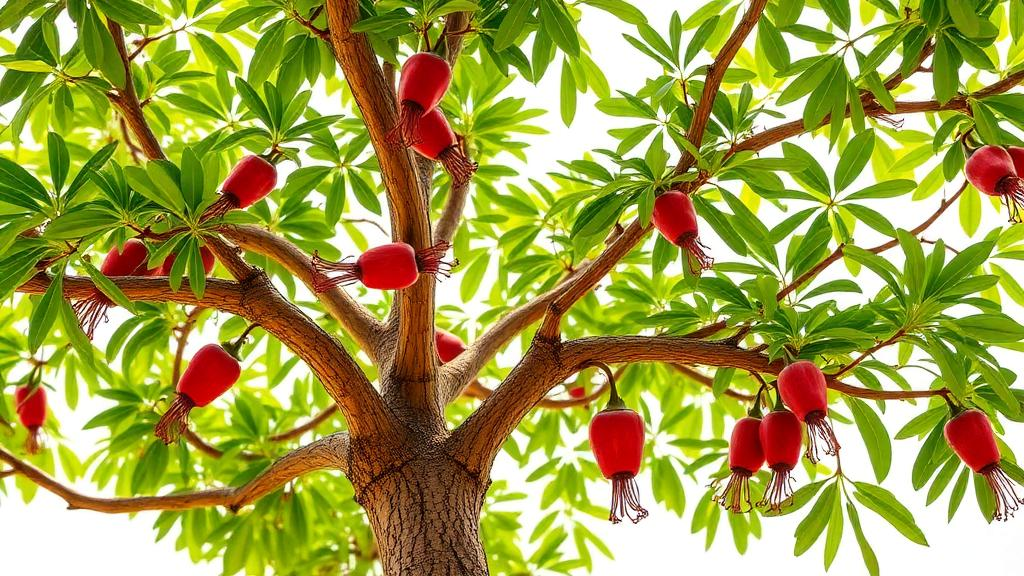
A towering evergreen that has shaded South Asian healing traditions for centuries is now at the center of one of the most ambitious efforts to bridge Ayurveda and modern evidence-based nutrition. A comprehensive review published in Food Science & Nutrition examines Terminalia arjuna, a member of the Combretaceae family that grows 20 to 30 meters tall across India, Sri Lanka, Burma, and Mauritius, and argues that the tree’s bark deserves a central place in the next generation of phytomedicine and functional foods. The timing is significant: at the 78th World Health Assembly in May 2025, the World Health Organization launched its Global Traditional Medicine Strategy 2025–2034, signaling that plant-based medicine is moving from the margins of healthcare toward rigorous scientific validation. Herbal medicines already serve as a primary source of healthcare for roughly 80 percent of the world’s population, and the review makes the case that Arjuna’s bark, long prized as a cardiotonic in classical texts such as the Charaka Samhita and Astang Hridayam, may finally be ready to make the leap from tradition to standardized, clinically validated nutraceutical products.
The scientific foundation of that leap rests on a remarkably rich phytochemical profile. Arjuna bark contains four major classes of bioactive compounds: triterpenoids including arjunic acid, arjunolic acid, arjunetin, arjungenin, and arjunglucosides; fifteen varieties of tannins, among them casuarinin and punicalagin; flavonoids such as luteolin, quercetin, kaempferol, and baicalein; and phenolic acids like gallic and ellagic acid. Together with minerals including copper, zinc, magnesium, and calcium, these constituents underpin a pharmacological portfolio spanning anti-tumoral, anti-inflammatory, antioxidant, antimicrobial, hypolipidaemic, wound-healing, cardioprotective, and anti-diabetic activities. But the review also reveals a crucial technical caveat: the chemistry is not uniform. Stem bark is the principal source of arjunic and arjunolic acids, while root bark yields distinct glycosides, and HPLC sampling across Indian geographic locations found substantial site-to-site variation in arjungenin and arjunic acid content. Extraction method matters too—alcoholic solvents efficiently pull out arjunic acid while hexane does not, and ultrasound-assisted extraction preserves more phenolics and flavonoids than conventional heating. Different solvents yielded only nine phytochemicals in common out of thirty identified compounds, meaning that two Arjuna products on a shelf may be chemically different medicines.
Nowhere is the molecular story more striking than in cancer research, where Arjuna’s compounds converge on a shared lethal strategy against malignant cells: mitochondrial, ROS-driven, caspase-mediated apoptosis. In non-small-cell lung cancer lines A549 and H460, arjunic acid triggers apoptotic body formation, PARP cleavage, and a JNK-dependent endoplasmic reticulum stress pathway involving IRE1α, ATF4, and CHOP—when researchers blocked JNK with the inhibitor SP600125, the cytotoxicity vanished, confirming the pathway’s centrality. Casuarinin, a hydrolysable tannin from the bark, tells an equally elegant story of molecular flexibility. In A549 lung cancer cells it induces G0/G1 cell-cycle arrest through p53 upregulation and p21/WAF1 induction, yet in MCF-7 breast cancer cells it elevates p21 without touching p53, reaching the same endpoint through a different door. The compound also activates the extrinsic Fas/FasL and caspase-8 pathway and shows anti-herpes activity against HSV-2 by disrupting viral glycoproteins C and D, blocking viral entry at concentrations with no toxicity to kidney cells.
Animal models have pushed the evidence beyond the dish. Arjunolic acid reduced tumor growth in Ehrlich ascites carcinoma mice by suppressing TGF-β1 signaling, restoring immune balance, and activating caspase-3, while ethanolic bark extract prolonged survival in Dalton’s lymphoma mice by 60 to 87.5 percent depending on dose and extended lifespan by roughly 35 percent in a solid tumor model. In a chemoprevention twist, oral administration of the extract at 500 milligrams per kilogram reduced tumor incidence and burden in hamsters exposed to the carcinogen DMBA, normalizing antioxidant status along the way. The most futuristic branch of this work involves nano-engineering: self-assembled arjunolic acid forms liposome-like vesicles that selectively enter cancer cells and kill them through a TNF-α-driven, ROS-dependent pathway; biosynthesized silver and selenium nanoparticles from the bark showed potent cytotoxicity against HepG2, PC3, and MCF-7 cells while sparing normal Vero cells; and copper-silver multi-walled carbon nanotube hybrids extended the approach across multiple cancer lines. The honest limitation, the review stresses, is that none of these nano-formulations has been tested for pharmacokinetics, toxicity, or safety in living organisms, and no human cancer trial of Arjuna exists at all.
Cardiovascular protection, by contrast, is where Arjuna’s evidence is strongest—and where its traditional reputation as a heart remedy finds its most concrete modern support. Across three distinct toxic-injury models, the extract and its constituents consistently shield cardiomyocytes through antioxidant and anti-apoptotic mechanisms. Against cobalt chloride-induced hypoxia in H9c2 heart cells, pretreatment restored viability and rebalanced the Bax/Bcl-2 apoptotic switch. Against doxorubicin, the chemotherapy drug whose cardiotoxicity limits its clinical use, arjunolic acid suppressed p38/JNK-driven Bax translocation, preserved mitochondrial membrane potential, and prevented cytochrome c release—a finding that raises the possibility of Arjuna as a cardioprotective adjunct for patients undergoing chemotherapy. Against isoproterenol-induced myocardial necrosis, the extract elevated antioxidant enzymes and blocked JNK/c-jun signaling. Deeper mechanistic work revealed that arjunolic acid acts as a direct PPARδ agonist that also inhibits TAK1, blocking non-canonical TGF-β signaling to regress cardiac fibrosis—when researchers silenced PPARδ, the anti-fibrotic effect disappeared entirely. In atherosclerosis-prone ApoE-deficient mice, aqueous extract downregulated CD36, MMP-9, VCAM-1, and ICAM-1 while activating cholesterol-efflux regulators PPAR-γ and LXR-α, reducing plaque burden with effects the study reported as comparable to atorvastatin, though from a single animal experiment rather than a head-to-head trial.
The protective reach extends well beyond the heart. Arjunolic acid guards the liver against acetaminophen overdose by inhibiting CYP2E1, the enzyme that converts the painkiller into its toxic metabolite NAPQI, and against cadmium, arsenic, and fluoride by restoring glutathione balance and antioxidant enzymes. In the kidney, it counters cisplatin nephrotoxicity by suppressing NF-κB, TGF-β, and caspase cascades, while aqueous extract reduces calcium oxalate crystallization and crystal adhesion to renal epithelial cells—the underlying process of kidney stones—with four novel antiurolithiatic proteins recently identified from the bark. Neuroprotection is emerging too: in rat stroke models the extract reduced infarct volume and preserved blood-brain barrier tight-junction proteins, and at simulated high altitude it reversed hypobaric hypoxia-induced renal and cerebrovascular damage through an atrial natriuretic peptide-mediated mechanism. In diabetes models, Arjuna works on both ends of the metabolic problem—boosting insulin availability and IRS-1/PI3K/Akt signaling while directly inhibiting DPP-IV with activity close to the drug sitagliptin, plus α-amylase and α-glucosidase to blunt post-meal glucose spikes, all while protecting the pancreas, retina, and heart from hyperglycemic injury through AMPK-mTOR-HO-1 autophagy and NF-κB/MAPK suppression.
Human clinical data, though limited, is genuinely encouraging and concentrated in cardiology. A double-blind trial in 116 coronary artery disease patients found that 500 milligrams of extract twice daily for three to six months lowered triglycerides and VLDL cholesterol more effectively than atorvastatin alone while suppressing TNF-α and IL-6 and raising IL-10. A long-term observational study followed 35 chronic CAD patients taking the extract alongside standard therapy for four to five years with no adverse effects on blood, liver, or kidney parameters, no hospitalizations, and no deaths—though without a randomized control group it cannot isolate the herb’s contribution. In heart failure, the results diverge instructively: a tiny 12-patient trial in severe refractory cases reported improved ejection fractions sustained over 28 months, but a larger, better-powered 100-patient trial found no ejection-fraction benefit, instead showing gains in exercise tolerance, quality-of-life scores, and red-cell antioxidant markers. Additional trials reported reduced ischemic mitral regurgitation after heart attack, improved endothelial function in chronic smokers, improved venous clinical severity in chronic venous insufficiency, and—remarkably—fasting blood sugar and HbA1c reductions comparable to sitagliptin when combined with metformin in type 2 diabetes. A dermatological study even found that a 0.25 percent extract cream cut transepidermal water loss by 46 percent and quadrupled skin moisturization, opening a cosmeceutical frontier.
Food scientists are already translating this pharmacology into edible formats. Microencapsulated Arjuna extract blended into a vanilla chocolate milk drink significantly reduced triglycerides, total cholesterol, LDL, and VLDL in hypercholesterolemic rats over a 60-day trial while preserving the beverage’s flavor and sensory properties. Seven percent ethanolic bark extract extended the shelf life of ghee several-fold in accelerated oxidation testing, and graded concentrations of the extract in goat meat batter reduced lipid oxidation and spoilage organisms over nine days of storage. In aquaculture, dietary bark powder at 10 grams per kilogram of feed enhanced immune markers in rohu fish over 90 days. Arjuna gum itself has emerged as a natural biopolymer for pH-responsive microbeads and controlled-release gels, and calcium-alginate edible films containing the extract improved the oxidative and microbial stability of chevon sausages—positioning the tree as both ingredient and packaging technology.
Safety data are reassuring but incomplete, and the review is candid about the gaps. Short-term toxicity is low: hydroalcoholic bark extract showed no mortality at 2,000 milligrams per kilogram and no harmful effects at 1,000 milligrams per kilogram daily for 28 days, and both hydroalcoholic and methanolic bark extracts were negative in Ames and chromosomal aberration tests. Yet a methanolic leaf extract had an LD50 of 900 milligrams per kilogram, and alcoholic bark extract reduced testicular steroidogenic activity and testosterone in male rats after 21 days—findings that cannot be extrapolated across preparations. Pharmacokinetic studies show the extracts inhibit CYP3A4, CYP2D6, and CYP2C9 in vitro, with whole-extract composition, not individual triterpenoids, driving the interaction risk, and a nanosuspension formulation boosted oral bioavailability 1.33-fold. The path forward, the authors argue, requires larger multi-center placebo-controlled trials with standardized, chemically characterized formulations, harmonized endpoints, nanotechnology and microencapsulation for bioavailability, and multiomic approaches enabling precision nutrition. If those pieces come together, a tree worshipped in ancient Sanskrit medical texts may finally earn its place not just in tradition, but in the evidence-based architecture of modern food and health.
Subject of Research: Phytochemistry, pharmacology, clinical evidence, and nutraceutical applications of Terminalia arjuna bark
Article Title: Harnessing Terminalia arjuna in Next Generation Phytomedicine: Cutting Edge Nutraceutical Trends Shaping Food and Health
Article References: Banerjee, I., Nazeerulla, F., Paul, M. K., Bhutia, S. K., Basu, D., & Mukhopadhyay, S. (2026). Harnessing Terminalia arjuna in Next Generation Phytomedicine: Cutting Edge Nutraceutical Trends Shaping Food and Health. Food Science & Nutrition, 14(10), Article e72352. https://doi.org/10.1002/fsn3.72352
Image Credits: AI Generated
DOI: 10.1002/fsn3.72352
Keywords: Terminalia arjuna, Ayurveda, phytomedicine, nutraceuticals, cardioprotection, arjunolic acid, arjunic acid, casuarinin, functional foods, antioxidants, nanoparticles, clinical trials
Cite Scienmag News
Alan Morgan. (October 1, 2026). Ancient Heart Tree Terminalia arjuna Emerges as Next-Generation Nutraceutical Star. Scienmag. https://scienmag.com/ancient-heart-tree-terminalia-arjuna-emerges-as-next-generation-nutraceutical-star/
Alan Morgan. "Ancient Heart Tree Terminalia arjuna Emerges as Next-Generation Nutraceutical Star." Scienmag, 1 October 2026, https://scienmag.com/ancient-heart-tree-terminalia-arjuna-emerges-as-next-generation-nutraceutical-star/. Accessed 4 October 2026.
Alan Morgan. "Ancient Heart Tree Terminalia arjuna Emerges as Next-Generation Nutraceutical Star." Scienmag. October 1, 2026. https://scienmag.com/ancient-heart-tree-terminalia-arjuna-emerges-as-next-generation-nutraceutical-star/


