

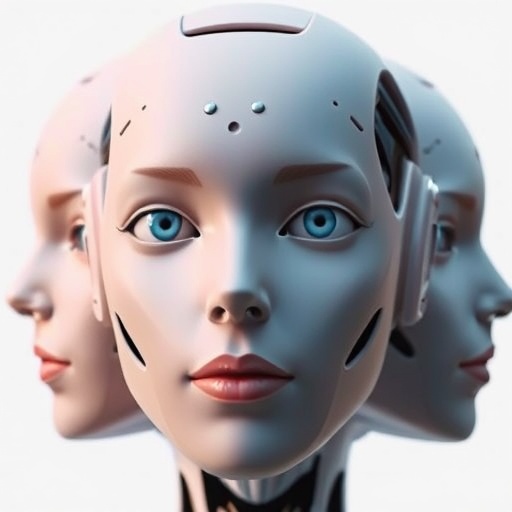
A new study has revealed a disturbing quirk of modern artificial intelligence: faces generated by the latest AI models are judged to be significantly more trustworthy than photographs of real human faces. The findings, published in the Journal of Vision, raise urgent alarms about the accelerating threat of fraud, identity theft, and misinformation in a world where hyper-realistic synthetic faces can be conjured by anyone with a web browser.
The research was led by Alexis McGuire, a PhD student in psychology at Lancaster University, working with colleagues at Lancaster, Stanford University, and the University of California, Berkeley. The team wanted to know how well people can distinguish genuine faces from those spat out by two distinct generations of AI, and, crucially, how those synthetic faces are perceived on a deeper social dimension—trustworthiness. To do this, they recruited 169 participants and showed them a randomized set of 96 faces that varied across race, gender, and age. Half the faces were real photographs, while the other half were created by either a Generative Adversarial Network, or GAN, the older style of face-synthesis engine, or by a newer diffusion model, the technology behind tools like Stable Diffusion and DALL‑E.
When participants were simply asked to label each face as “real” or “AI-generated,” their average accuracy was a dismal 58.4 percent—only a shade better than flipping a coin. Even more counterintuitively, faces produced by the newer diffusion models were rated as less realistic than those made by GANs. One might expect that a face that looks less realistic would also be less likely to be trusted. The opposite turned out to be true.
In a second experiment, a fresh set of participants rated the trustworthiness of the same faces on a seven-point scale. Real human faces scored the lowest, with an average trust rating of just 4.03 out of 7. GAN-generated faces crept up to 4.36. But the diffusion-model faces, those very same images that had been deemed the least realistic, soared to an average trust rating of 4.70, making them the most trustworthy of the bunch. This paradox suggests that our brains process the authenticity of a face and its social trustworthiness using at least partially separate neural and psychological mechanisms.
What might explain the diffusion model’s advantage in generating trustworthy visages? Diffusion models work by learning to reverse a process of gradually adding noise to an image. When creating a face, they essentially start from a random static fuzz and iteratively refine it, guided by a text prompt, until a coherent portrait emerges. Unlike GANs, which pit two neural networks against each other, diffusion models tend to produce faces with highly balanced, symmetrical features and soft, almost idealised skin textures—characteristics that subtly mimic the “average face” effect, in which composite, morph-like faces are consistently rated as more attractive and trustworthy. The resulting images may lack the fine-grain imperfections that our visual system uses to detect realism, yet they simultaneously push deeply embedded social buttons that signal benevolence and honesty.
The study’s authors warn that this trust-enhancing property of the newest AI faces is not a trivial lab curiosity. Cheap, accessible generative AI tools have fundamentally lowered the barrier for creating fake identities at scale. Bad actors can now manufacture an endless supply of trustworthy-looking faces to populate fake social media profiles, romance scams, and fabricated news anchors. “AI-generated images are becoming more sophisticated and more accessible,” McGuire said. “As a society, we are increasingly exposed to artificially generated faces—often in nefarious and exploitative scenarios, such as political disinformation, financial and identity fraud, and catfishing.” Because the diffusion-synthesised faces feel so intuitively reliable, warnings and watermarks may struggle to overcome the gut-level impression that the person behind the image is honest.
The cognitive disconnect between realism and trust has practical consequences. Traditional media literacy programmes often teach people to look for obvious glitches—asymmetric eyes, unrealistic reflections, or strange ear shapes. Yet diffusion models have become adept at erasing those tells, and even when some subtle cues remain, the current work shows that a lack of full realism does not diminish, and may even enhance, the face’s trustworthiness. This means that the instinct to distrust something that looks slightly “off” may not kick in if the face instead feels instinctively warm and reliable. We are, in effect, hardwired to be duped by the very features that make these images less photographically perfect.
The broader societal implications are stark. In an information ecosystem where video and still imagery can be fabricated en masse, the erosion of visual trust is not limited to obviously malicious deepfakes. The mere knowledge that any face could be synthetic chips away at the background assumption that an image corresponds to a real person. This could undermine interpersonal trust in online settings, from job recruitment and dating apps to telehealth and online education. The researchers are now running a wider anonymous survey to understand individual differences in people’s ability to detect AI-generated faces, a step they hope will help design countermeasures, but they caution that purely perceptual training may not be sufficient.
The study, titled “AI-Generated Faces are Becoming More Trustworthy,” was funded by the Centre for Research and Evidence on Security Threats and Security Lancaster. As generative AI hurtles forward, it seems the most dangerous capability is not simply mimicking reality, but rather manufacturing a synthetic reality that feels warmer, kinder, and more believable than the truth.
Subject of Research: People
Article Title: AI-generated faces are becoming more trustworthy
News Publication Date: 7-Jul-2026
Web References: 10.1167/jov.26.7.3
References: McGuire, A. et al. AI-Generated Faces are Becoming More Trustworthy. Journal of Vision 26, 7, 3 (2026).
Image Credits: Lancaster University
Keywords: AI-generated faces, trustworthiness, diffusion models, generative adversarial networks, visual perception, deepfakes, misinformation, social cognition


