

In the relentless battle against the American opioid epidemic, which now claims more than 80,000 lives each year from overdoses, a quiet revolution in medication delivery has been unfolding in pharmacies and clinics across the country. A Rutgers Health study has documented a dramatic tenfold surge in the use of a long-acting injectable form of buprenorphine, the frontline medication for opioid use disorder, signaling a potential paradigm shift in how the healthcare system treats one of its most persistent public health crises. The findings reveal not only the speed of clinical adoption but also a patchwork landscape of access heavily shaped by state-level policies and insurance design.
Buprenorphine is a partial agonist at the mu-opioid receptor, meaning it binds tightly to the same brain receptors activated by full agonists like fentanyl or heroin but produces a muted, ceiling-limited response. This pharmacological profile achieves several critical goals: it satiates the neurobiological craving for opioids, normalizes the dysregulated stress and reward circuitry that chronic drug use leaves in its wake, and, because of its high receptor affinity, blocks illicit opioids from binding and triggering life-threatening respiratory depression. The medication’s long half-life had already made daily sublingual tablets or films a cornerstone of medication-assisted treatment, yet the daily self-administration model carries significant adherence burdens and fluctuating plasma concentrations that can leave patients vulnerable during trough periods.
The long-acting injectable version, first approved by the Food and Drug Administration in 2018, engineers a depot formulation that is administered subcutaneously or intramuscularly once every month. After injection, the drug precipitates into a solid crystalline mass within the tissue, gradually dissolving and releasing a steady stream of buprenorphine into the systemic circulation. This depot mechanism produces remarkably stable plasma levels, avoiding the daily peak-and-trough oscillations that can trigger breakthrough withdrawal symptoms or craving, and it renders the patient’s receptor occupancy constant for four full weeks, an uninterrupted shield against both relapse and accidental overdose from contaminated street drugs.
The study, published in Health Affairs, analyzed a staggering national dataset of pharmacy prescription claims involving more than four billion prescriptions dispensed annually between 2021 and 2024. By isolating claims for buprenorphine molecules and then disaggregating them by route of administration, payer type, prescriber specialty and geographic location, the research team mapped the real time diffusion of the injectable technology. What they observed was a growth curve steep enough to reshape the national treatment landscape: the absolute volume of injectable buprenorphine prescriptions multiplied by a factor of ten over the three-year window, even as oral buprenorphine dispensing remained largely stable, indicating a genuine substitution and expansion effect rather than a simple shift within a static market.
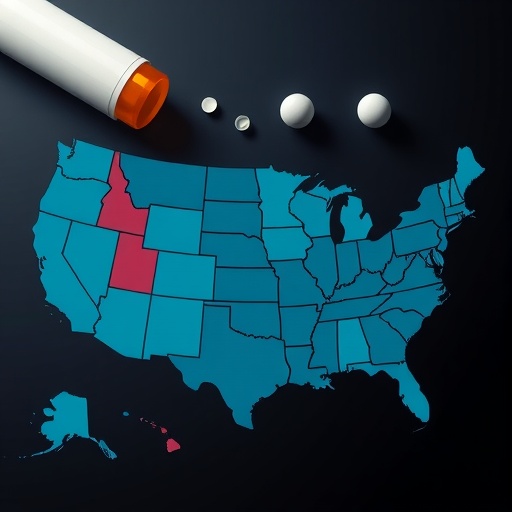
Beneath the aggregate national trend, however, the researchers uncovered vast territorial disparities. In some states, the injectable formulation accounted for less than one percent of all buprenorphine prescribed by 2024, while in others it represented nearly thirteen percent. This more than tenfold difference cannot be explained by underlying rates of opioid use disorder alone, pointing instead to structural factors such as prior authorization requirements, provider education gaps, and formulary placement. Pennsylvania, Louisiana, Alaska and Ohio emerged as the states with the highest injection rates, a distinction the researchers attribute in part to deliberate coverage decisions made by their Medicaid managed-care plans that removed administrative barriers and allowed patients and clinicians to select the monthly option without navigating bureaucratic thickets.
The dominance of Medicaid as a payer is a defining feature of this early adoption curve. Because a disproportionate share of individuals with severe opioid use disorder qualify for the joint federal-state program through disability or income eligibility, the policies that state Medicaid directors set around reimbursement and utilization management become de facto determinants of treatment access. Where Medicaid carved out a clear and easy pathway for injectable buprenorphine, prescriptions followed; where it erected hurdles such as step-therapy mandates that require failure on oral formulations first, the technology remained largely confined to academic medical centers and a handful of early-adopting practitioners. The lesson, according to the researchers, is that financing levers are clinical levers in addiction medicine.
Another notable shift involves who is writing the prescriptions. The rapid uptake occurred disproportionately among advanced practice clinicians, specifically nurse practitioners and physician assistants, who now account for an expanding share of the buprenorphine prescriber workforce. Federal regulatory changes that relaxed the waiver-requirement rules for prescribing buprenorphine have dovetailed with an expanding scope-of-practice movement across states, enabling these clinicians to manage chronic, relapsing opioid use disorder much as they manage hypertension or diabetes. This provider-demographic finding suggests that the injection’s logistical simplicity—a single monthly visit with no need to manage daily pill counts—aligns well with primary care workflows, where the overwhelming majority of advanced practice clinicians operate.
From a clinical outcomes standpoint, the benefits of the depot injection may be most pronounced for patients who float on the highest-risk margins of the opioid crisis. Individuals recently discharged from emergency departments after a nonfatal overdose, those navigating unstable housing or shelter systems, and people leaving correctional facilities are all notoriously vulnerable to relapse and fatal re-overdose in the weeks following treatment initiation. The injection’s “forgiving” pharmacokinetics eliminate the daily window of self-discontinuation, providing an entire month of guaranteed receptor blockade during the transitional periods when lapses are biologically and environmentally most likely. Stephen Crystal, director of the Rutgers Center for Health Services Research, underscored that this sustained protection could be lifesaving precisely for these highest-acuity populations, turning the medication from a daily negotiation into a monthly insurance policy against death.
The findings collectively articulate a clear but incomplete success story. On one hand, the injectable technology has diffused far faster than many skeptical health-services researchers predicted, proving that a long-acting formulation can gain serious traction in a reimbursement environment often biased toward low-cost generics. On the other hand, the extreme state-to-state variability means that a person’s chance of receiving what may be the most protective form of buprenorphine remains a lottery determined largely by Zip code and insurer. As policymakers search for levers to flatten the still-rising overdose curve, the study offers a data-driven argument that removing administrative friction, empowering non-physician prescribers, and aligning Medicaid’s incentives with clinical evidence could accelerate a treatment transformation already saving thousands of lives.
Subject of Research: People
Article Title: Use of Long-Acting Injectable Buprenorphine for Opioid Use Disorder Increased Tenfold From 2021 to 2024
News Publication Date: 7-Jul-2026
Web References: Rutgers Center for Health Services Research; Health Affairs DOI: 10.1377/hlthaff.2025.01584
References: Williams AR, Olfson M, Samples H, Hua J, Crystal S. Uptake and Geographic Variation of Long-Acting Injectable Buprenorphine in the United States, 2021–24. Health Affairs. Published online July 7, 2026.
Image Credits: Not available
Keywords: Opioid use disorder, Buprenorphine, Long-acting injectable, Medication-assisted treatment, Mu-opioid receptor partial agonist, Pharmacokinetics, State policy variation, Medicaid, Advanced practice clinicians, Overdose prevention, Health services research


