

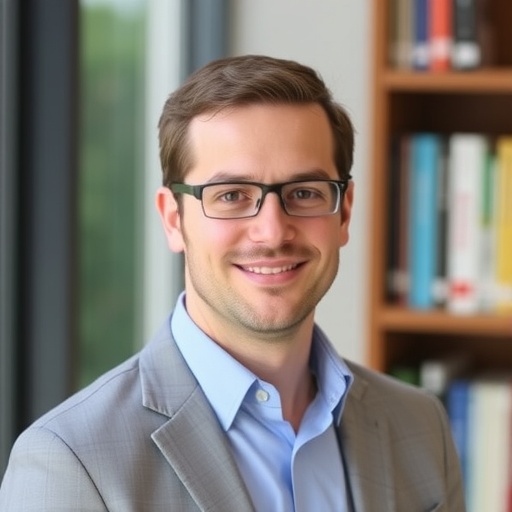
In a nondescript office at the Simon-Skjodt Center for the Prevention of Genocide, a new kind of sentinel is being trained—not a person, but an algorithm. Assistant Professor Meghan Garrity of George Mason University’s Schar School of Policy and Government has begun a year-long fellowship to build predictive models that could detect the faint, early tremors of mass atrocities before the killing starts. The project, backed by a $30,000 award from the United States Holocaust Memorial Museum, marks a decisive turn in a field long haunted by reactive policy. Garrity’s work, spanning June 2026 to May 2027, will produce a full-length manuscript and a policy memo designed to place computational tools in the hands of decision-makers.
The technical ambition is formidable. Forecasting genocide is not like predicting weather; the underlying human systems are chaotic, layered with propaganda networks, shifting political alliances, and the deliberate obfuscation of perpetrators. Garrity’s approach grafts political science onto machine learning, using structured historical databases of past atrocity events—the Political Instability Task Force’s State Failure dataset, the Uppsala Conflict Data Program’s georeferenced violence records, and the Atrocity Forecasting Project’s risk indicators—to train classifiers that recognize patterns of escalation. Variables such as abrupt changes in executive constraints, surges in hate speech frequency scraped from online media, or unusual population movements tracked via satellite imagery are fed into gradient-boosted trees and recurrent neural networks that learn to assign probability scores for onset within specific subnational regions over six-month windows.
This is not mere academic cartography of disasters past. The fellowship requires a policy memo that translates the model’s outputs into a dashboard-like framework for early warning. The idea is to generate what practitioners call “decision-grade” forecasts: granular enough to tell a State Department desk officer that, say, Province X has swung from a 12% to a 74% risk of mass killing in the next quarter, and which specific preconditions—a coup threat combined with ethnic census enumeration—are driving that shift. Garrity’s prior research has emphasized the importance of disentangling structural risk (chronic institutional fragility) from acute triggers, a distinction that naive statistical models often miss but which is critical for designing prevention strategies that differentiate long-term development aid from emergency diplomatic intervention.
One of the thorniest challenges the project faces is the scarcity of positive cases for training. Catastrophic events such as Rwanda or Srebrenica are, mercifully, rare in absolute terms, leaving a profoundly imbalanced dataset. Standard accuracy metrics become misleading: a model that predicts “no genocide” for every observation might be 99% correct while utterly useless. Garrity’s methodology therefore leans on precision-recall trade-offs and cost-sensitive learning, penalizing false negatives far more heavily than false alarms. Preliminary work has explored synthetic data generation through adversarial networks—creating realistic, counterfactual atrocity scenarios to teach the model to recognize subtle signatures that textbooks have not yet catalogued. This technique, borrowed from medical imaging where tumors must be detected against overwhelming normal scans, is now bleeding into the security realm with its own ethical quagmires.
The output of the fellowship will not be a black-box oracle. Garrity intends to foreground interpretability, employing SHAP values and partial dependence plots so that analysts can audit why the model flags a particular country at a particular moment. The policy memo will advocate for embedding such explainable AI within the U.S. government’s existing Atrocity Early Warning Framework, a multi-agency process that currently relies heavily on qualitative expert judgement. By coupling human regional expertise with quantitative rigor, the hope is to overcome the well-documented cognitive biases—availability cascades, analogical reasoning from the Holocaust—that have often skewed risk assessments.
George Mason University’s location in the Washington, D.C. corridor amplifies the project’s potential impact. The Schar School has forged deep ties with intelligence community partners and the Department of State’s Bureau of Conflict and Stabilization Operations, creating a direct pipeline from research to practice. Garrity’s work will be presented in closed-door briefings as well as in the open manuscript, which is expected to offer a replicable methodology for other institutions tracking political violence. The $30,000 grant from the Holocaust Memorial Museum, a guardian of memory that has increasingly championed forward-looking prevention science, underscores a philosophical pivot: remembrance is most potent when it supplies the raw material for foresight. If the models work, they might finally give substance to the “never again” promise—not as a moral plea, but as a data-driven function of statecraft.
Subject of Research: Predictive modeling of mass atrocities using machine learning and political science datasets; early warning systems for genocide and mass killing.
Article Title: Training Algorithms to Predict Genocide: A Data-Driven Quest for Atrocity Prevention
News Publication Date: July 10, 2025
Web References: https://www.gmu.edu/masonnow; https://www.gmu.edu/about; https://www.ushmm.org/genocide-prevention/simon-skjodt-center
References: Not available.
Image Credits: Not available.
Keywords: Genocide prevention, mass atrocities, predictive analytics, early warning systems, machine learning, political science, atrocity forecasting, Simon-Skjodt Center, George Mason University, international security.


