


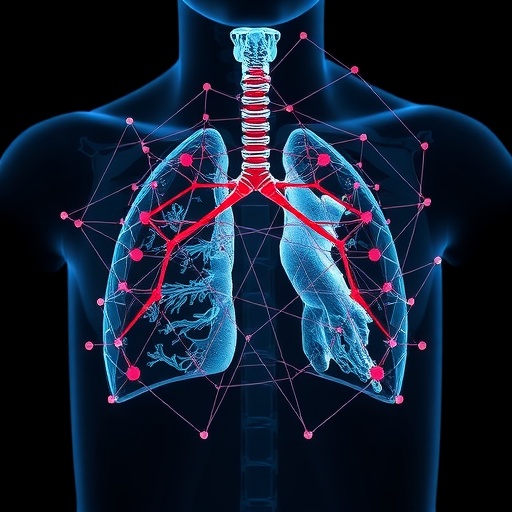
Acute respiratory distress syndrome, or ARDS, can transform a respiratory infection, trauma, or systemic illness into a rapidly evolving medical emergency. The syndrome is marked by widespread inflammation and damage in the lungs, allowing fluid to accumulate inside air sacs that normally exchange oxygen and carbon dioxide. Even with mechanical ventilation, prone positioning, and intensive-care support, some patients deteriorate quickly while others recover. A study introducing AdaG-Net, a multimodal artificial-intelligence model designed to predict mortality in ARDS, aims to address this uncertainty by combining several types of clinical information rather than relying on a single measurement.
The model, described in the article “Development and Internal Validation of AdaG-Net: A Dual-Attention and Adaptive Gating-Based Multimodal Model for Mortality Prediction in Acute Respiratory Distress Syndrome,” is built around two ideas from modern machine learning: attention and adaptive information selection. In practical terms, attention mechanisms help an algorithm identify which parts of a complex dataset deserve the greatest weight. Adaptive gating then acts as a learned control system, determining which data streams should influence a prediction at a particular time or for a particular patient. Together, these components are intended to make the model more flexible than conventional risk scores that assign fixed importance to a limited number of clinical variables.
The multimodal design is important because ARDS is not represented by one biological signal. A patient’s prognosis may be reflected in demographic characteristics, vital signs, laboratory results, ventilator settings, organ-function measurements, medication exposure, and the timing of clinical events. These data are generated in different formats and at different intervals. A blood-gas measurement may be available only periodically, while heart rate and oxygen saturation can be recorded continuously. AdaG-Net is designed to process such heterogeneous information as coordinated but distinct modalities, allowing the model to learn how they interact rather than forcing every variable into a single undifferentiated table.
Its dual-attention structure provides two complementary forms of selectivity. One attention process can focus on the most informative variables within a given data type, such as the respiratory measurements that carry the strongest prognostic signal at a particular stage of illness. Another can compare or integrate information across modalities, helping the model determine whether laboratory findings, physiological observations, or treatment-related data should dominate the current estimate. This is especially relevant in intensive care, where the same oxygen level may have a different meaning depending on ventilator support, blood pressure, kidney function, and the trajectory of the patient over time.
The adaptive gating component adds another layer of dynamic decision-making. Rather than treating every available input as equally reliable, the network can learn to regulate the contribution of each modality. If a data stream is incomplete, delayed, or less informative in a particular case, its influence may be reduced while other sources receive greater weight. In theory, this may help the system cope with the irregular and imperfect records typical of intensive-care medicine. Clinical datasets often contain missing measurements because tests are not ordered at uniform intervals, devices fail to record a value, or a patient’s condition changes faster than routine documentation can capture.
The researchers frame AdaG-Net as a mortality-prediction system rather than a replacement for clinical judgment. Such a model could eventually help intensive-care teams identify patients who require closer monitoring, prompt discussions about escalation of support, or early consideration of specialist interventions. It might also assist researchers in adjusting for baseline risk when evaluating new therapies. However, a predicted probability is not a diagnosis, and an algorithm cannot determine whether a patient will benefit from a treatment without clinical context. Decisions involving ventilation, fluid management, infection control, and end-of-life care remain dependent on physicians, patients, and families.
A central feature of the reported work is internal validation, a process used to test whether a model performs consistently within the dataset or institution from which it was developed. Internal validation can reveal problems such as overfitting, in which an algorithm memorizes patterns specific to its training data but performs poorly on new cases. It may involve procedures such as cross-validation, bootstrapping, or the separation of development and testing subsets. The distinction matters because a model can appear highly accurate during development while failing when applied to another hospital, a different patient population, or a new period in clinical practice.
The study therefore represents an important development stage, but not the final step before clinical deployment. External validation across multiple hospitals would be needed to determine whether AdaG-Net remains reliable when documentation practices, treatment protocols, patient demographics, and disease causes change. ARDS can arise from viral pneumonia, bacterial infection, aspiration, sepsis, trauma, or other conditions, and these causes may not be equally represented in a development cohort. A robust model must also be evaluated for calibration, meaning whether its predicted risks correspond to observed outcomes, as well as for discrimination, fairness, interpretability, and clinical usefulness.
The wider significance of AdaG-Net lies in the direction it reflects for medical artificial intelligence. Instead of asking a model to extract a simple answer from one laboratory test or one image, multimodal systems attempt to reconstruct the changing clinical picture from many imperfect signals. In ARDS, where deterioration can occur within hours and where treatment itself changes the measurements being analyzed, that flexibility could be valuable. Yet the promise of adaptive AI must be balanced with transparency, cybersecurity, data governance, and prospective testing. AdaG-Net may offer a technically sophisticated framework for mortality prediction, but its real impact will depend on whether independent studies show that it improves decisions and outcomes at the bedside.
Cite Scienmag News
Blake Davidson. (August 25, 2026). AdaG-Net: A Multimodal Model for Mortality Prediction in Acute Respiratory Distress Syndrome. Scienmag. https://scienmag.com/adag-net-a-multimodal-model-for-mortality-prediction-in-acute-respiratory-distress-syndrome/
Blake Davidson. "AdaG-Net: A Multimodal Model for Mortality Prediction in Acute Respiratory Distress Syndrome." Scienmag, 25 August 2026, https://scienmag.com/adag-net-a-multimodal-model-for-mortality-prediction-in-acute-respiratory-distress-syndrome/. Accessed 3 September 2026.
Blake Davidson. "AdaG-Net: A Multimodal Model for Mortality Prediction in Acute Respiratory Distress Syndrome." Scienmag. August 25, 2026. https://scienmag.com/adag-net-a-multimodal-model-for-mortality-prediction-in-acute-respiratory-distress-syndrome/


