


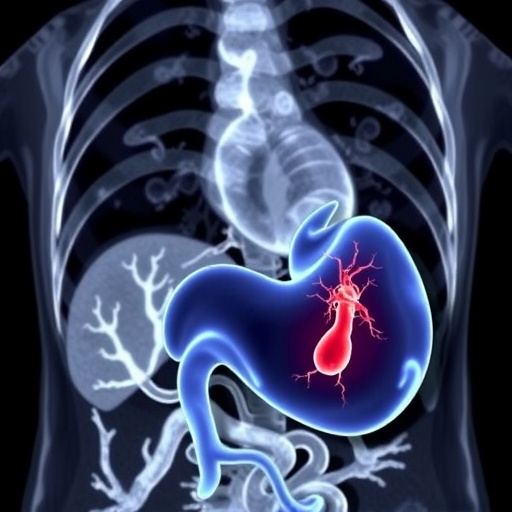
A rare and potentially fatal complication of long-term mechanical circulatory support has been successfully treated without open surgery, according to a case report published in General Thoracic and Cardiovascular Surgery. Physicians describe how a hepatic artery aneurysm ruptured directly into the biliary tract in a patient supported by a left ventricular assist device, causing internal bleeding known as hemobilia. The bleeding was controlled through transcatheter arterial embolization, a minimally invasive procedure that blocks the damaged artery from inside the bloodstream. The report highlights the complex interaction between cardiovascular devices, anticoagulation, abdominal blood vessels and the biliary system, while demonstrating how modern interventional radiology can provide a lifesaving alternative for patients who may be too fragile for conventional surgery.
Left ventricular assist devices, or LVADs, are implantable mechanical pumps used in patients with advanced heart failure. The device draws blood from the left ventricle and propels it into the aorta, helping maintain circulation when the heart cannot pump effectively on its own. Although LVAD therapy can extend survival and improve quality of life, it also creates new clinical challenges. Patients generally require long-term antithrombotic treatment to reduce the risk of pump thrombosis and systemic embolism. At the same time, the continuous-flow pump and the altered pressure environment can increase the risk of bleeding. Gastrointestinal hemorrhage is a well-recognized complication, but bleeding from a hepatic artery aneurysm into the biliary tract is exceptionally uncommon.
A hepatic artery aneurysm is an abnormal enlargement and weakening of a segment of the artery that supplies blood to the liver and, through its branches, to the gallbladder and parts of the upper abdominal organs. If the aneurysm ruptures, blood may enter the abdominal cavity, the digestive tract or the biliary tree, the network of ducts that carries bile from the liver to the intestine. When blood enters the biliary system, the resulting condition is called hemobilia. It can produce gastrointestinal bleeding, anemia, abdominal pain and obstructive jaundice, although the clinical presentation may vary. The combination of a vascular rupture and biliary obstruction can make diagnosis particularly difficult, especially in a patient already vulnerable because of advanced heart disease and continuous anticoagulant exposure.
In the reported case, the bleeding source was identified as a ruptured hepatic artery aneurysm communicating with the biliary tract during prolonged LVAD support. This anatomical connection is clinically important because bleeding may not immediately appear as a straightforward arterial hemorrhage. Instead, blood can pass through the bile ducts before reaching the intestine, potentially creating intermittent or concealed gastrointestinal bleeding. Imaging therefore becomes central to diagnosis. Contrast-enhanced computed tomography can reveal an arterial aneurysm, active extravasation or blood within the biliary system, while angiography provides a real-time map of the hepatic arterial circulation. Endoscopic evaluation may also demonstrate blood emerging from the opening of the bile duct into the duodenum, but identifying and controlling the upstream arterial lesion requires vascular imaging and intervention.
The medical team treated the rupture with transcatheter arterial embolization, or TAE. During this procedure, an interventional radiologist advances a catheter through the arterial system, commonly entering from a peripheral artery and navigating it toward the hepatic artery under fluoroscopic guidance. Contrast injections outline the aneurysm, the bleeding point and the vessels supplying healthy liver tissue. Once the abnormal branch is selected, embolic materials can be delivered through the catheter to obstruct blood flow into the aneurysm. Depending on the anatomy, physicians may use metallic coils, liquid embolic agents, vascular plugs or combinations of these tools. The aim is to seal the ruptured segment while preserving sufficient arterial perfusion to the liver and minimizing the risk of ischemia.
For a patient dependent on an LVAD, avoiding emergency open surgery can be especially valuable. Major abdominal surgery may impose substantial stress on the cardiovascular system, increase transfusion requirements and create difficult decisions about anticoagulation and antiplatelet therapy. Interrupting these medications can increase the risk of thrombus formation within the pump, while continuing them may worsen active hemorrhage. TAE offers a targeted solution: it addresses the bleeding artery directly through a small vascular access site and can often be performed rapidly, with less physiological disruption than surgical ligation or aneurysm repair. However, the procedure is not risk-free. Potential complications include non-target embolization, liver infarction, recurrent bleeding, infection, access-site injury and contrast-related kidney damage. Careful angiographic planning is therefore essential.
The case also illustrates why clinicians must maintain a broad differential diagnosis when bleeding develops in patients receiving long-term mechanical circulatory support. Although gastrointestinal bleeding in LVAD recipients is frequently associated with mucosal lesions and abnormal vascular formations, unusual arterial causes can occur and may be life-threatening. A hepatic artery aneurysm may arise through several mechanisms, including atherosclerotic degeneration, inflammation, infection, trauma, iatrogenic injury or changes in local arterial hemodynamics. In some patients, no single cause can be established. The presence of an aneurysm does not always predict rupture, but once communication with the biliary tract occurs, rapid diagnosis and definitive control become urgent priorities.
The successful use of TAE in this case reinforces the growing role of multidisciplinary care for patients with advanced heart failure and implantable circulatory devices. Cardiologists, cardiac surgeons, gastroenterologists, hepatobiliary specialists, interventional radiologists and critical-care teams may all be needed to balance bleeding control, pump function, liver perfusion and anticoagulation management. The report does not suggest that every episode of gastrointestinal bleeding in an LVAD recipient is caused by a hepatic artery aneurysm. Instead, it emphasizes that persistent, recurrent or unexplained bleeding should prompt consideration of less common vascular sources, particularly when standard evaluations do not identify the cause. Early cross-sectional imaging and angiography can transform a difficult diagnostic problem into a treatable one.
The case ultimately demonstrates how image-guided endovascular therapy can rescue patients facing a dangerous intersection of cardiovascular technology and abdominal vascular disease. A ruptured hepatic artery aneurysm bleeding into the biliary tract is rare, but its consequences can be severe, especially under the anticoagulated conditions often required for LVAD support. By sealing the responsible artery through a catheter, physicians achieved hemostasis while avoiding the hazards of open surgery. The experience adds to evidence that minimally invasive embolization should be considered when hepatic arterial bleeding is suspected in mechanically supported patients. It also serves as a reminder that advances in heart-failure therapy create new patterns of complications—patterns that increasingly require collaboration between device specialists and experts who can navigate the body’s vascular system from within.
Cite Scienmag News
Ophelia Keating. (August 25, 2026). Ruptured Hepatic Artery Aneurysm Into Biliary Tract During LVAD Support Successfully Embolized. Scienmag. https://scienmag.com/ruptured-hepatic-artery-aneurysm-into-biliary-tract-during-lvad-support-successfully-embolized/
Ophelia Keating. "Ruptured Hepatic Artery Aneurysm Into Biliary Tract During LVAD Support Successfully Embolized." Scienmag, 25 August 2026, https://scienmag.com/ruptured-hepatic-artery-aneurysm-into-biliary-tract-during-lvad-support-successfully-embolized/. Accessed 4 September 2026.
Ophelia Keating. "Ruptured Hepatic Artery Aneurysm Into Biliary Tract During LVAD Support Successfully Embolized." Scienmag. August 25, 2026. https://scienmag.com/ruptured-hepatic-artery-aneurysm-into-biliary-tract-during-lvad-support-successfully-embolized/


