


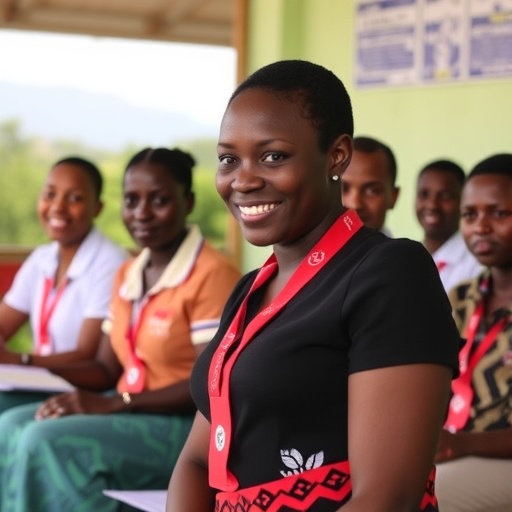
People living with HIV in Uganda who completed a peer advocacy training program became significantly more active in encouraging friends and family members to protect themselves against HIV—and new research now reveals exactly how that change happened. The mechanism, according to a secondary analysis of a randomized controlled trial published in the Journal of Behavioral Medicine, runs through two psychological channels: a reduction in internalized HIV stigma and an increase in HIV knowledge. The finding offers a practical blueprint for low-cost HIV prevention at a moment when funding cuts are threatening prevention programs across sub-Saharan Africa.
The intervention at the heart of the study, called Game Changer for HIV Prevention (GC-HIV), is an eight-session group program designed to turn people living with HIV into prevention advocates within their own social networks. Participants attended weekly two-hour sessions in groups of eight to ten, facilitated by trained Ugandan peer facilitators who were themselves living with HIV. Sessions covered self-compassion and peer support to overcome internalized stigma, decision-making around HIV disclosure, the facts and myths of HIV transmission and treatment, and—critically—the practical skills of starting and sustaining conversations about HIV prevention with the people around them.
The theoretical foundation draws on social diffusion theory and principles of social influence, which hold that behavior change can be initiated by a few individuals and spread through communities via shifting social norms. Because peer advocacy hinges on interpersonal, bidirectional exchange rather than one-way mass messaging, people living with HIV are uniquely positioned as messengers: their close, trusted relationships and personal lived experience with HIV lend their words a credibility that no broadcast campaign can match. In a setting like Uganda, where HIV prevalence has remained above 5 percent for more than two decades and virtually every family is touched by the epidemic, the researchers describe people living with HIV as potential “game changers” for prevention.
The trial enrolled 210 people living with HIV at the Infectious Diseases Institute in Kampala between January 2022 and February 2023, randomizing them in equal numbers to the intervention or a usual-care control group. Each participant, referred to as an “index participant,” was asked to name up to 20 people with whom they interact most frequently—their social network “alters.” At baseline and at 6-, 12-, and 18-month follow-ups, participants reported whether they had talked with each alter in the past three months about five HIV protective behaviors: condom use, HIV testing, and pre-exposure prophylaxis (PrEP) for alters not living with HIV, and engagement in HIV care and antiretroviral therapy (ART) use for alters living with HIV. All assessments were administered in Luganda or English using Network Canvas social network software, and measures had been validated through standard translation and back-translation procedures.
The results were striking. Controlling for baseline advocacy and demographic characteristics, participants in the intervention arm targeted a significantly greater percentage of their network members with every one of the five forms of advocacy over the follow-up period. Advocacy for condom use reached 32.4 percent of alters in the intervention group versus 20.7 percent in the control group; advocacy for HIV testing reached 40.1 percent versus 26.5 percent; PrEP advocacy reached 20.3 percent versus 7.7 percent; HIV care advocacy reached 51.7 percent versus 43.1 percent; and ART advocacy reached 62.3 percent versus 51.3 percent. A previous report from the same trial had shown that network members who received testing and condom advocacy were themselves more likely to report recent HIV testing and consistent condom use, giving the advocacy measures real behavioral relevance.
But the central question of the new analysis was mechanistic: through what pathways did the training produce these effects? The researchers hypothesized four candidate mediators, each targeted directly by the intervention content—internalized HIV stigma, HIV disclosure, HIV knowledge, and self-efficacy for conducting advocacy. Internalized stigma was measured with the eight-item Internalized AIDS-Related Stigma Scale, which captures feelings such as guilt and the sense that something is wrong with oneself because of HIV status. HIV knowledge was assessed with 13 true-false statements covering medication goals, drug resistance, adherence, prevention including the concept that an undetectable viral load makes transmission very difficult, and myths such as the belief that HIV can be acquired through witchcraft. Disclosure was measured as the percentage of alters to whom a participant had revealed their HIV status, and self-efficacy as confidence in starting a conversation about HIV on a 0-to-10 scale.
Using path analysis with SAS software, the team modeled each mediator separately, specifying how study arm affected both the mediator at month 6 and the advocacy outcome across 18 months of follow-up, while adjusting for baseline values and participant characteristics. The analysis of 208 participants who completed the month-6 assessment showed that the intervention significantly improved all four candidate mediators by month 6: internalized stigma fell, while disclosure, knowledge, and self-efficacy all rose.
Yet only two of the four constructs actually carried the intervention’s effect. Reduced internalized stigma was associated with increased advocacy for all five protective behaviors, and it fully mediated the intervention effect on HIV care advocacy—the indirect effect was significant while the direct effect was not. For the other four behaviors, stigma reduction partially mediated the effect, meaning both the stigma pathway and an unexplained direct pathway remained significant. Increased HIV knowledge likewise fully mediated the effect on HIV care advocacy and partially mediated effects on HIV testing and PrEP advocacy, though it played no mediating role for condom or ART advocacy. When both mediators were modeled jointly, the results held: the intervention effect on HIV care advocacy was fully explained, while testing and PrEP advocacy remained only partially mediated.
In contrast, HIV disclosure and advocacy self-efficacy, despite both being significantly improved by the intervention and both being associated with some forms of increased advocacy, did not statistically mediate any of the intervention effects. The authors suggest that disclosure may be less a mechanism than a form of advocacy itself—an initial stage in a cascade that begins with sharing one’s status and leads to subsequent encouragement of protective behaviors. They also note that the single-item self-efficacy measure may have been too crude, and that more distal measurements of change in disclosure and confidence might reveal mediating roles that month-6 assessments could not detect.
The findings carry immediate practical weight. Roughly a third to one half of people living with HIV in Uganda report experiencing HIV-related discrimination, from job loss to social ridicule and relationship abandonment, and about a quarter of people living with HIV do not know their status. Consistent condom use ranges from 10 to 40 percent depending on the population, and PrEP access remains poor. The authors argue that helping people cope with stigma and master basic HIV facts—dispelling common misconceptions—may deserve proportionally greater resources in future iterations of advocacy training. They also suggest exploring whether enrolling participants with higher baseline internalized stigma could yield even greater gains, while cautioning that heavily stigmatized individuals may be less likely to join or fully engage in group programs.
The study contributes empirical support to theories of social diffusion and social influence by demonstrating the psychological mechanisms through which peer networks can propagate behavior change. It also acknowledges limitations: advocacy relied on participant self-report rather than verified observations, the measure captured only whether a discussion occurred rather than its duration or quality, and participants—recruited from a center of excellence and required to have been in HIV care for at least a year—may be more motivated than the broader population of people living with HIV. Still, given the recent drastic reduction in United States government funding for HIV care and prevention in the region, the appeal of an intervention that mobilizes existing social networks with modest resources is hard to overstate. In a high-prevalence setting where nearly everyone is already connected to someone living with HIV, equipping those individuals with reduced shame and solid knowledge appears to be the key that turns personal experience into community-wide prevention.
Cite Scienmag News
Glenn Wilkins. (September 3, 2026). HIV Advocacy Training Boosts Prevention Efforts Among Ugandans Living with HIV. Scienmag. https://scienmag.com/hiv-advocacy-training-boosts-prevention-efforts-among-ugandans-living-with-hiv/
Glenn Wilkins. "HIV Advocacy Training Boosts Prevention Efforts Among Ugandans Living with HIV." Scienmag, 3 September 2026, https://scienmag.com/hiv-advocacy-training-boosts-prevention-efforts-among-ugandans-living-with-hiv/. Accessed 4 September 2026.
Glenn Wilkins. "HIV Advocacy Training Boosts Prevention Efforts Among Ugandans Living with HIV." Scienmag. September 3, 2026. https://scienmag.com/hiv-advocacy-training-boosts-prevention-efforts-among-ugandans-living-with-hiv/


