


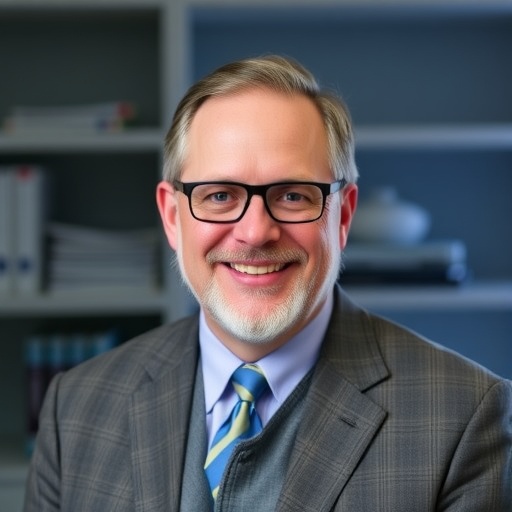
In an era when cancer centers compete for rankings, funding, and prestige, one of America’s most accomplished surgical leaders insists that the secret to building a world-class institution is deceptively simple: treat every patient as if they were the only one, and become an expert in every kind of cancer. That philosophy has guided Professor Timothy J. Eberlein of Washington University School of Medicine throughout his career, most notably during his tenure as the driving force behind the transformation of the Siteman Cancer Center in St. Louis into one of the largest and most respected comprehensive cancer centers in the United States. His insights were shared in a wide-ranging interview conducted by Professor Ken Shirabe, President of the Japanese Society of Gastroenterological Surgery, published as the third installment of the special series “Interview with World Class Authorities” in the Annals of Gastroenterological Surgery. The conversation offers a rare, candid look at how vision, scale, mentorship, and an unshakeable commitment to equity can combine to reshape cancer care on a national scale.
When Eberlein arrived at Washington University as Chair of Surgery, the institution faced a frustrating problem. Despite decades of effort, it had never earned designation from the National Cancer Institute, the credential that marks an American cancer center as truly elite. He was recruited with a mandate to change that, and the goals he set were as ambitious as they were precise. The first was scientific breadth: the center would develop deep expertise in every cancer type, from colorectal and blood cancers to brain and bone malignancies, rather than concentrating resources on a few high-profile diseases. The second was a humanistic commitment captured in a phrase that has since become the institution’s signature vision—world-class cancer care, delivered one patient at a time. Every patient, Eberlein explains, regardless of background, should feel like the most important person the center has ever treated, and every patient should have access to the paradigm-shifting treatments being developed in its laboratories.
The mission statement that Eberlein and his colleagues crafted was equally explicit: to prevent cancer in the community and to transform patient care through scientific discovery, building on the formidable research infrastructure of Washington University. That community emphasis is not decorative. The geographic region served by Siteman spans the center of the United States and includes large populations that are medically underserved, rural, and economically disadvantaged. The epidemiological profile of the region compounds the challenge—high rates of cigarette smoking, obesity, poor diet and physical inactivity, and significant industrial exposure to heavy metals from decades of copper and lead mining. These factors converge to produce a patient population with an unusually heavy burden of cancer and limited access to specialized care, making outreach and inclusion a matter of institutional survival as much as ethical obligation.
Eberlein’s answer to that challenge was to make equity a measurable operational goal rather than an aspiration. All advances in cancer, he emphasizes, come through clinical trials, so his leadership committed the center to being a national leader in accrual to clinical trials—including underserved minority and rural patients. The results are striking: Siteman now ranks among the top three or four cancer centers in the United States for clinical trial enrollment, and every quarter the senior leadership reviews all trials and their accrual patterns specifically to verify that underserved, rural, and minority patients are being included. Patients now travel to Siteman from all fifty states. The center’s own institutional data show that in a single recent year, 23.1 percent of interventional trial participants were from minority populations, 12.0 percent from rural areas, and 28.1 percent medically underserved—a distribution that most large centers struggle to approach.
Scale, Eberlein argues, is what makes such a mission financially sustainable. Siteman has grown into the third-largest cancer center in the United States, and that size allowed it to provide approximately 159 million dollars in free care last year while functioning as a safety-net provider—not a role every cancer center embraces. The institution’s research engine is equally massive, with a total peer-reviewed research portfolio exceeding 184 million dollars, including 41.8 million dollars in National Cancer Institute funding, and an annual research budget approaching 200 million dollars across grants and studies. More than 268 members drawn from 23 departments and four affiliated schools contribute to the enterprise, with 94 percent of members supported by peer-reviewed funding. In 2024 alone, the center enrolled nearly 10,000 new patients and cared for more than 75,000 unique patients overall, supported by thousands of surgeons, oncologists, researchers, and nurses.
The scientific credentials of the center rest in part on a class of grants that many institutions never obtain. The National Cancer Institute’s Specialized Programs of Research Excellence—known as SPORE grants—represent the pinnacle of translational cancer research funding, and Siteman holds three of them, in endometrial, pancreatic, and leukemia research, along with a comparable SCORE grant in lymphoma. Notably, Eberlein points out, two of these SPOREs are led by surgeons, a detail that reflects his broader conviction that surgeon-scientists occupy a uniquely valuable position in cancer research. Philanthropy has also played a strategic role, he notes, with targeted donations supporting new research initiatives and clinical trials, cushioning the center against shifts in federal priorities and budgetary turbulence.
At the heart of Eberlein’s institutional philosophy is what he calls the virtuous cycle of academic medicine, a concept he has articulated in his published work on surgical education. The logic is straightforward but demanding: sustaining research and education requires revenue generated by a large clinical enterprise; that income fuels scientific discovery and training programs; innovation, in turn, attracts both patients seeking cutting-edge treatment and trainees seeking world-class education; and the resulting talent and volume strengthen the clinical enterprise further. His own Department of Surgery at Washington University routinely ranks first or second in research funding among American surgical departments, a position he attributes to this self-reinforcing loop. High-quality patient care generates clinically relevant questions; research answers them and feeds improved diagnostics and therapeutics back into the clinic; and the environment of inquiry trains the next generation of clinicians and scientists.
That training philosophy is intensely individualized—Eberlein prefers the word “individualized” to “personalized” when describing it. Recognizing that trainees want different paths, Washington University developed a “Flexibility in Surgical Training” program that allows residents to dedicate roughly a third of their final three years to a chosen specialty, whether surgical oncology, minimally invasive surgery, outcomes research, or education. The results, he reports, include residents who graduate with operative experience exceeding that of fellows at other institutions. The surgeon-scientist pathway remains a priority, though Eberlein is candid about its fragility: fewer than 1,000 American surgeons hold National Institutes of Health grants. His remedy combines financial support, protected research time, strong mentorship, critical mass in laboratories, and above all collaboration—demonstrating feasibility through teamwork rather than expecting any individual to accomplish everything alone.
The tension between operating and researching is one Eberlein describes with an athletic metaphor: it is like being a professional baseball player who also wants to play professional hockey—very few can do both at the highest level, and those who try need guidance. Surgeons, he argues, bring a distinctive perspective to research because they see patients with complex problems that extend far beyond the operation itself, positioning them to identify gaps in outcomes that better techniques, systemic therapies, or combined approaches could close. He also offers a timeless clinical reminder drawn from decades at the bedside: when all else fails, go talk to the patient. Trainees may gather scans, biomarkers, and genomic data, but patients themselves often reveal both diagnosis and the right course of treatment, even if they lack the technical vocabulary to describe them.
Eberlein’s views on leadership evolved considerably during his career. Trained under Dr. Henry Bahnson, a brilliant cardiothoracic surgeon, he initially imagined leadership as standing at the top of a pyramid. Experience as chair taught him the opposite: the pyramid is inverted, and the leader exists to solve other people’s problems and help them achieve their goals. He deliberately hired people smarter than himself and led by example, while acknowledging that modern leadership increasingly demands formal training, which many surgical trainees now pursue through business education. His creed for clinical work is equally egalitarian. Surgery, he says, is the ultimate team sport—a surgeon is only as good as the anesthetist, intensivist, perfusionist, and nurse beside them. He tells trainees to know everyone in the hospital, including transporters, laboratory staff, and blood bank workers, because respecting every member of the team is what makes outcomes possible and institutions function.
Looking toward the future, Eberlein is strikingly optimistic about the coming generation of surgeons and oncologists, particularly those addressing gastrointestinal cancers, which he notes are best understood not as one disease but as many diseases whose biology is being progressively decoded. His message to young surgeons in Japan and beyond is to maintain the passion they felt the first time they entered an operating room, to embrace innovation, and to prepare for a future in which genetic therapies, cancer vaccines, and immune therapies will be combined with surgical expertise to achieve results that today’s clinicians can only dream about. His career, and the institution he built, stand as evidence that the most powerful technology in cancer medicine may still be an organizational one: a clear vision, generously funded, relentlessly measured, and applied one patient at a time.
Cite Scienmag News
Nathaniel Bowman. (September 3, 2026). Expert Insights on Cancer Care Leadership With Professor Timothy Eberlein. Scienmag. https://scienmag.com/expert-insights-on-cancer-care-leadership-with-professor-timothy-eberlein/
Nathaniel Bowman. "Expert Insights on Cancer Care Leadership With Professor Timothy Eberlein." Scienmag, 3 September 2026, https://scienmag.com/expert-insights-on-cancer-care-leadership-with-professor-timothy-eberlein/. Accessed 3 September 2026.
Nathaniel Bowman. "Expert Insights on Cancer Care Leadership With Professor Timothy Eberlein." Scienmag. September 3, 2026. https://scienmag.com/expert-insights-on-cancer-care-leadership-with-professor-timothy-eberlein/


