


None
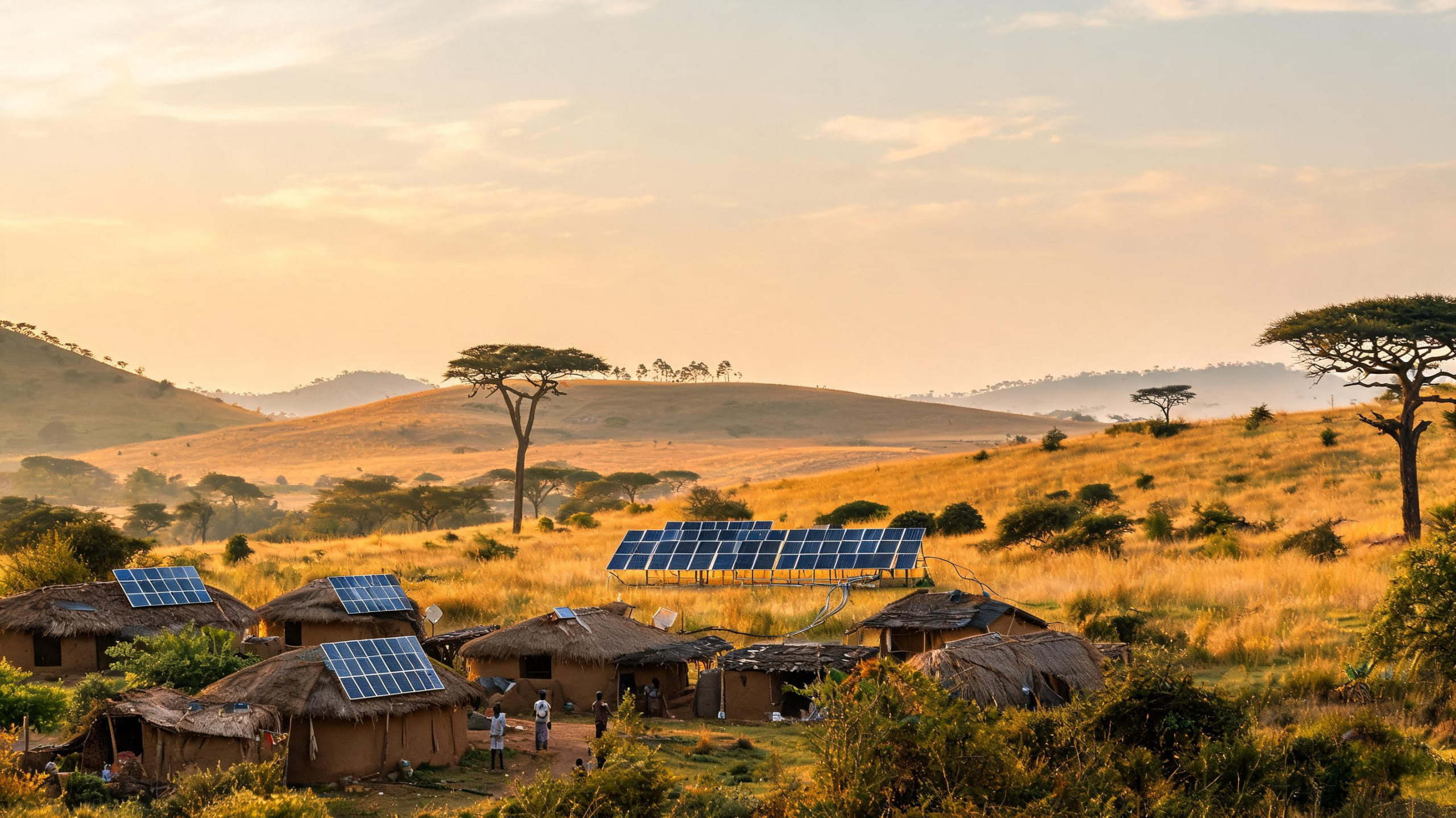
The findings from Lira and Gulu districts offer a window into the broader dynamics of energy poverty in post-conflict sub-Saharan Africa, where the transition from biomass to modern energy sources is shaped as much by social infrastructure as by physical infrastructure. The reported prevalence of household access to renewable energy at 70.5 percent appears, at first glance, encouraging when compared with national and regional averages. Yet the composition of that access matters enormously. With electricity accounting for 68.0 percent of renewable access and solar following at 47.9 percent, while wind and biogas remain almost entirely absent, the renewable energy landscape in Northern Uganda is essentially a two-technology story. This concentration reflects both the maturity of solar photovoltaic markets in East Africa and the fact that Uganda’s grid is overwhelmingly hydropower-based, meaning that grid connection, where it exists, delivers largely renewable electricity even though individual households cannot verify the generation mix themselves.
The choice to define access as the use of at least one renewable source, including grid electricity, is methodologically significant. Because hydropower contributed 93.4 percent of Uganda’s grid generation in 2023 and roughly 92 percent of installed generating capacity is renewable, treating grid electricity as a proxy for renewable supply is defensible at the national level. However, the authors’ sensitivity analysis, which excluded grid electricity from the outcome and found a lower prevalence with broadly similar predictors, strengthens confidence in the robustness of the central findings. This dual approach acknowledges a persistent measurement challenge in energy research: households connected to a renewable-heavy grid experience clean energy consumption without any direct awareness of it, while off-grid solar users often have a more tangible relationship with the technology powering their homes.
The multilevel modeling strategy deserves particular attention. By including a random intercept for cluster and applying cluster-robust standard errors, the analysis accounts for the reality that households within the same village or parish share circumstances, from local grid extension decisions to the presence of solar vendors and the influence of neighbors’ adoption choices. The adjusted intraclass correlation coefficient of 0.444 is strikingly high, indicating that nearly half of the variation in renewable energy access occurs at the cluster level rather than the household level. This finding carries substantial policy weight. It suggests that community-level interventions, such as siting service centers, supporting local entrepreneurs, and targeting awareness campaigns at the village scale, could be considerably more efficient than approaches that treat households as independent decision-makers operating in identical environments.
Among the household-level predictors, the association with primary education stands out for the magnitude of its effect. Households whose respondents had primary education had more than three times the odds of renewable energy access compared with those without it. This aligns with a consistent body of Ugandan evidence, including earlier work by Lee and colleagues on energy transition determinants, Aarakit and colleagues on solar photovoltaic adoption, and Murungi and colleagues on rural electricity access, all of which identified education as a central driver. Education likely operates through several channels simultaneously: greater literacy enables comprehension of product information and contracts, higher earning potential improves affordability, and schooling can increase familiarity with and trust in new technologies. The dose-response question, whether secondary or tertiary education confers still greater advantage, remains open but the direction of the gradient in prior literature suggests it would.
Equally notable is the negative association with older age. Respondents aged sixty years and above had roughly a quarter of the odds of renewable energy access compared with younger households. In a region where decades of conflict disrupted livelihoods and where older adults may be less mobile, less literate, and more dependent on familiar cooking practices, this pattern points to a risk that the energy transition could bypass exactly those households that spend the most time exposed to indoor air pollution from firewood and charcoal. The health stakes are considerable. Replacing open fires and traditional stoves with cleaner technologies has been estimated to save up to 7.6 million lives annually worldwide by reducing exposure to harmful indoor and outdoor air pollutants, and older household members are typically the most intensively exposed group.
The service-environment variables emerged as the strongest predictors in the model, and their interpretation may be the most actionable. Households lacking local availability of renewable energy services had 84 percent lower odds of access, and those unable to reach all energy options locally had 63 percent lower odds. Living far from energy sources reduced the odds by nearly 80 percent. These are not measures of household motivation or awareness; they are measures of supply-side presence. In other words, even within a single region, whether a household can adopt renewable energy depends heavily on whether technicians, spare parts, vendors, and installation services exist within practical reach. This resonates with a well-documented failure mode of off-grid solar programs across sub-Saharan Africa, where products are sold or donated but subsequently fall into disuse because no local repair capacity exists.
The training variable reinforces this supply-side interpretation. Households without any renewable energy training had 71 percent lower odds of access than those with training. Training in this context plausibly encompasses both formal awareness campaigns and practical instruction in installation, maintenance, and safe use. The finding suggests that knowledge transfer functions as a genuine bottleneck rather than a mere correlate, and it provides an empirical basis for programs that pair technology distribution with community education. It also connects to the education finding: where formal schooling is limited, structured training may substitute for some of the familiarity and confidence that education would otherwise provide.
The strongest single predictor was the absence of reported energy barriers, which quadrupled the odds of access. Households that perceived no obstacles to obtaining renewable energy were dramatically more likely to actually use it. This perception measure likely aggregates financial constraints, information gaps, distrust of vendors, and logistical difficulties into a single subjective assessment. Its dominance in the model implies that demand-side interventions aimed at reducing perceived barriers, through microfinance, subsidies, consumer protection, or demonstration projects, could yield outsized returns. It also cautions against purely technological approaches: a solar panel available in a district town accomplishes little for a household that believes it cannot afford, install, or maintain one.
The regional context sharpens the urgency of these findings. Northern Uganda is the country’s second-largest charcoal-producing region, responsible for 39.5 percent of national production, and its dependence on charcoal has driven measurable ecological damage, including a 90 percent decline in shea trees and increasingly erratic rainfall with longer, hotter dry seasons. Nationally, more than 500,000 acres of forest are cleared each year and 62.5 percent of forest cover has been lost over three decades, largely for fuelwood, with projections suggesting that nearly all forests outside protected areas could be gone by 2050. Against this backdrop, the 29.5 percent of surveyed households without any renewable energy source represent not only a development gap but an ongoing contribution to deforestation and greenhouse gas emissions.
The refugee-hosting dimension of Northern Uganda adds another layer of vulnerability. Districts in the region host large displaced populations with particularly limited access to clean cooking and renewable technologies, and energy needs in such settings often intensify pressure on surrounding forests. Any strategy to expand renewable access in Lira and Gulu, and in neighboring districts with similar profiles, will need to account for population displacement, land tenure uncertainty, and the specific constraints faced by refugee and host communities alike.
Several limitations inherent to the cross-sectional design warrant consideration when interpreting the associations reported. Because exposure and outcome were measured at a single point in time, the direction of causality cannot be established with certainty. It is possible, for instance, that households that adopt renewable technologies subsequently gain access to training or services rather than the reverse, although the plausibility and consistency of the findings with prior longitudinal and intervention studies lend credibility to the proposed causal pathways. Self-reported data on energy use may also be subject to recall or social desirability bias, and the two-district sampling frame, while purposively chosen for population density and sub-regional representation, means the results should be generalized to the rest of Northern Uganda with appropriate caution.
Nevertheless, the convergence of this study’s predictors with prior Ugandan and regional literature creates a coherent evidence base for policy. The picture that emerges is of an energy transition gated by three interlocking conditions: human capital, captured by education and training; physical and commercial infrastructure, captured by local service availability and proximity; and perceived feasibility, captured by the absence of barriers. Interventions that address only one of these conditions are likely to underperform. A subsidy program without local technicians will produce idle equipment; a training campaign without affordable products will produce awareness without adoption; a vendor network without community trust will produce sales without sustained use.
The findings also speak to Uganda’s national commitments. The country’s installed renewable capacity of 1,067 megawatts in 2020, roughly a quarter of total capacity, falls well short of the International Energy Agency’s 2030 benchmark of 71 percent renewable capacity, and Uganda ranks among the ten countries with the lowest access to clean cooking energy. Because household-level adoption is the unit at which energy poverty is ultimately experienced, studies like this one, which identify modifiable predictors at the household and community scale, complement national capacity statistics with the granular evidence needed for targeted implementation. The high clustering of access within communities suggests that geographically targeted programming, concentrating services, training, and barrier-reduction efforts in underserved parishes, could achieve rapid gains.
More broadly, the study illustrates a methodological contribution relevant beyond Uganda: the explicit modeling of between-cluster variation in energy access. The intraclass correlation of 0.444 quantifies something often asserted but rarely measured, namely that energy access is a fundamentally local phenomenon. Future household energy surveys in low- and middle-income settings would benefit from routinely reporting this statistic, as it directly informs sample size calculations for cluster-randomized evaluations and signals the potential effectiveness of community-level versus household-level interventions.
In sum, the evidence from 634 households in Lira and Gulu indicates that renewable energy access in Northern Uganda is neither randomly distributed nor solely a function of household wealth. It is structured by education, age, training, local service ecosystems, geographic proximity, and perceived barriers, with community context explaining nearly half of all variation. Expanding local service availability, embedding training in distribution programs, and systematically reducing the barriers households report would constitute an evidence-aligned pathway toward more equitable energy access in a region whose forests, health, and post-conflict recovery all depend on it.
Subject of Research: Factors associated with access to renewable energy in Northern Uganda: a cross-sectional community-based study
Article Title: Factors associated with access to renewable energy in Northern Uganda: a cross-sectional community-based study
Article References: Musinguzi, M., Kigongo, E., Emmanuel, I., Opido, J. O., Amito, F., Opio, I. O., Waziri, H., Kabunga, A., & Sam Opollo, M. (2026). Factors associated with access to renewable energy in Northern Uganda: a cross-sectional community-based study. BMC Environmental Science, 3(1), Article 23. https://doi.org/10.1186/s44329-026-00063-9
Image Credits: AI Generated
DOI: 10.1186/s44329-026-00063-9
Keywords: Factors, associated, access, renewable, energy, Northern, Uganda, cross-sectional, community-based, scientific research
Cite Scienmag News
Faith Mcneil. (September 3, 2026). Factors associated with access to renewable energy in Northern Uganda: a cross-sectional community-based study. Scienmag. https://scienmag.com/factors-associated-with-access-to-renewable-energy-in-northern-uganda-a-cross-sectional-community-based-study/
Faith Mcneil. "Factors associated with access to renewable energy in Northern Uganda: a cross-sectional community-based study." Scienmag, 3 September 2026, https://scienmag.com/factors-associated-with-access-to-renewable-energy-in-northern-uganda-a-cross-sectional-community-based-study/. Accessed 4 October 2026.
Faith Mcneil. "Factors associated with access to renewable energy in Northern Uganda: a cross-sectional community-based study." Scienmag. September 3, 2026. https://scienmag.com/factors-associated-with-access-to-renewable-energy-in-northern-uganda-a-cross-sectional-community-based-study/


