

Tuesday, October 20, 2026
Science
No Result
View All Result
  • Login
  • HOME
  • SCIENCE NEWS
  • CONTACT US
  • HOME
  • SCIENCE NEWS
  • CONTACT US
No Result
View All Result
Scienmag
No Result
View All Result
Home Science News Medicine

ABCA1 cholesterol trafficking implicated in Parkinson’s neurodegeneration in mice

October 20, 2026
in Medicine
Diana Fleming
By Diana Fleming Scienmag Editorial Profile - Neurodegenerative Diseases
Reading Time: 2 mins read
0
ABCA1 cholesterol trafficking implicated in Parkinson’s neurodegeneration in mice

ABCA1 cholesterol trafficking implicated in Parkinson’s neurodegeneration in mice

65
SHARES
587
VIEWS
Share on FacebookShare on Twitter
ADVERTISEMENT

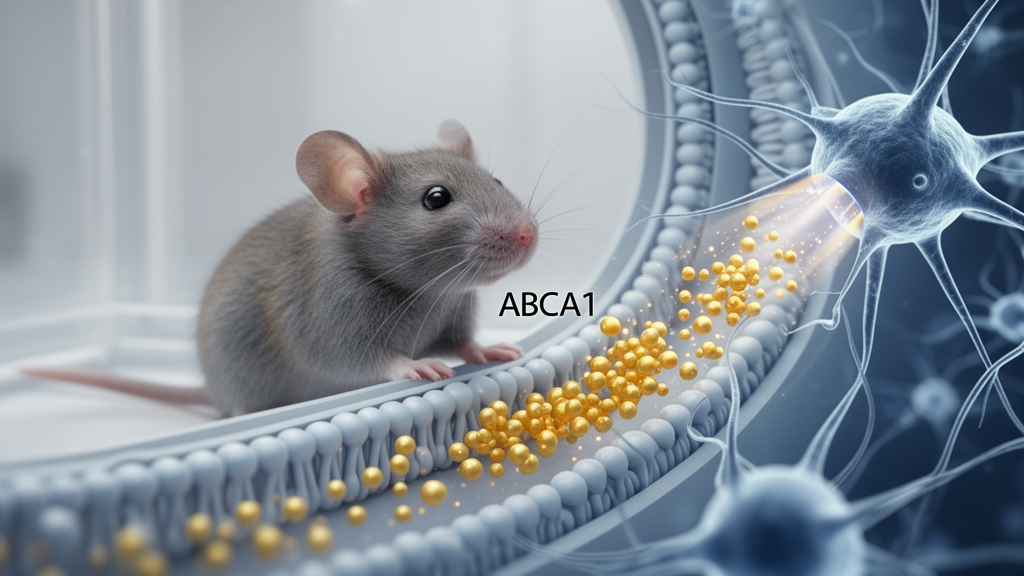
Elevated expression of the cholesterol transporter ABCA1 was detected in the substantia nigra of postmortem brains from people with Parkinson’s disease and in a mouse model of the disorder. Together, experiments in human brain tissue, cultured cells and mice indicate that disturbed ABCA1-dependent cholesterol trafficking can promote lysosomal cholesterol accumulation, impaired autophagy, α-synuclein pathology and neuronal death. The findings identify a disease mechanism and a potential intervention target, but they do not establish a treatment effect in people.

The researchers traced part of the mechanism to interactions between astrocytes and neurons. The experimental evidence is causal within the tested mouse and cell systems, although the postmortem observations alone cannot establish when or why ABCA1 expression becomes elevated in human disease. Mechanistic experiments located ABCA1 in neuronal lysosomes, where it facilitated cholesterol import.

The researchers further reported that ABCA1-mediated lysosomal cholesterol accumulation impeded autophagy by activating the lysosomal cholesterol sensor GPR155. These results link a specific route of intracellular cholesterol handling to the accumulation of pathological α-synuclein and cell death, rather than associating elevated ABCA1 merely with already damaged tissue. The protective effects were then tested in the PFF mouse model of Parkinson’s disease.

Genetic silencing of Abca1 in dopaminergic neurons attenuated neurodegeneration and disease-related pathology, while silencing Abca1 in astrocytes reduced excessive cholesterol efflux and lessened neurodegeneration and behavioral deficits. The researchers also identified magnesium citrate as an ABCA1 inhibitor and reported that treatment reduced dopaminergic neuronal loss in PFF mice. These findings support ABCA1 inhibition as a possible disease-modifying strategy, but the evidence comes from experimental models.

Subject of Research: ABCA1-dependent cholesterol trafficking as a mechanism of neurodegeneration in Parkinson’s disease

Article Title: Dysregulated cholesterol trafficking through ABCA1 drives neurodegeneration in Parkinson’s disease

Article References: Ma, F.-X., Zhao, X.-X., Wang, X.-X., Fang, S.-Y., Xu, S.-H., Wang, M., Liu, Y.-X., Wang, C., Wang, Q.-L., Lu, M., & Cao, L. (2026). Dysregulated cholesterol trafficking through ABCA1 drives neurodegeneration in Parkinson’s disease. Nature Neuroscience. https://doi.org/10.1038/s41593-026-02487-7

Image Credits: AI Generated

DOI: 10.1038/s41593-026-02487-7

Keywords: ABCA1, Parkinson’s disease, cholesterol trafficking, astrocytes, dopaminergic neurons, lysosomes, autophagy, α-synuclein, magnesium citrate, mouse models, Dysregulated, cholesterol

Cite Scienmag News

Diana Fleming. (October 20, 2026). ABCA1 cholesterol trafficking implicated in Parkinson’s neurodegeneration in mice. Scienmag. https://scienmag.com/abca1-cholesterol-trafficking-implicated-in-parkinsons-neurodegeneration-in-mice/


Diana Fleming. "ABCA1 cholesterol trafficking implicated in Parkinson’s neurodegeneration in mice." Scienmag, 20 October 2026, https://scienmag.com/abca1-cholesterol-trafficking-implicated-in-parkinsons-neurodegeneration-in-mice/. Accessed 20 October 2026.

Diana Fleming. "ABCA1 cholesterol trafficking implicated in Parkinson’s neurodegeneration in mice." Scienmag. October 20, 2026. https://scienmag.com/abca1-cholesterol-trafficking-implicated-in-parkinsons-neurodegeneration-in-mice/

Tags: ABCA1ABCA1 transporter functionastrocytesautophagyautophagy impairment in neurodegenerationcholesterolcholesterol traffickingcholesterol trafficking in neuronsdopaminergic neuronsDysregulatedGPR155 activationlysosomal cholesterol accumulationlysosomal cholesterol sensorslysosomesmagnesium citratemouse modelsmouse models of Parkinson’sneuron-astrocyte interactionsneuronal death mechanismsParkinson's diseasepotential therapeutic targets in neurodegenerative diseasesα-synucleinα-synuclein pathology
Share26Tweet16
Previous Post

Iranian breast cancer study identifies themes of suffering, uncertainty and adaptation

Next Post

Pain and depressive symptoms linked with cardiovascular risk in Chinese adults

Related Posts

Face-to-Face Beats Phone Check-Ups for Blood Pressure Control in Chinese Primary Care
Medicine

Telephone follow-up linked to poorer blood pressure control in Chinese primary care cohort

October 20, 2026
Poisoning Data Reveal Hidden Shift in Malaysia’s Suicide Crisis
Medicine

Assessing non-fatal intentional poisoning incidents as a national sentinel indicator for suicide mortality trends in Malaysia (2006 to 2021): a mechanistic and economic impact estimation

October 20, 2026
Deadly Drug-Resistant Bloodstream Infections Hit Cancer Patients Far Harder
Medicine

Oncologic status associated with higher 30-day mortality in multidrug-resistant bloodstream infections

October 20, 2026
How Feeling Valued Shapes the Care Nurses Give: Dignity Linked to Better Patient Care
Medicine

Clinical nurse study links professional dignity with caring behavior scores

October 20, 2026
Intensive Risk-Factor Therapy Shows Little Effect on Diabetic Neuropathy Prevention
Medicine

Does Intensive Therapy Targeting Modifiable Risk Factors Prevent Diabetic Neuropathy in Adults with Type 2 Diabetes? A Systematic Review and Meta-analysis of Randomized Clinical Trials

October 20, 2026
New Prediction Model Flags Liver Complication Risk in Preterm Infants on IV Nutrition
Medicine

Internally validated model identifies factors associated with parenteral nutrition-associated cholestasis in preterm infants

October 20, 2026
Next Post
When Pain Meets Depression: The Combined Threat to Your Heart

Pain and depressive symptoms linked with cardiovascular risk in Chinese adults

  • Mothers who receive childcare support from maternal grandparents show more optimized

    Mothers who receive childcare support from maternal grandparents show more parental warmth, finds NTU Singapore study

    27656 shares
    Share 11059 Tweet 6912
  • University of Seville Breaks 120-Year-Old Mystery, Revises a Key Einstein Concept

    1061 shares
    Share 424 Tweet 265
  • Bee body mass, pathogens and local climate influence heat tolerance

    682 shares
    Share 273 Tweet 171
  • Researchers record first-ever images and data of a shark experiencing a boat strike

    546 shares
    Share 218 Tweet 137
  • Groundbreaking Clinical Trial Reveals Lubiprostone Enhances Kidney Function

    531 shares
    Share 212 Tweet 133
Science

Embark on a thrilling journey of discovery with Scienmag.com—your ultimate source for cutting-edge breakthroughs. Immerse yourself in a world where curiosity knows no limits and tomorrow’s possibilities become today’s reality!

RECENT NEWS

  • Pain and depressive symptoms linked with cardiovascular risk in Chinese adults
  • ABCA1 cholesterol trafficking implicated in Parkinson’s neurodegeneration in mice
  • Iranian breast cancer study identifies themes of suffering, uncertainty and adaptation
  • East African ethics and regulatory staff training linked with higher knowledge scores

Categories

  • Agriculture
  • Anthropology
  • Archaeology
  • Athmospheric
  • Biology
  • Biotechnology
  • Blog
  • Bussines
  • Cancer
  • Chemistry
  • Climate
  • Earth Science
  • Editorial Policy
  • Marine
  • Mathematics
  • Medicine
  • Pediatry
  • Policy
  • Psychology & Psychiatry
  • Science Education
  • Science News
  • Social Science
  • Space
  • Technology and Engineering

Subscribe to Blog via Email

Enter your email address to subscribe to this blog and receive notifications of new posts by email.

Join 5,150 other subscribers

© 2025 Scienmag - Science Magazine

Welcome Back!

Login to your account below

Forgotten Password?

Retrieve your password

Please enter your username or email address to reset your password.

Log In
No Result
View All Result
  • HOME
  • SCIENCE NEWS
  • CONTACT US

© 2025 Scienmag - Science Magazine

Discover more from Science

Subscribe now to keep reading and get access to the full archive.

Continue reading