


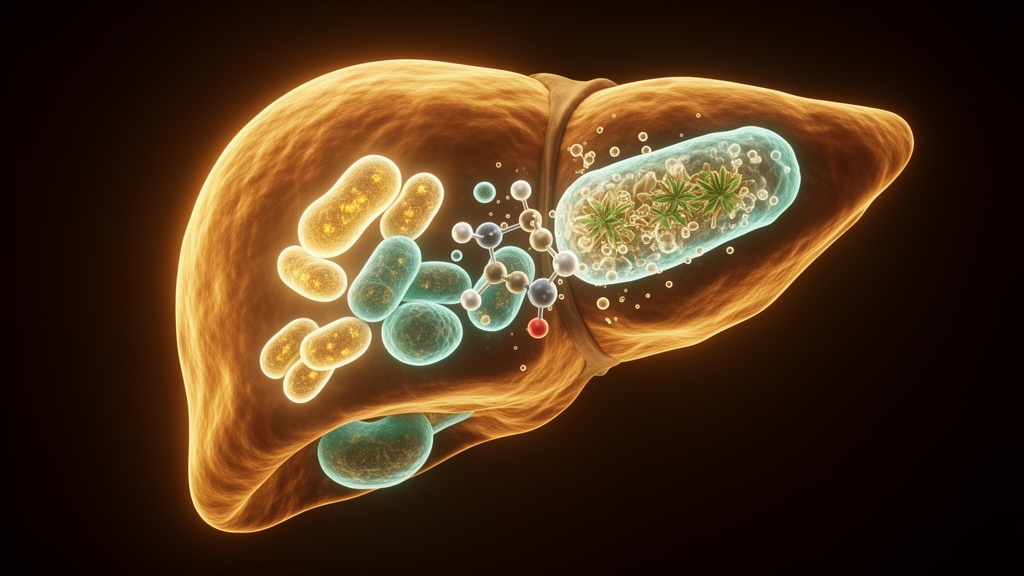
A traditional Chinese medicinal formula long used in liver cancer care has shown a striking mechanistic trick in laboratory models of hepatocellular carcinoma: it appears to disable the cellular quality-control system that recycles damaged mitochondria, and in doing so it pushes tumor cells toward an inflammatory form of self-destruction. The finding, published in Frontiers in Oncology, comes from a team at Nanjing University of Chinese Medicine that combined a mouse xenograft model with experiments on HepG2 liver cancer cells to trace how the Xiaoai Jiedu recipe, known as XJR, interferes with two interconnected cellular pathways.
The formula itself is far from a single molecule. XJR contains seven herbal components, including spreading hedyotis herb, appendiculate Cremastra pseudobulb, fruit of fiveleaf akebia, stiff silkworm, centipede, heterophylly falsestarwort root and dwarf lilyturf root tuber. Using ultra-performance liquid chromatography coupled with high-resolution mass spectrometry, the researchers identified 93 chemical constituents in the XJR decoction, underscoring the multi-component character that the authors argue underlies its multi-target activity. The team characterized the decoction chemically before turning to biological models, a step meant to establish what exactly was being tested.
The central discovery concerns mitophagy, the selective autophagic process by which cells recognize, sequester and degrade damaged mitochondria. In the PINK1/parkin pathway, the kinase PINK1 accumulates on the outer membrane of injured mitochondria and activates the E3 ubiquitin ligase parkin, which tags mitochondrial surface proteins for removal. Autophagy adaptors such as p62/SQSTM1 then deliver the tagged organelles to autophagosomes, which fuse with lysosomes for degradation. This housekeeping system matters in cancer because it helps tumor cells survive stress: by clearing dysfunctional mitochondria, mitophagy limits reactive oxygen species accumulation, preserves mitochondrial membrane potential and can even blunt the damage inflicted by chemotherapy.
According to the study, XJR disrupts this protective machinery. In tumor tissue from mice bearing subcutaneous H22 hepatocellular carcinoma xenografts, immunohistochemistry showed that PINK1 and parkin expression decreased in a dose-dependent manner as XJR doses rose from 1 to 9 grams per kilogram of body weight per day over 14 days, while p62 and LC3B trended upward. Quantitative PCR and western blotting of tumor tissue confirmed the same pattern: reduced mRNA and protein for PINK1, parkin and LC3B, with increases in p62, COX IV and TOMM20, particularly at the highest dose. In cell culture, XJR-containing serum prepared from dosed rats produced comparable changes in HepG2 cells.
Transmission electron microscopy made the mitochondrial consequences visible. Control tumor tissue showed minimal mitochondrial damage, but low-dose XJR produced mild swelling and partial focal dissolution of cristae with intact outer membranes. At medium and high doses, the picture darkened considerably: mitochondria showed moderate to severe edema and degeneration, partial or extensive rupture of outer membranes, dissolved cristae, vacuolar degeneration and reduced electron density of the mitochondrial matrix, alongside dilated rough endoplasmic reticulum and extensive rupture of cell membranes. In HepG2 cells, XJR treatment eliminated the autophagosomes and autophagolysosomes abundant in controls, and a JC-1 assay showed decreased mitochondrial membrane potential, a hallmark of mitochondrial dysfunction.
Damaged mitochondria that are no longer being cleared leak their danger signals. The study measured mitochondrial reactive oxygen species with DCFH-DA and MitoSOX fluorescence and found markedly elevated levels after XJR treatment, with the autophagy inhibitor 3-methyladenine intensifying rather than rescuing the phenotype. This matters because mitochondria-derived ROS act as a key upstream activator of the NLRP3 inflammasome, a multiprotein complex composed of NLRP3, the adaptor protein ASC and caspase-1. When assembled, the inflammasome activates caspase-1, which processes the pro-inflammatory cytokines IL-1β and IL-18 and triggers pyroptosis, an inflammatory form of programmed cell death.
The downstream effects were consistent across models. In mice, ELISA showed that IL-1β and IL-18 rose significantly in serum after XJR treatment, and western blot and immunohistochemistry revealed dose-dependent increases in NLRP3 pathway components in tumor tissue. In HepG2 cells, XJR elevated IL-1β and IL-18 and increased lactate dehydrogenase release, a marker of membrane rupture consistent with pyroptosis. When the researchers added MCC950, a potent and selective NLRP3 inhibitor, the effects were substantially reversed: TUNEL signals, cytokine induction and inflammasome marker expression all dropped, suggesting that NLRP3 activation contributes to the anti-tumor activity of the formula.
To probe causality, the team used two complementary interventions. Pharmacologically, 3-MA, which blocks autophagosome formation, mimicked XJR’s effects on mitochondrial damage, ROS generation and NLRP3-associated inflammatory responses, and combined treatment intensified the loss of mitochondrial membrane potential. Genetically, small interfering RNA against PINK1 reproduced the formula’s actions: apoptosis and ROS signals rose, fluorescence of PINK1, parkin and LC3B fell with reduced colocalization with the mitochondrial marker TOMM20, and p62, NLRP3, ASC, GSDMD, caspase-1, IL-1β and IL-18 all increased. Combining PINK1 knockdown with XJR produced synergistic effects, supporting the idea that the formula acts through the PINK1/parkin axis.
The authors are careful about what their data do and do not prove. They note that 3-MA is a broad-spectrum autophagy inhibitor rather than a selective mitophagy inhibitor, so phenotypes seen with 3-MA pretreatment cannot be fully attributed to PINK1/parkin-mediated mitophagy. They also acknowledge that their findings currently support correlative rather than causal associations, that rescue experiments with PINK1 or parkin overexpression would strengthen the conclusions, and that direct assays of mitophagic flux using tools such as mt-Keima or mito-QC were not performed. TUNEL staining, they add, cannot distinguish pyroptosis from apoptosis because it detects DNA damage from multiple modes of cell death, although their detection of cleaved GSDMD-N and activated caspase-1 provides molecular evidence for pyroptotic activation.
The scope of the study is likewise bounded. The in vitro work relied primarily on HepG2 cells, and the in vivo validation used a single H22 subcutaneous xenograft model, so validation across additional liver cancer cell lines and clinical tumor samples remains necessary before any translational claims. The authors also emphasize that the NLRP3 inflammasome plays context-dependent dual roles in hepatocellular carcinoma, suppressing early malignant transformation through pyroptotic clearance of damaged cells while potentially promoting progression in established tumors through inflammatory remodeling of the microenvironment. Within those limits, the study presents a coherent mechanistic picture: by suppressing PINK1-mediated mitophagy, XJR allows damaged mitochondria and their reactive oxygen species to accumulate, which promotes NLRP3 inflammasome assembly, caspase-1 activation, IL-1β and IL-18 release, and pyroptotic death of liver cancer cells in both cell culture and xenograft models. The authors frame the work as preliminary mechanistic insight into a traditional formula whose anti-hepatocellular carcinoma activity had previously been linked to the AKT/mTOR pathway and the miR-200b-3p/Notch1 axis, and they call for future studies to dissect which mitochondrial danger signals serve as the primary upstream trigger and to verify the pathway’s dependence through overexpression rescue experiments.
Subject of Research: Preclinical study of the Xiaoai Jiedu recipe's effects on mitophagy and NLRP3 inflammasome signaling in hepatocellular carcinoma models
Article Title: Xiaoai Jiedu recipe promotes NLRP3 inflammasome activation by alleviating PINK1-mediated mitophagy in hepatocellular carcinoma
Article References: Wu, Y.-Y., Zhu, H.-M., Lu, Z.-Y., Tang, Z.-H., Li, W.-T., & Wu, M.-H. (2026). Xiaoai Jiedu recipe promotes NLRP3 inflammasome activation by alleviating PINK1-mediated mitophagy in hepatocellular carcinoma. Frontiers in Oncology, 16, Article 1985999. https://doi.org/10.3389/fonc.2026.1985999
Image Credits: AI Generated
DOI: 10.3389/fonc.2026.1985999
Keywords: hepatocellular carcinoma, Xiaoai Jiedu recipe, mitophagy, PINK1, parkin, NLRP3 inflammasome, pyroptosis, mitochondrial ROS, HepG2 cells, xenograft mouse model, traditional Chinese medicine, preclinical study
Cite Scienmag News
Nathaniel Bowman. (October 27, 2026). Traditional Chinese formula blocks liver cancer cell survival by disabling mitochondrial recycling. Scienmag. https://scienmag.com/traditional-chinese-formula-blocks-liver-cancer-cell-survival-by-disabling-mitochondrial-recycling/
Nathaniel Bowman. "Traditional Chinese formula blocks liver cancer cell survival by disabling mitochondrial recycling." Scienmag, 27 October 2026, https://scienmag.com/traditional-chinese-formula-blocks-liver-cancer-cell-survival-by-disabling-mitochondrial-recycling/. Accessed 27 October 2026.
Nathaniel Bowman. "Traditional Chinese formula blocks liver cancer cell survival by disabling mitochondrial recycling." Scienmag. October 27, 2026. https://scienmag.com/traditional-chinese-formula-blocks-liver-cancer-cell-survival-by-disabling-mitochondrial-recycling/


