


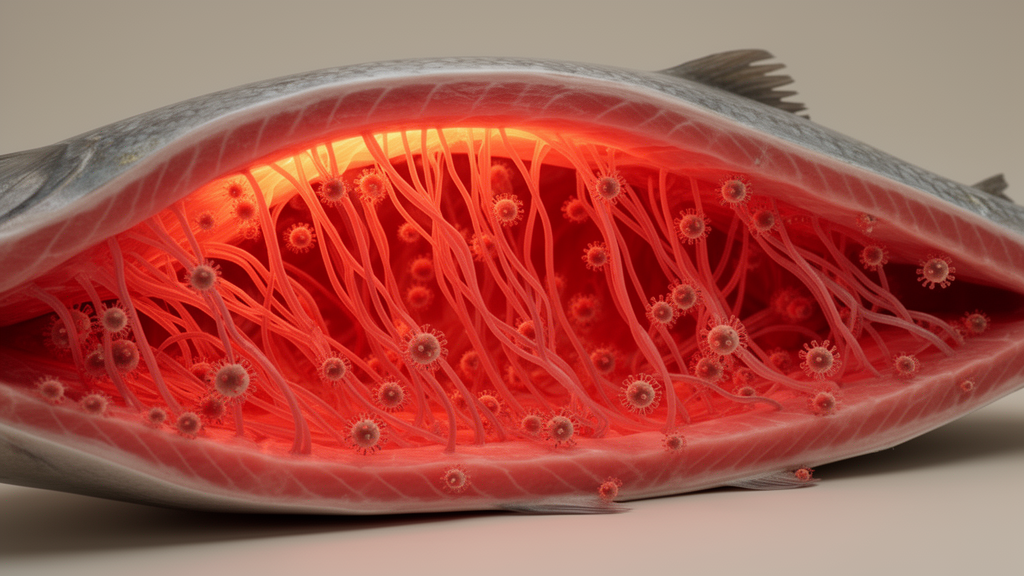
Researchers from Zhejiang Ocean University have elucidated the complex interplay between protein structural degradation, volatile flavor evolution, and microbial community succession in Chinese hook snout carp (Opsariichthys bidens) during simulated refrigerated transportation. By establishing a transportation simulation model that accounts for ambient temperature fluctuations typical of winter, spring/autumn, and summer in Zhejiang Province, the study provides a detailed correlation analysis of how these environmental factors drive quality deterioration. The findings highlight that temperature is the dominant environmental factor influencing the spoilage trajectory, with storage duration acting as a secondary but significant intensifier of these biochemical and microbiological changes.
The experimental design involved storing the fish at three distinct temperature levels: 4 °C, 16 °C, and 32 °C, which correspond to the average ambient temperatures of different seasons in the region. Samples were collected at 0, 6, 12, and 24 hours to capture the dynamic progression of spoilage. This approach moves beyond traditional constant-temperature studies, offering a more realistic representation of the cold-chain logistics environment. The study utilized a combination of Fourier transform infrared spectroscopy (FTIR), gas chromatography–mass spectrometry (GC–MS), and Illumina high-throughput sequencing to comprehensively characterize the changes in muscle protein structure, volatile compounds, and microbial diversity.
FTIR analysis revealed that prolonged storage at higher temperatures led to a significant decrease in ordered protein structures, specifically α-helix and β-sheet contents, while disordered structures such as β-turns and random coils increased. In the fresh control samples, the proportions of α-helix, β-sheet, β-turn, and random coil were 15%, 30%, 38%, and 16%, respectively. After 24 hours at 32 °C, the β-sheet content dropped to 17%, while β-turn and random coil contents rose to 43% and 18%. This shift indicates progressive denaturation of myofibrillar proteins, which is closely linked to the reduction in water-holding capacity and the subsequent loss of moisture observed in the muscle tissue.
GC–MS combined with Relative Odor Activity Value (ROAV) analysis demonstrated a temperature-dependent shift in the dominant volatile compounds responsible for flavor deterioration. At 4 °C, the flavor profile was initially dominated by ketones and phenolics, such as 1-penten-3-one and eugenol, which are associated with freshness. However, as storage time increased, aldehydes and sulfur-containing compounds became more prominent. At higher temperatures of 16 °C and 32 °C, nitrogen-containing compounds, particularly indole, accumulated significantly. Indole, which imparts a fecal odor at elevated concentrations, reached a ROAV of 100 at 32 °C after 24 hours, indicating severe protein degradation and microbial spoilage. The emergence of these off-odor compounds underscores the rapid deterioration of sensory quality under suboptimal storage conditions.
Microbial community analysis using 16S rRNA gene sequencing showed that temperature significantly influenced the diversity and composition of the bacterial populations in the fish muscle. The alpha diversity indices, including Shannon and Simpson, indicated that low-temperature storage at 4 °C resulted in a simplified microbial community structure, with a pronounced decline in diversity over time. In contrast, storage at 16 °C and 32 °C led to greater temporal variation in community diversity, with initial fluctuations followed by a sharp decrease. Beta diversity analysis confirmed that the microbial communities at 4 °C were distinctly separated from those at higher temperatures, suggesting that cold conditions favor the enrichment of psychrotrophic and cold-adapted microorganisms.
At the genus level, Acinetobacter emerged as the predominant spoilage bacterium across all temperature treatments, although its relative abundance varied dynamically. This finding is notable as it diverges from the typical Pseudomonas-dominated spoilage pattern often reported in other aquatic species. The dominance of Acinetobacter under low-temperature conditions may be attributed to its ability to maintain membrane fluidity by modulating fatty acid composition, allowing it to preserve basal metabolic functions and gain a competitive advantage during prolonged refrigerated storage. Other genera, such as Brevundimonas and Sphingomonas, were also detected but at lower relative abundances.
Functional prediction using PICRUSt2 based on the 16S rRNA sequencing data revealed that elevated temperatures enhanced the metabolic potential of the microbial communities, particularly in pathways related to amino acid, lipid, and carbohydrate metabolism. The predicted abundance of protease-associated enzymes, such as aminopeptidase N and serine carboxypeptidase, was significantly higher in samples stored at 32 °C for 24 hours compared with fresh samples. This upregulation of proteolytic enzymes correlates with the observed protein degradation and the formation of nitrogenous off-odor compounds. Additionally, enzymes involved in lipid metabolism, including alcohol dehydrogenase and lactate dehydrogenase, showed increased predicted abundances at higher temperatures, suggesting enhanced lipid oxidation and the production of aldehydes and ketones.
The study establishes a clear correlation cascade where temperature elevation triggers myofibrillar protein unfolding, which releases substrates for microbial metabolism. The selective enrichment of spoilage microbiota, driven by temperature, leads to the upregulation of specific metabolic pathways that generate sulfur-containing, nitrogenous, and carbonyl off-odor compounds. This integrated view links microbial functional shifts directly to flavor deterioration and protein structural changes. The findings emphasize that maintaining low temperatures during transportation is crucial for inhibiting muscle protein denaturation and controlling microbial succession, thereby preserving the quality and safety of freshwater fish.
Based on the observed patterns of quality deterioration, the researchers recommend maintaining transport temperatures below 4 °C to minimize protein degradation and microbial growth. They also suggest limiting the duration of exposure to temperatures above 16 °C to less than 6 hours and avoiding exposure to 32 °C for more than 12 hours. These recommendations provide a theoretical basis for optimizing temperature control strategies in the logistics of freshwater fish. However, the study acknowledges that it employed discrete temperature levels rather than continuously fluctuating regimes, and future research should investigate the effects of dynamic temperature fluctuations on microbial succession and protein-flavor interactions to develop more robust predictive models for shelf-life estimation under realistic cold-chain conditions.
Subject of Research: Correlation of protein structure, volatile flavor, and microbial succession in fish during simulated transport
Article Title: Protein structural changes, volatile flavor evolution and microbial community succession in Opsariichthys bidens during simulated natural refrigerated transport: a correlation analysis
Article References: Wang, J., Xu, L., Ying, X., Deng, S., Yu, J., Weng, X., Sartoni, M., Guidi, A., & Zhang, J. (2026). Protein structural changes, volatile flavor evolution and microbial community succession in Opsariichthys bidens during simulated natural refrigerated transport: a correlation analysis. Food Chemistry: X, 40, Article 104653. https://doi.org/10.1016/j.fochx.2026.104653
Image Credits: AI Generated
DOI: 10.1016/j.fochx.2026.104653
Keywords: food science, aquatic products, cold chain, microbial succession, protein degradation, volatile compounds, fish spoilage, temperature control, Protein, structural, changes, volatile
Cite Scienmag News
Morgan Morrow. (October 26, 2026). Temperature Drives Fish Spoilage via Protein and Microbial Shifts. Scienmag. https://scienmag.com/temperature-drives-fish-spoilage-via-protein-and-microbial-shifts/
Morgan Morrow. "Temperature Drives Fish Spoilage via Protein and Microbial Shifts." Scienmag, 26 October 2026, https://scienmag.com/temperature-drives-fish-spoilage-via-protein-and-microbial-shifts/. Accessed 26 October 2026.
Morgan Morrow. "Temperature Drives Fish Spoilage via Protein and Microbial Shifts." Scienmag. October 26, 2026. https://scienmag.com/temperature-drives-fish-spoilage-via-protein-and-microbial-shifts/


