


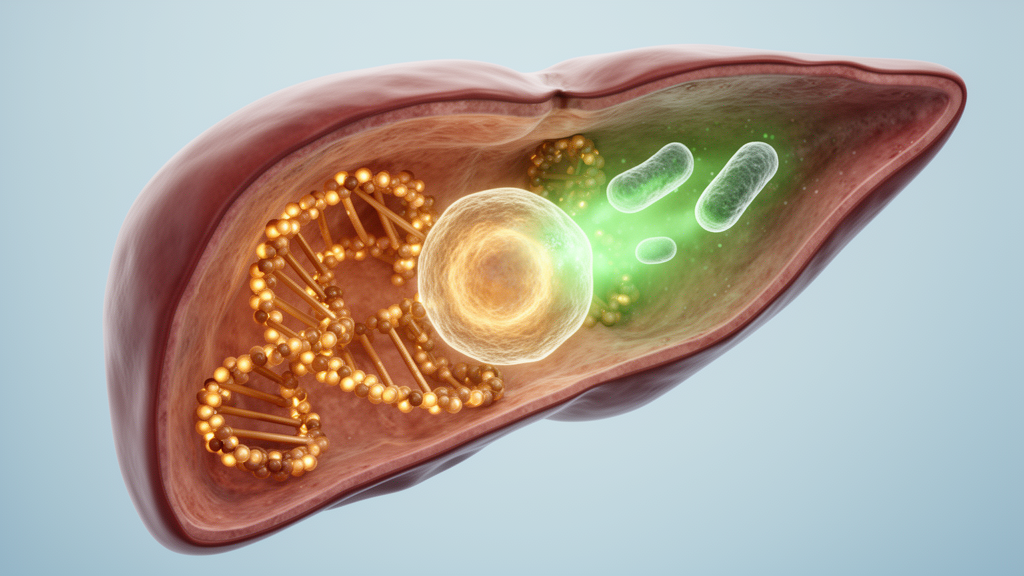
Liver cancer does not simply grow faster than healthy tissue; it rewires its entire chemical economy. In hepatocellular carcinoma (HCC), the most common form of primary liver cancer, tumor cells overhaul how they burn glucose, build fatty acids, and process amino acids, all to satisfy the relentless demands of rapid proliferation and to survive in the hostile, oxygen-starved environments that tumors create. At the same time, a quieter but equally profound transformation takes place across the genome: patterns of DNA methylation shift, RNA molecules acquire new chemical tags, non-coding RNAs fall out of balance, and histone proteins—the spools around which DNA is wound—carry altered marks. For decades, these two phenomena, metabolic reprogramming and epigenetic dysregulation, were studied largely in isolation. A new systematic review now argues that they are inseparable, locked in a reciprocal dialogue that drives hepatocarcinogenesis itself.
The review, led by Professor Kefei Yuan of West China Hospital, Sichuan University, and colleagues, was published online in the Chinese Medical Journal on July 30, 2026. It systematically assembles the latest research on how epigenetic regulation and metabolic reprogramming interact in HCC, organizing a sprawling literature into a coherent framework. “A thorough understanding of how epigenetic modifications and metabolic reprogramming interact in HCC is critical for elucidating the mechanisms underlying hepatocarcinogenesis and developing new treatment approaches against HCC,” explains Prof. Yuan, the corresponding author of the review. “In this article, we systematically introduce the molecular basis of each epigenetic modification, then summarize the latest research progress on epigenetic regulation of metabolism in HCC, trying to link these two frontier fields.”
The central insight of the review is that the relationship between metabolism and epigenetics is bidirectional. Metabolic pathways generate small molecules that serve as substrates or cofactors for epigenetic enzymes. Acetyl-CoA, produced from glucose and lipid metabolism, fuels histone acetylation. S-adenosylmethionine (SAM), a product of one-carbon amino acid metabolism, supplies the methyl groups that decorate DNA and histones. Lactate, the end product of the Warburg effect—the phenomenon in which cancer cells preferentially ferment glucose even in the presence of oxygen—has emerged as a signaling molecule in its own right, driving a newly recognized histone modification called lactylation. In this way, the metabolic state of a cell is written directly into its chromatin, the packaged form of DNA that determines which genes are accessible for transcription.
The reverse direction is equally consequential. Epigenetic modifications alter the expression of metabolic enzymes, reinforcing and amplifying the metabolic phenotype of the tumor. Aberrant methylation of promoters controlling metabolic genes can silence or activate entire pathways, shifting cells toward enhanced glycolysis, increased fatty acid synthesis, or reprogrammed amino acid handling. This feedback loop—metabolites shaping epigenetic marks, epigenetic marks shaping metabolic enzymes—creates a self-reinforcing circuit that locks HCC cells into their malignant state and contributes to the construction of a tumor-promoting microenvironment. The review organizes this crosstalk around five major types of epigenetic modification, each with distinct connections to metabolism.
The first is DNA methylation, which shows bidirectional crosstalk with multiple metabolic pathways. On one side, aberrant methylation of metabolic gene promoters drives changes in glycolysis, lipid synthesis, and amino acid metabolism, effectively rewriting the tumor’s metabolic instruction manual. On the other side, metabolic intermediates such as SAM, derived from one-carbon metabolism, provide the raw material for DNA methylation itself, closing the loop. This means that nutritional state, enzyme availability, and flux through one-carbon metabolism can all influence which genes are silenced or expressed, and those expression changes in turn reshape metabolism further.
The second is RNA methylation, particularly N6-methyladenosine (m6A), the most abundant internal modification of messenger RNA in mammalian cells. The review describes how m6A fine-tunes the expression of metabolic enzymes through a cast of regulatory proteins: “writers” such as METTL3 that install the mark, “erasers” such as FTO that remove it, and “readers” such as YTHDFs and IGF2BPs that interpret it and determine the fate of the modified transcript. This dynamic system controls key metabolic processes in HCC, including glycolysis, lipid synthesis, and amino acid metabolism, allowing tumor cells to adjust enzyme production rapidly in response to shifting conditions without altering the underlying DNA sequence.
The third category is non-coding RNAs, which form a multi-layered regulatory network. MicroRNAs directly target the messenger RNAs of metabolic enzymes, dampening or eliminating their translation. Circular RNAs act as sponges that sequester microRNAs, relieving their inhibitory effects, and some can even encode functional peptides. Long non-coding RNAs operate through yet other mechanisms: they interact with proteins, remodel chromatin, or stabilize metabolic enzymes, thereby influencing metabolic pathways at multiple levels simultaneously. The sheer diversity of these RNA species means that a single metabolic pathway in HCC may be regulated by dozens of non-coding RNAs acting in concert, creating redundancy that can frustrate single-target therapies but also offering multiple points of intervention.
The fourth is histone modification, the family of chemical tags on chromatin proteins that includes methylation, acetylation, lactylation, phosphorylation, and ubiquitination. These modifications integrate metabolic signals directly into transcriptional programs. Histone acetylation depends on acetyl-CoA derived from glucose and lipid metabolism, meaning that a cell burning sugar at high rates is chemically primed to open up its genes. Histone methylation depends on SAM from amino acid metabolism, linking nitrogen and one-carbon metabolism to gene expression. Perhaps most striking is lactylation, an emerging modification in which lactate—the very molecule produced by the Warburg effect—is attached to histones, directly coupling glycolytic flux to gene regulation. The review also flags RNA editing as a fifth mechanism, predominantly adenosine-to-inosine (A-to-I) editing mediated by the enzyme ADAR1, which contributes to metabolic reprogramming by altering key genes involved in polyamine metabolism and oxidative stress responses.
What elevates this review beyond a descriptive catalog is its therapeutic framing. The epigenetic-metabolism axis, the authors argue, represents a promising target for drug development. Preclinical studies have shown that targeting DNA methyltransferases, histone modifiers, or non-coding RNAs can reverse metabolic reprogramming and suppress tumor growth. Inhibitors of DNMT1, a DNA methyltransferase, and of histone methyltransferases have demonstrated anti-tumor effects in HCC models. Meanwhile, nanoparticle-mediated delivery of small interfering RNAs targeting metabolic enzymes has shown efficacy in reducing tumor burden in preclinical settings. “Given that epigenetic mechanisms drive metabolic reprogramming essential for HCC survival and drug resistance, targeting this axis theoretically could overcome chemoresistance,” notes Prof. Yuan. “However, promising preclinical candidates have not yet advanced to clinical trials, underscoring the need for further interdisciplinary research.”
The authors are candid about the gaps that remain. The specific effects of metabolites such as cholesterol, ethanol, and alpha-ketoglutarate on DNA methylation require further exploration, a question with direct relevance given that alcohol exposure and lipid dysregulation are major risk factors for liver disease. The relationship between histone modifications and amino acid metabolism remains unclear, as does the role of ketone body metabolism in histone acetylation and the involvement of histone demethylases in metabolic reprogramming. These unresolved questions define the research agenda for the field. What is already clear, however, is that the epigenetic-metabolic crosstalk in HCC is not a side effect of cancer but a central organizing principle of it—a bidirectional network in which every metabolic choice a tumor cell makes is recorded in its chromatin, and every epigenetic mark reshapes its metabolism. Untangling that loop, the review suggests, may be the key to therapies that do not merely attack liver cancer cells but dismantle the regulatory logic that sustains them.
Subject of Research: The bidirectional crosstalk between epigenetic regulation and metabolic reprogramming in hepatocellular carcinoma
Article Title: New review in Chinese Medical Journal illuminates the crosstalk between epigenetics and metabolism in hepatocellular carcinoma
Article References: New review in Chinese Medical Journal illuminates the crosstalk between epigenetics and metabolism in hepatocellular carcinoma. Original publication (Bibliographic details unavailable.)
Image Credits: AI Generated
DOI: Not provided
Keywords: hepatocellular carcinoma, epigenetics, metabolic reprogramming, DNA methylation, RNA methylation, m6A, non-coding RNAs, histone modification, lactylation, Warburg effect, cancer metabolism, Chinese Medical Journal
Cite Scienmag News
Nathaniel Bowman. (October 17, 2026). Epigenetics and Metabolism: The Two-Way Conversation Driving Liver Cancer. Scienmag. https://scienmag.com/epigenetics-and-metabolism-the-two-way-conversation-driving-liver-cancer/
Nathaniel Bowman. "Epigenetics and Metabolism: The Two-Way Conversation Driving Liver Cancer." Scienmag, 17 October 2026, https://scienmag.com/epigenetics-and-metabolism-the-two-way-conversation-driving-liver-cancer/. Accessed 17 October 2026.
Nathaniel Bowman. "Epigenetics and Metabolism: The Two-Way Conversation Driving Liver Cancer." Scienmag. October 17, 2026. https://scienmag.com/epigenetics-and-metabolism-the-two-way-conversation-driving-liver-cancer/


