


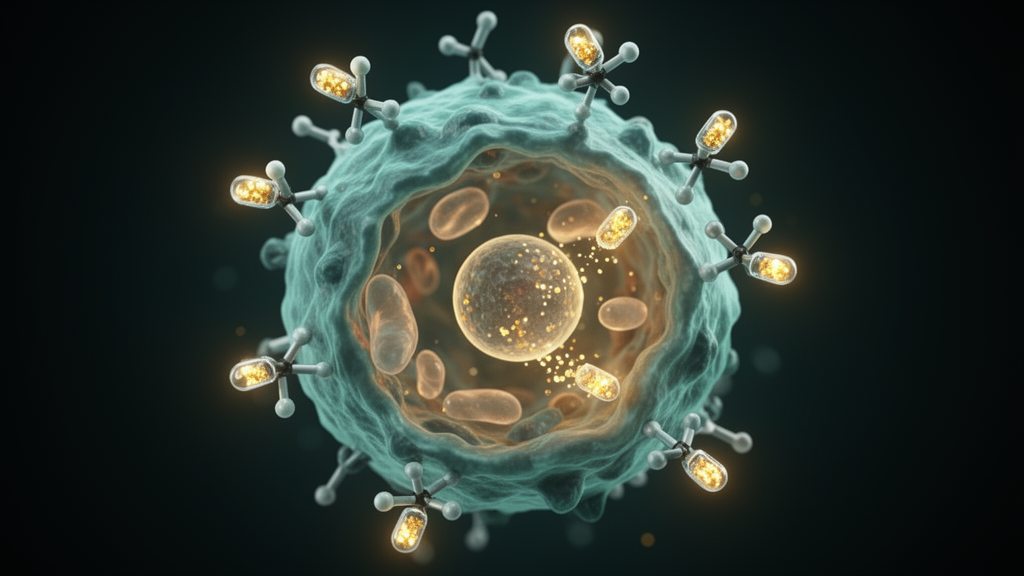
Antibody–drug conjugates, or ADCs, have become one of the fastest-growing drug classes in oncology, combining the targeting precision of monoclonal antibodies with the cytotoxic potency of chemotherapy payloads. Yet the biomarkers used to select patients for these agents remain strikingly rudimentary. In a Review published in Nature Reviews Clinical Oncology, an international team of researchers led by Jia Liu of the Kinghorn Cancer Centre in Sydney argues that the field has outgrown its dominant tool, semi-quantitative immunohistochemistry, and proposes a modular framework that rethinks how ADC biomarkers should be developed, validated and deployed in the clinic.
The central premise of the framework is that ADC activity cannot be reduced to a single measurement of target expression. An ADC must first bind its antigen on the tumour cell surface, then be internalized, trafficked through the endolysosomal pathway, and finally release its payload through linker cleavage. The liberated drug must then act on a tumour that may or may not be intrinsically susceptible to its mechanism of action. Each of these steps is a potential bottleneck, and each is shaped by tumour biology, the tumour microenvironment and the pharmacological properties of the specific conjugate. A tumour with abundant antigen but inefficient internalization, or with high expression of drug efflux pumps, may derive little benefit despite passing a conventional companion diagnostic test.
The authors organize their framework around discrete modules that correspond to these biological determinants: antigen abundance and accessibility, intracellular trafficking and linker cleavage, and tumour susceptibility to the payload. The modular design is deliberate. Rather than seeking a single universal biomarker, the framework allows different assays to be combined and weighted depending on the ADC in question, the tumour type and the clinical question, whether that is patient selection, therapeutic sequencing, rational combination design, dose optimization or regulatory decision-making.
The first module addresses the antigen itself. Current clinical practice relies heavily on immunohistochemistry scored on ordinal scales, an approach inherited from decades of HER2 and hormone receptor testing in breast cancer. The Review highlights how error-prone and subjective this can be, citing multi-institutional assessments showing substantial variability in pathologist scoring of HER2 immunohistochemistry, and global studies documenting inconsistent diagnosis of the HER2-low category that has become so consequential with the advent of trastuzumab deruxtecan. The authors argue that quantitative, spatially resolved assays, including quantitative continuous scoring of digital pathology images, quantitative immunofluorescence capable of measuring HER2 and TROP2 concentrations on a single biopsy slide, and mass spectrometry-based proteomics, can capture antigen levels with far greater precision and reproducibility than visual scoring.
Spatial biology is a recurring theme. ADC efficacy depends not only on how much antigen a tumour expresses but on where it is expressed, how uniformly it is distributed across the tumour and whether it is accessible to a large circulating antibody. The Review points to work on the neoadjuvant ADC SHR-A1811 in HER2-positive breast cancer, in which spatial determinants of efficacy were mapped across tumour architecture, and to the DAISY trial of trastuzumab deruxtecan, which showed how variable HER2 expression within metastatic disease shapes response. Intratumoural heterogeneity, long recognized as a driver of therapy resistance, is particularly relevant for ADCs because bystander killing of antigen-negative neighbouring cells depends on the diffusibility of the released payload, a property that varies dramatically between linkers and payloads.
The second module concerns what happens after binding: internalization, intracellular trafficking and linker cleavage. The authors note that endocytic evasion has recently been described as a mechanism of resistance to ADC therapy, and that the enzymes assumed to cleave cleavable linkers may not always be the ones that actually do so. In a striking example, cathepsin B, long considered the canonical target of cathepsin-cleavable linkers, was shown to be dispensable for the cellular processing of such conjugates. Emerging evidence also links cathepsin protease expression, including proteases contributed by tumour-associated macrophages, to outcomes with trastuzumab deruxtecan in metastatic breast cancer. Molecular imaging offers a complementary window on this module: immuno-PET with radiolabelled antibodies, exemplified by zirconium-89 and copper-64 labelled trastuzumab studies in the ZEPHIR trial lineage, has demonstrated the ability to predict lack of response to trastuzumab emtansine in advanced HER2-positive breast cancer by visualizing whether the drug actually reaches and is retained in metastatic lesions.
The third module moves beyond the conjugate entirely and asks whether the tumour cell is vulnerable to the payload once it is released. This is emerging as a decisive question now that multiple approved ADCs share topoisomerase I inhibitor payloads, including trastuzumab deruxtecan, datopotamab deruxtecan and sacituzumab govitecan. Cross-resistance between such agents has been documented clinically, with TOP1 mutations identified in tumours that progressed after exposure to topoisomerase I inhibitor ADCs, and parallel genomic alterations affecting both antigen and payload targets observed in acquired resistance to sacituzumab govitecan in triple-negative breast cancer. Expression of the schlafen-11 gene, SLFN11, a known sensitizer of cancer cells to DNA-damaging agents, is highlighted as a candidate pan-cancer biomarker of payload sensitivity, while ATP-binding cassette transporters such as P-glycoprotein can actively efflux certain payloads and confer multidrug resistance. Payload-centric biomarkers of this kind could, the authors argue, guide not just whether to give an ADC but in what order, an increasingly urgent question as sequential ADC therapy becomes standard in breast cancer and other diseases.
A distinctive and arguably overdue contribution of the Review is its insistence that toxicity biomarkers be developed alongside efficacy biomarkers. The authors note that toxicity can be equally determinant of clinical utility, since a drug that cannot be delivered at an active dose provides no benefit regardless of tumour sensitivity. Interstitial lung disease associated with anti-ERBB2 ADCs, dermatologic events with the nectin-4-directed agent enfortumab vedotin, and the hematologic toxicity of sacituzumab govitecan are cited as examples where understanding and predicting toxicity would directly improve the therapeutic index. Risk–benefit frameworks such as Q-TWiST analyses of sacituzumab govitecan in metastatic triple-negative breast cancer illustrate how toxicity shapes the value of these drugs in practice. Incorporating toxicity prediction into biomarker development would also support dose optimization initiatives, including the US FDA’s Project Optimus, which calls for selecting optimized dosages rather than merely maximum tolerated ones.
Technologically, the framework leans on a maturing toolkit. Multiplex immunofluorescence and hyperplex spatial proteomics can map dozens of proteins and RNAs in fixed tissue at single-cell resolution. Mass spectrometry-based proteogenomics, supported by resources such as the Clinical Proteomic Tumor Analysis Consortium and the pi-HuB proteomic navigator of the human body, offers unbiased quantification of antigen abundance and payload-relevant pathways. Machine learning and federated deep learning approaches are proposed as means of integrating these multimodal data streams while respecting patient privacy and enabling harmonization across institutions and countries. Circulating tumour DNA and other liquid biopsy analytes may allow longitudinal monitoring of resistance mechanisms, such as loss of HER2 expression or binding, without repeated invasive biopsies.
The authors are candid about the challenges standing between this framework and routine clinical adoption. Quantitative and spatial assays will require prospective validation in ADC trials, standardization across platforms and laboratories, and regulatory pathways for qualification, such as those outlined in the FDA’s E16 guidance on biomarker submissions. Preanalytical variables, including decalcification and fixation, can distort immunohistochemistry and molecular measurements and must be controlled. Harmonized development across trials, tumour types and geographical regions will be essential, the Review concludes, to move ADC biomarker development beyond the empirical target-expression thresholds that have defined the field to date. If the modular vision succeeds, the next generation of ADC trials could enrol patients not by a stained slide score alone, but by a composite biological profile that captures every step in the journey of these complex drugs from the bloodstream to the tumour cell nucleus.
Subject of Research: A modular biomarker framework for improving patient selection, sequencing and toxicity prediction with antibody–drug conjugates in oncology
Article Title: A modular framework for antibody–drug conjugate biomarkers
Article References: Liu, J., Ruan, D.-Y., McNamee, N., Reddel, R. R., Wu, H.-X., Meng, Q., Xu, R.-H., Subbiah, V., Rimm, D. L., & Pistilli, B. (2026). A modular framework for antibody–drug conjugate biomarkers. Nature Reviews Clinical Oncology. https://doi.org/10.1038/s41571-026-01213-3
Image Credits: AI Generated
DOI: 10.1038/s41571-026-01213-3
Keywords: antibody–drug conjugates, biomarkers, immunohistochemistry, target expression, linker cleavage, payload susceptibility, topoisomerase I inhibitors, spatial proteomics, tumour microenvironment, toxicity biomarkers, precision oncology, trastuzumab deruxtecan
Cite Scienmag News
Nathaniel Bowman. (October 9, 2026). Beyond target expression: a modular framework to predict who benefits from antibody–drug conjugates. Scienmag. https://scienmag.com/beyond-target-expression-a-modular-framework-to-predict-who-benefits-from-antibody-drug-conjugates/
Nathaniel Bowman. "Beyond target expression: a modular framework to predict who benefits from antibody–drug conjugates." Scienmag, 9 October 2026, https://scienmag.com/beyond-target-expression-a-modular-framework-to-predict-who-benefits-from-antibody-drug-conjugates/. Accessed 9 October 2026.
Nathaniel Bowman. "Beyond target expression: a modular framework to predict who benefits from antibody–drug conjugates." Scienmag. October 9, 2026. https://scienmag.com/beyond-target-expression-a-modular-framework-to-predict-who-benefits-from-antibody-drug-conjugates/


