


In the crowded world of neurodegeneration research, motor neurons have long occupied the spotlight in amyotrophic lateral sclerosis, the relentless disease that strips people of the ability to move, speak and eventually breathe. But a new study published in Nature Neuroscience argues that the true puppet masters of one of the disease’s most damaging cellular defects may be sitting quietly beside those neurons. A team led by Maria Stavrou and Bhuvaneish T. Selvaraj at the University of Edinburgh, working with Giampietro Schiavo’s group at University College London, has shown that astrocytes—the star-shaped support cells that outnumber neurons in the brain and spinal cord—can impose, and crucially reverse, a breakdown in the delivery of mitochondria along the axons of motor neurons carrying the C9ORF72 mutation, the most common genetic cause of both familial ALS and a substantial share of sporadic cases.
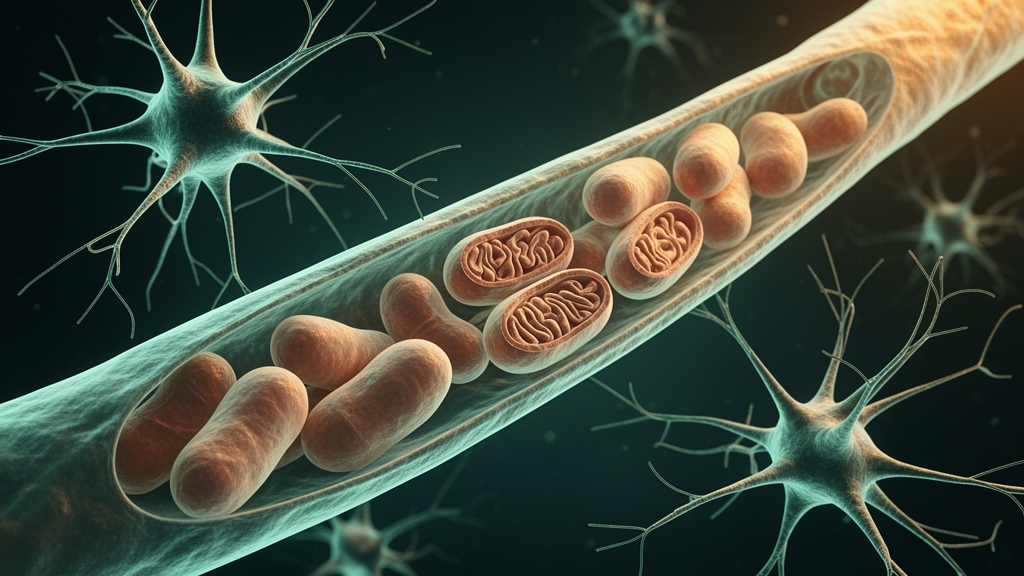
The logistics of a motor neuron are staggering. These cells extend axons that can stretch up to a meter in the human body, and their distant terminals need a constant supply of fresh mitochondria, the organelles that generate the chemical energy ATP required for synaptic transmission and cellular survival. Moving mitochondria along the axon is an energy-intensive process in itself, and when that transport falters, the far reaches of the neuron are starved of power while damaged organelles pile up. Disrupted axonal transport has been implicated in ALS for years, and previous work had established that C9ORF72 motor neurons show cell-autonomous defects in mitochondrial motility and function. What remained unknown was whether the astrocytes surrounding those neurons—cells already known to contribute to non-cell-autonomous neurodegeneration through mechanisms such as reduced glutamate uptake and impaired lactate shuttling—also influence this transport machinery.
To find out, the team built a rigorous human stem-cell platform. They used induced pluripotent stem cell lines derived from three patients carrying the C9ORF72 repeat expansion, together with isogenic gene-corrected controls created through CRISPR–Cas9 editing, in which the mutation was removed. From these lines they generated highly enriched spinal cord-patterned astrocytes, more than ninety percent of which expressed the canonical astrocyte markers glial fibrillary acidic protein and S100B, as well as motor neuron cultures of which roughly half to sixty percent were ISL1/2-positive motor neurons. The mutant astrocytes carried hallmark C9ORF72 pathologies, including RNA foci and dipeptide repeat proteins, yet showed no differences in glutamate uptake or calcium wave propagation, meaning any effects on transport could not be attributed to those well-known astrocyte dysfunctions.
The central experiment was elegantly simple. The researchers selectively labeled motor neurons with a fluorescent mitochondrial marker, mito-DsRed2, and then imaged mitochondrial movement along a hundred-micrometer stretch of the proximal axon using live-cell time-lapse microscopy, generating kymographs from which they extracted two established metrics: the percentage of mitochondria that were motile and their average velocity. When genetically normal motor neurons were grown in physical contact with C9ORF72-mutant astrocytes, both measures dropped significantly compared with motor neurons cultured alone. Strikingly, when the same control neurons were paired with gene-corrected astrocytes, the deficit vanished entirely. Even more remarkable, mutant motor neurons cocultured with corrected astrocytes recovered both transport parameters to wild-type levels. In these mixed cultures, the phenotype of the neuron’s mitochondrial traffic was dictated not by the neuron’s own genome but by the genotype of its astrocyte neighbors.
Contact, it turned out, was essential. When the team treated control motor neurons with conditioned medium harvested from mutant astrocytes, mitochondrial motility was unaffected, indicating that secreted factors alone could not reproduce the damage; direct physical interaction between the two cell types was required. The specificity of the defect was equally revealing. Tracking HcT-labeled signaling endosomes, another vital axonal cargo, showed no transport changes in any coculture combination. The astrocyte effect was therefore cargo-specific, targeting mitochondria rather than causing a global collapse of axonal transport. The authors suggest this selectivity reflects distinct energetic dependencies: signaling endosomes fuel their movement with locally generated glycolytic ATP, whereas mitochondrial motility depends on membrane potential and calcium-regulated adaptors such as Miro, directly coupling transport to the bioenergetic state of the organelle itself.
That coupling became the thread the researchers followed next. Using Seahorse extracellular flux analysis, they measured oxygen consumption rates as a proxy for mitochondrial respiration. Because motor neuron cultures respire at nearly eightfold the rate of astrocytes alone, changes in coculture readings could be confidently attributed to the neurons. The results were unambiguous: coculture with astrocytes of either genotype boosted basal and maximal respiration relative to neuron monocultures, but pairing neurons with mutant astrocytes significantly reduced both parameters compared with pairing them with corrected astrocytes. A complementary assay using the potentiometric dye MitoTracker Red CMXRos confirmed that the steady-state mitochondrial membrane potential of motor neurons—mutant or normal—fell in the presence of mutant astrocytes and recovered with corrected astrocytes. The astrocyte genotype was directly modulating the bioenergetic health of neurons it touched.
The root of the problem lay within the astrocytes themselves. Isolated C9ORF72-mutant astrocytes showed significantly reduced basal, ATP-linked and maximal respiration compared with their gene-corrected counterparts, along with diminished glycolytic capacity, lactate production and glucose utilization. RNA sequencing, however, revealed no genotype-driven astrocyte reactivity, making a gain-of-toxic-function inflammatory mechanism unlikely. Intriguingly, when the team measured intracellular lactate in motor neurons using a genetically encoded FRET biosensor called Laconic, they found no significant differences across coculture conditions, suggesting that disrupted oxidative metabolism within astrocytes, rather than altered lactate transfer to neurons, mediates the transport deficit. The astrocytes were not failing to deliver fuel; they were failing in a way that somehow drains the neurons’ own power plants.
The therapeutic implication emerged from a rescue experiment targeting the master regulator of mitochondrial biogenesis. The team overexpressed three key metabolic genes in mutant astrocytes via lentiviral delivery: PPARGC1A (encoding PGC-1α), PPARGC1B (PGC-1β) and TFAM. PGC-1β proved toxic to the astrocytes, and TFAM, consistent with prior reports that it does not drive mitochondrial biogenesis, conferred no benefit. PGC-1α, by contrast, upregulated transcripts of the mitochondrial electron transport chain, including MT-CO2, MT-ND2, MT-CO3, MT-ND4 and MT-ATP6, and produced a trend toward increased respiration. When mutant astrocytes overexpressing PGC-1α were cocultured with motor neurons—mutant or corrected—mitochondrial motility and velocity were restored. Boosting the metabolic engine of the astrocyte alone was sufficient to repair the transport machinery inside genetically distinct neurons.
The findings reframe how scientists think about non-cell-autonomous degeneration in ALS. Rather than astrocytes poisoning neurons through inflammatory or excitotoxic signals, this work describes a bioenergetically coupled mechanism in which the metabolic competence of glia sets the ceiling for mitochondrial dynamics in neurons. The result also resonates with earlier animal work in SOD1 models of ALS, where PGC-1α activation preserved mitochondrial function and delayed disease progression, hinting that metabolic rescue of glia could be a broadly applicable strategy. The authors caution that much remains to be defined, including whether direct mitochondrial exchange, metabolite or lipid transfer, vesicular signaling or other modes of metabolic coupling connect astrocytic energy status to neuronal mitochondrial behavior, and whether similar mechanisms operate across other ALS genotypes and in sporadic disease, which accounts for roughly ninety percent of cases.
For a disease with no cure and only modestly effective therapies, the identification of an actionable, astrocyte-centered node is significant. If pharmacological activation of the PGC-1α pathway in glia can correct non-cell-autonomous mitochondrial dysfunction in C9ORF72-ALS, it opens a therapeutic window that does not require correcting the mutation inside every neuron. The study, funded in part by the Medical Research Council, the UK Dementia Research Institute and the My Name’5 Doddie Foundation among others, demonstrates with unusual clarity that in neurodegeneration, the health of a neuron may depend as much on the metabolic company it keeps as on its own genes—a lesson that could reshape drug discovery for ALS well beyond the C9ORF72 mutation that first revealed it.
Subject of Research: Non-cell-autonomous regulation of axonal mitochondrial transport by C9ORF72-mutant astrocytes in amyotrophic lateral sclerosis
Article Title: Astrocytes regulate axonal mitochondrial transport deficits in C9ORF72 amyotrophic lateral sclerosis motor neurons
Article References: Stavrou, M., Heffernan, Á. B., Carter, R. N., Dando, O., Jiwaji, Z., Burr, K., Nanda, J., Villarroel-Campos, D., Masoud Abdelhafid, A., Cholewa-Waclaw, J., Soong, D., Story, D., Schiavo, G., Hardingham, G. E., Chandran, S., & Selvaraj, B. T. (2026). Astrocytes regulate axonal mitochondrial transport deficits in C9ORF72 amyotrophic lateral sclerosis motor neurons. Nature Neuroscience. https://doi.org/10.1038/s41593-026-02464-0
Image Credits: AI Generated
DOI: 10.1038/s41593-026-02464-0
Keywords: amyotrophic lateral sclerosis, C9ORF72, astrocytes, motor neurons, mitochondrial transport, axonal transport, mitochondrial bioenergetics, PGC-1α, induced pluripotent stem cells, non-cell-autonomous neurodegeneration, CRISPR gene correction, live-cell imaging
Cite Scienmag News
Diana Fleming. (October 9, 2026). Astrocytes Drive the Mitochondrial Traffic Jams Behind a Common Form of ALS. Scienmag. https://scienmag.com/astrocytes-drive-the-mitochondrial-traffic-jams-behind-a-common-form-of-als/
Diana Fleming. "Astrocytes Drive the Mitochondrial Traffic Jams Behind a Common Form of ALS." Scienmag, 9 October 2026, https://scienmag.com/astrocytes-drive-the-mitochondrial-traffic-jams-behind-a-common-form-of-als/. Accessed 9 October 2026.
Diana Fleming. "Astrocytes Drive the Mitochondrial Traffic Jams Behind a Common Form of ALS." Scienmag. October 9, 2026. https://scienmag.com/astrocytes-drive-the-mitochondrial-traffic-jams-behind-a-common-form-of-als/


