


Picture a bustling farmer’s market on a Saturday morning. Every shopper has favorite stalls they return to week after week, yet almost nobody buys everything from a single vendor. Shoppers browse, compare, occasionally try a new stall, and adapt their baskets to whatever the season and the local market offer. According to a new study published in Science Advances by researchers at the Max Planck Institute for Marine Microbiology in Bremen, some of the closest partnerships in the living world work in remarkably similar ways. The team, led by Nicole Dubilier and Harald Gruber-Vodicka with first author Anna Mankowski, found that tiny marine worms which cannot survive without their bacterial tenants nevertheless treat those tenants with a striking mixture of loyalty and openness, and that this very flexibility appears to be the secret of their long-term stability.
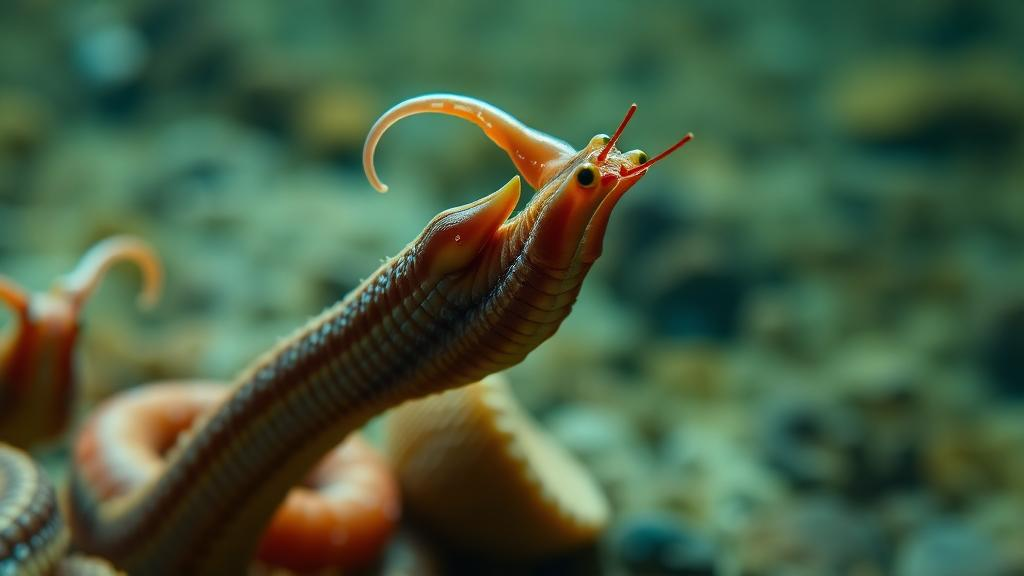
The worms in question belong to a group of gutless marine oligochaetes, thin, short animals smaller than a pinhead that live in sediments in tropical and temperate seas around the world. Their name is not an exaggeration. Over the course of evolution, these worms have lost their mouth, their gut and their excretory organs entirely. They cannot eat in any conventional sense, and they have no way of disposing of metabolic waste on their own. Instead, they host dense communities of chemosynthetic bacteria directly beneath their skin. These bacterial tenants fix carbon from compounds such as sulfide, provide the worm with nutrition, and process the host’s waste products. The association is so tight that neither partner can persist without the other: the worm is a walking, burrowing habitat, and the bacteria are its kitchen and its waste treatment plant rolled into one.
Given this level of interdependence, one might expect the partnership to be locked in place, with each worm species bound to a fixed, unchanging set of bacterial partners. The new study shows that the reality is more nuanced and, in some ways, the opposite of what intuition would predict. Within a single worm species, the bacterial communities are indeed very consistent. Worms of the same species collected from ocean regions far apart from one another harbor the same, or very similar, suites of symbionts. At the level of the species, the partnership looks rock solid, as stable as any mutualism described in the literature.
But that stability dissolves the moment researchers compare different host species, even ones that are close evolutionary relatives. Closely related worm species often host very different bacterial communities, tailored to the specific conditions of their local habitat. The authors use the market metaphor to make sense of this pattern: a shopper visiting a market in a different city will still find staple foods, fruits and vegetables, but the specific basket they assemble will reflect local supply and local preferences. In the same way, each worm species solves its nutritional needs with a specific, locally adaptive community of symbionts. The functional requirements of the partnership remain constant, while the identities of the partners providing those functions can change dramatically from one host lineage and one location to another.
Even more surprising is what the study reveals about fidelity over time. The worms do not simply inherit a fixed bacterial community and pass it on unchanged. They regularly take up new symbionts from their environment, and occasionally they drop some of the ones they already carry. As Mankowski reports, the worms like to try out new market stalls every now and then, adjusting to the local supply. This ongoing turnover means that the symbiosis is not a closed, hermetically sealed system but an open, dynamic marketplace in which partners are continually recruited, tested and, in some cases, released. The community as a whole remains stable in its overall composition and function, while its individual members come and go.
Why would an animal that is utterly dependent on its bacteria take the apparent risk of not being completely loyal to them? Dubilier, who has studied these partnerships for decades, admits that the pattern was genuinely surprising, since dependence on a partner would seem to demand unwavering fidelity. The most plausible answer lies in the diversity of metabolic abilities among the bacterial partners. Each symbiont species brings a different set of biochemical skills to the table. By periodically acquiring new bacteria, a worm can tap into new sources of food and energy, expanding its metabolic repertoire. In habitats where nutrients are sometimes scarce or fluctuate over time, this ability to sample and incorporate new metabolic capabilities could make the difference between thriving and merely surviving. Flexibility, in other words, is not a weakness in the partnership but a form of insurance.
The evidence behind these conclusions is unprecedented in scale. The researchers analyzed samples collected during three decades of expedition work, spanning nearly 250 worms representing 63 species from 17 different locations across the world’s oceans. No comparable survey of these symbioses has ever been attempted before. A dataset of this breadth was essential for separating genuine patterns from local accidents: only by comparing worms across species, regions and habitats could the team demonstrate that community stability within species coexists with dramatic turnover between species and through time.
The study also owes its existence to a quiet revolution in laboratory technology. Gruber-Vodicka, who led the project at the Max Planck Institute in Bremen and now runs his own laboratory at Kiel University, recalls that the first and seminal metagenomic analyses of gutless oligochaetes required thousands of worms to yield enough genetic material for a single analysis, a constraint that made comparative work across species and locations practically impossible. Recent technical innovations have changed that equation completely. Today, researchers can work with single individuals of animals smaller than a pinhead, recovering the genomes of their symbionts and reconstructing the metabolic potential of entire bacterial communities from one worm at a time. That leap in sensitivity is what transformed a long-standing question about symbiotic stability into an answerable one.
The broader significance of the work extends well beyond these particular worms. Symbioses between animals and chemosynthetic or nutritional bacteria are widespread in nature, from deep-sea tube worms and hydrothermal vent mussels to insects fed by bacterial endosymbionts, and a central puzzle in evolutionary biology has been how such intimate dependencies persist over millions of years without becoming brittle. The new study suggests a general principle: stability in symbiosis need not come from rigidity. A partnership can remain functionally stable even as its membership changes, provided the exchange of benefits continues. The worms are loyal partners to their bacteria in the short term, but always open to new possibilities in the long run, and that combination of commitment and adaptability keeps the relationship resilient as environments shift.
The evolutionary success of this strategy is written in the worms’ distribution. Despite an apparently restrictive lifestyle, lacking a mouth, a gut and excretory organs, and depending entirely on microbial partners for nutrition and waste management, gutless oligochaete communities have colonized all the world’s oceans and an impressive variety of habitats, from carbonate sands in Belize to sediments far beyond the tropics. Their shifting alliances, maintained over roughly 150 million years of evolution, have proven to be a remarkably durable recipe. In the marketplace of symbiosis, it turns out, the most stable customers are not those who never change their stalls, but those who know exactly what they need while remaining willing to shop around for it.
Subject of Research: Stability and flexibility of bacterial symbioses in gutless marine worms
Article Title: A symbiotic marketplace: Stability through flexibility
Article References: A symbiotic marketplace: Stability through flexibility. (n.d.). Original publication
Image Credits: AI Generated
DOI: Not provided
Keywords: symbiosis, marine worms, microbiome, metagenomics, chemosynthetic bacteria, Science Advances, Max Planck Institute for Marine Microbiology, host-microbe interactions, evolution, biodiversity, oligochaetes, nutrient exchange
Cite Scienmag News
Morgan Morrow. (October 6, 2026). Loyal but not faithful: marine worms swap microbes to stay stable. Scienmag. https://scienmag.com/loyal-but-not-faithful-marine-worms-swap-microbes-to-stay-stable/
Morgan Morrow. "Loyal but not faithful: marine worms swap microbes to stay stable." Scienmag, 6 October 2026, https://scienmag.com/loyal-but-not-faithful-marine-worms-swap-microbes-to-stay-stable/. Accessed 6 October 2026.
Morgan Morrow. "Loyal but not faithful: marine worms swap microbes to stay stable." Scienmag. October 6, 2026. https://scienmag.com/loyal-but-not-faithful-marine-worms-swap-microbes-to-stay-stable/


