


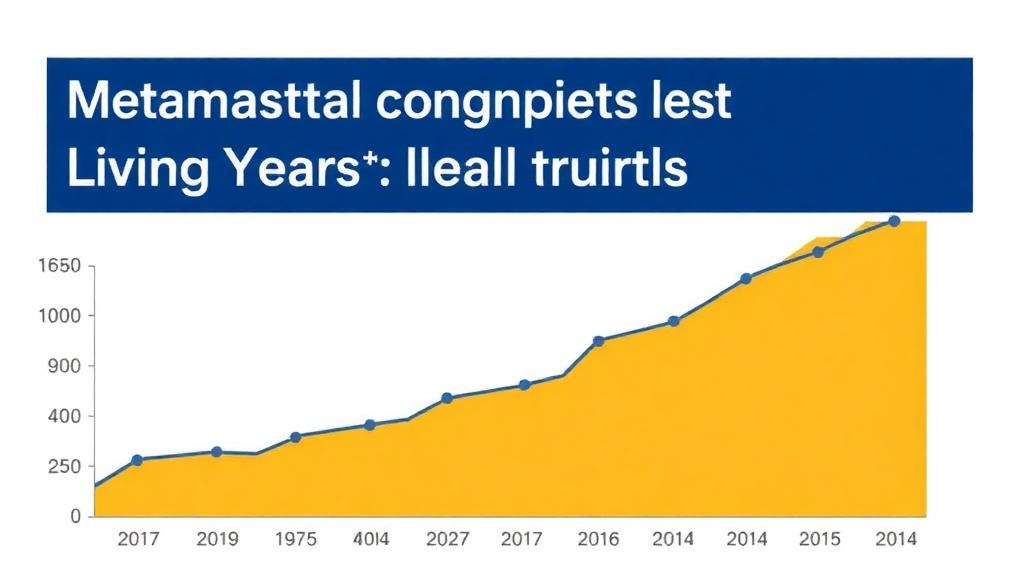
A quiet transformation is reshaping the landscape of advanced cancer in the Netherlands, and its scale has now been measured with unprecedented precision. A population-based retrospective cohort study published in the British Journal of Cancer has documented a dramatic rise in the number of people living long-term with de novo metastatic incurable cancer, meaning patients whose disease had already spread to distant organs at the moment of first diagnosis. In 2000, 1,298 such patients in the Netherlands survived at least two years after their diagnosis. By 2021, that annual figure had climbed to 5,398, a more than fourfold increase. These long-term survivors now represent between 12.0 and 22.6 percent of all incurable cancer diagnoses, up from roughly one in eight to nearly one in four. The findings, drawn from the Netherlands Cancer Registry, offer one of the clearest quantitative portraits yet of a population that modern oncology has created but has only begun to understand.
The study, led by Ruben Bouma and Mariken E. Stegmann of the University of Groningen’s Department of Primary and Long-term Care, together with colleagues from Amsterdam University Medical Center, the Netherlands Comprehensive Cancer Organisation and other Dutch institutions, set out to fill a conspicuous gap in cancer epidemiology. Therapeutic advances over the past two decades have steadily improved survival for patients with incurable cancer, yet the epidemiological characteristics of those who live with metastatic disease for years rather than months have remained poorly described. To address this, the researchers analyzed registry data for all adults aged 18 or older diagnosed with de novo metastatic solid tumors between 2000 and 2021 who survived at least two years after diagnosis. By restricting the cohort to patients whose metastases were present from the outset, the team deliberately excluded those whose disease relapsed after earlier curative treatment, isolating a group whose illness trajectory begins, from the very first day, in territory that medicine traditionally labels terminal.
The prevalence figures are perhaps the most striking element of the analysis. As of February 2024, the researchers calculated that at least 18,466 people in the Netherlands were living long-term with de novo metastatic incurable cancer, equivalent to roughly one in every thousand inhabitants. For a country of about 17.8 million people, that translates into a substantial and growing community of patients who are neither cured nor in their final months, but occupy a prolonged middle ground of chronic illness and ongoing treatment. The composition of this population challenges common assumptions about advanced cancer. Mean age at inclusion was 64 years, with a standard deviation of 12, and 59.4 percent were male, a distribution shaped largely by the tumor types that dominate the cohort.
That tumor distribution itself tells a story about how treatment has changed survival. Prostate cancer accounted for 35.6 percent of long-term survivors, lung cancer for 20.2 percent, breast cancer for 14.4 percent, and colorectal cancer for 6.3 percent. The prominence of lung cancer is particularly notable, because metastatic lung cancer was long considered among the most lethal of diagnoses. The arrival of molecularly targeted therapies, such as osimertinib for EGFR-mutated non-small-cell lung cancer, has transformed outcomes for defined patient subgroups, converting rapidly fatal disease into a condition that can be controlled, sometimes for years, with daily oral medication. Prostate cancer’s dominance reflects both its high incidence and the effectiveness of androgen-receptor-targeted treatments that can hold metastatic disease in check over long periods.
The duration of survival within the cohort is equally revealing. Of the 18,466 patients alive in February 2024, 55.8 percent, or 10,310 individuals, had survived between two and five years after diagnosis. A further 31.0 percent, numbering 5,721, had lived five to ten years beyond their metastatic diagnosis. Most remarkably, 13.2 percent, or 2,435 patients, had survived ten years or longer with disease that was metastatic from the start. A decade of life with incurable cancer was, at the turn of the millennium, an outcome so rare that it was scarcely contemplated in clinical planning. Today it describes thousands of people in a single mid-sized European country, and the trajectory of the data suggests the group will continue to expand.
Methodologically, the study exemplifies the power of high-quality national cancer registration. The Netherlands Cancer Registry, maintained by the Netherlands Comprehensive Cancer Organisation, records incident diagnoses using the International Classification of Diseases for Oncology and TNM staging criteria, allowing researchers to identify de novo stage IV solid tumors consistently across two decades. The team calculated annual incidence and prevalence of the long-term survivor population and characterized demographic and tumor attributes of those diagnosed in recent years. Because the analysis relied on anonymized registry data, individual informed consent was not required under Dutch regulations, and the protocol was approved by the registry’s Privacy Review Board and registered within the University Medical Center Groningen’s research management system. The authors note that the analysis code, developed for restricted registry data, is available on reasonable request subject to approval.
The study’s context within the broader literature underscores that the Netherlands is not an isolated case. Estimates for the United States suggest hundreds of thousands of people are living with metastatic cancer, and projections indicate continued growth in incidence and long-term survival as new medicines diffuse into practice. Comparable work in England has characterized the population with treatable but not curable cancer, while Australian researchers have estimated the number of people living with metastatic breast cancer using linked health data. Survival improvements have been documented specifically for metastatic colorectal cancer over two decades, and changes in survival for de novo metastatic cancer in the era of new medicines have been quantified in the United States as well. The Dutch study adds a European, population-based, twenty-two-year perspective that aligns with and reinforces this international picture.
What the numbers imply for care is the study’s central message. Patients living long-term with incurable cancer occupy an awkward position between two established care models. Cancer survivorship programs were largely designed around people who have completed curative treatment, while palliative care services have traditionally concentrated on the final months of life. This new population often receives continuous systemic therapy for years, accumulating treatment toxicities, psychosocial burdens and profound uncertainty about the future. Qualitative research has described the experience as living in a twilight zone, with patients reporting persistent anxiety, difficulty planning ahead, and a sense of inhabiting a place in between remission and terminal illness. Prior work by several of the same Dutch authors, including a modified Delphi study published in Palliative Medicine, has sought to define who counts as living long-term with incurable cancer, and a national survey has documented unmet needs around advance care planning in this group.
The epidemiological shift also carries implications for health system planning. A population of 18,466 long-term metastatic cancer patients, growing year on year, requires sustained access to oncologists, primary care physicians, rehabilitation services, psychological support and palliative care expertise simultaneously, rather than sequentially. International bodies have begun to respond: the European Society for Medical Oncology has issued expert consensus statements on cancer survivorship that explicitly include people with advanced and metastatic disease, and standards from the Multinational Association of Supportive Care in Cancer and the American Society of Clinical Oncology now address survivorship care for patients affected by advanced cancer. The Dutch data provide the kind of denominator that such guidelines have lacked, quantifying how many people the emerging care models must serve.
The authors conclude that the substantial increases in incidence and prevalence reflect a genuine shift toward prolonged survival within the incurable cancer population, and they call for greater awareness and research to inform care for this emerging group. The message for clinicians, policymakers and researchers alike is that the boundary between terminal and chronic illness has moved, and the systems built on the old boundary must now follow. As targeted therapies and immunotherapies continue to extend survival across tumor types, the population living long-term with metastatic disease will grow not only in the Netherlands but worldwide, and understanding its size, composition and needs will become an increasingly urgent task for cancer epidemiology and for the design of humane, effective care.
Subject of Research: Epidemiological trends in long-term survival among patients with de novo metastatic incurable cancer
Article Title: Trends in incidence and prevalence of patients living long-term with de novo metastatic incurable cancer: a retrospective cohort study
Article References: Bouma, R., Geerse, O. P., Raijmakers, N. J. H., Fransen, H. P., van Zuylen, L., Reyners, A. K. L., van Asselt, K., van Gastel, M. D. A., Brandenbarg, D., & Stegmann, M. E. (2026). Trends in incidence and prevalence of patients living long-term with de novo metastatic incurable cancer: a retrospective cohort study. British Journal of Cancer. https://doi.org/10.1038/s41416-026-03627-3
Image Credits: AI Generated
DOI: 10.1038/s41416-026-03627-3
Keywords: metastatic cancer, cancer epidemiology, Netherlands Cancer Registry, cancer survivorship, palliative care, prostate cancer, lung cancer, breast cancer, colorectal cancer, incidence, prevalence, targeted therapy
Cite Scienmag News
Nathaniel Bowman. (October 6, 2026). Metastatic Cancer Patients Living Years Longer: Dutch Registry Reveals a Fourfold Surge. Scienmag. https://scienmag.com/metastatic-cancer-patients-living-years-longer-dutch-registry-reveals-a-fourfold-surge/
Nathaniel Bowman. "Metastatic Cancer Patients Living Years Longer: Dutch Registry Reveals a Fourfold Surge." Scienmag, 6 October 2026, https://scienmag.com/metastatic-cancer-patients-living-years-longer-dutch-registry-reveals-a-fourfold-surge/. Accessed 6 October 2026.
Nathaniel Bowman. "Metastatic Cancer Patients Living Years Longer: Dutch Registry Reveals a Fourfold Surge." Scienmag. October 6, 2026. https://scienmag.com/metastatic-cancer-patients-living-years-longer-dutch-registry-reveals-a-fourfold-surge/


