


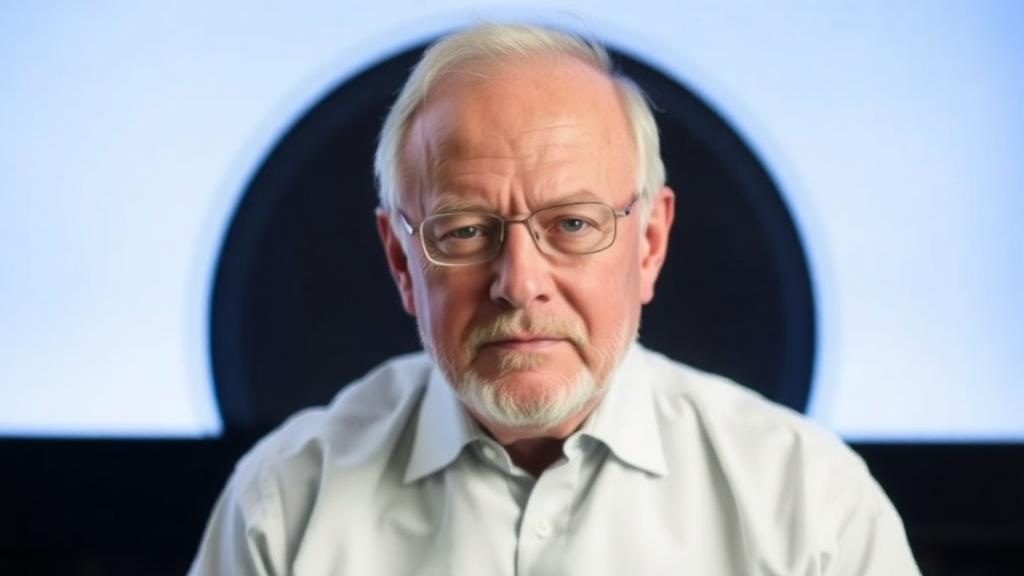
The international medical community is mourning the loss of Professor Paolo Tomà, an internationally renowned leader, mentor, and pioneer in the field of paediatric radiology, who passed away in May 2026. Over a career spanning more than four decades, Tomà helped define what modern imaging for children looks like today, combining technical innovation in ultrasound and cross-sectional imaging with an unwavering commitment to protecting young patients from unnecessary radiation. His death marks the end of an era for a subspecialty that he shaped not only in his native Italy but across Europe and around the world.
Tomà’s path into medicine began in Genoa, where he earned his medical degree from the University of Genoa in 1976. Even at that early stage, he demonstrated an unusually clear sense of direction. Rather than choosing between the two disciplines that fascinated him most, he completed dual training in both radiology and paediatrics, a combination that would become the foundation of his entire professional identity. Understanding children as patients, not merely as small adults, and understanding imaging as a tool to serve their specific clinical needs, allowed him to approach diagnostic problems with a perspective that many colleagues spent careers trying to emulate.
In 1980, he joined the Department of Imaging at the G. Gaslini Institute in Genoa, one of Italy’s most prestigious paediatric hospitals. There he advanced steadily from registrar to senior roles, eventually serving as Director of the Ultrasound Division from 1992 to 1994. Ultrasound was, during those years, transforming paediatric imaging: it offered a radiation-free window into the bodies of infants and children, and Tomà became one of its most articulate champions. His leadership of the division coincided with the rapid maturation of paediatric sonographic techniques, and he was widely regarded as a clinician who insisted that technological capability must always be matched by clinical judgement.
His exceptional leadership capabilities led to his appointment as Director of Radiology at the G. Gaslini Institute, a position he held from 1995 to 2009. His responsibilities expanded further when he took on the role of Director of the Department of Imaging between 2005 and 2009, overseeing a broad portfolio of diagnostic services at one of Europe’s leading children’s hospitals. In 2010, Tomà relocated to Rome to assume the directorship of the Imaging Department at the Bambino Gesù Children’s Hospital, the Vatican-affiliated paediatric institution that ranks among Italy’s foremost centres for children’s medicine. The move cemented a legacy that spanned the country’s two great paediatric institutions, and under his guidance the Rome department continued to develop as a national reference point for advanced paediatric diagnostics.
Alongside his institutional responsibilities, Tomà was a deeply committed educator. In 1990 he was appointed Professor of Paediatric Radiology at Genoa University’s Postgraduate Schools, and for more than three decades, across both Genoa and Rome, he mentored, inspired, and led generations of talented young Italian paediatric radiologists. Former trainees describe an environment in which rigor was expected but never at the expense of encouragement, and in which the intellectual excitement of the field was communicated with characteristic warmth. Many of the radiologists now leading paediatric imaging services throughout Italy trace their professional formation directly to his teaching, a measure of mentorship that few in any subspecialty can claim.
As a researcher, Tomà was prolific and influential. He published more than 300 papers in peer-reviewed journals, alongside numerous book chapters and textbooks that became standard references for trainees and practitioners alike. His major scientific contributions advanced three areas in particular: radiation protection in children, early screening protocols for neonatal hip dysplasia, and advanced paediatric chest imaging. Each of these fields carries enormous practical weight. Radiation protection addresses one of the central ethical tensions in paediatric medicine, since children’s developing tissues are more sensitive to ionizing radiation and their longer lifespans amplify cumulative exposure risks. Tomà’s work helped embed the principle of keeping paediatric doses as low as reasonably achievable into everyday clinical practice.
His contributions to neonatal hip dysplasia screening were similarly consequential. Developmental dysplasia of the hip affects a meaningful proportion of newborns, and ultrasound-based screening protocols, refined and validated by researchers across Europe, have allowed clinicians to identify and treat the condition early, often avoiding the need for invasive interventions later in childhood. Tomà’s work in this area helped establish the evidence base and the practical screening frameworks that many European services adopted. In paediatric chest imaging, meanwhile, his research pushed the field toward techniques that maximized diagnostic yield while minimizing the burden on young patients, an approach that anticipated the modern emphasis on patient-centred imaging.
Tomà’s expertise made him a cornerstone of radiological societies in Italy and far beyond its borders. At home, he served as President of the Italian Society of Paediatric Radiology from 1996 to 2000 and acted as a long-term delegate for the Italian Society of Medical and Interventional Radiology, known as SIRM, representing Italian paediatric imaging on the international stage. In Europe, his influence was even more visible. He served as Vice-President of the European Society of Paediatric Radiology from 1999 to 2002 and then as President from 2002 to 2003, guiding the society through a period of growing collaboration among national paediatric imaging communities. He later served as a Trustee and elder statesman, a role known within the ESPR Board as that of a Wise Man, offering counsel drawn from decades of institutional experience.
In recognition of his outstanding lifelong service, the European Society of Paediatric Radiology awarded him its prestigious Gold Medal in 2016, one of the highest honours the subspecialty can bestow. He was also a member of numerous editorial boards, including that of the journal Pediatric Radiology, where he served for many years and helped shape the scientific record of the field he loved. Colleagues across these organizations consistently described him as a figure whose opinion carried weight precisely because it was offered with such care and generosity, never as a reflex but always as a considered contribution to a shared enterprise.
Beyond his immense academic accolades, Professor Tomà was widely recognized for his wisdom, patience, and perspective. Colleagues frequently noted his gentle ability to differentiate between the truly important and the merely urgent, a philosophy that made him a calming and authoritative guide for young doctors and international boards alike. In a medical culture often driven by haste and metrics, he modelled a different kind of leadership, one grounded in listening, reflection, and long-term thinking. He leaves behind a legacy of scientific excellence and profound kindness. As a true polymath, his knowledge of the arts, literature, and history was profound, and those who worked with him recall an understated, brilliant mind that he shared with humour and sensitivity. He is survived by a global community of colleagues, students, and friends who will miss him deeply, and by a field that stands, in large part, on the foundations he helped to build.
Subject of Research: The life and scientific legacy of paediatric radiology pioneer Professor Paolo Tomà
Article Title: Professor Paolo Tomà
Article References: Rosendahl, K., & M. Owens, C. (2026). Professor Paolo Tomà. Pediatric Radiology, 56(10), 2092-2093. https://doi.org/10.1007/s00247-026-06723-x
Image Credits: AI Generated
DOI: 10.1007/s00247-026-06723-x
Keywords: Paolo Tomà, paediatric radiology, obituary, ultrasound, radiation protection, hip dysplasia screening, chest imaging, G. Gaslini Institute, Bambino Gesù Children's Hospital, European Society of Paediatric Radiology, medical mentorship, Italy
Cite Scienmag News
Harold Sullivan. (October 6, 2026). Paolo Tomà, Pioneer of Paediatric Radiology, Dies at the Height of His Legacy. Scienmag. https://scienmag.com/paolo-toma-pioneer-of-paediatric-radiology-dies-at-the-height-of-his-legacy/
Harold Sullivan. "Paolo Tomà, Pioneer of Paediatric Radiology, Dies at the Height of His Legacy." Scienmag, 6 October 2026, https://scienmag.com/paolo-toma-pioneer-of-paediatric-radiology-dies-at-the-height-of-his-legacy/. Accessed 6 October 2026.
Harold Sullivan. "Paolo Tomà, Pioneer of Paediatric Radiology, Dies at the Height of His Legacy." Scienmag. October 6, 2026. https://scienmag.com/paolo-toma-pioneer-of-paediatric-radiology-dies-at-the-height-of-his-legacy/


