


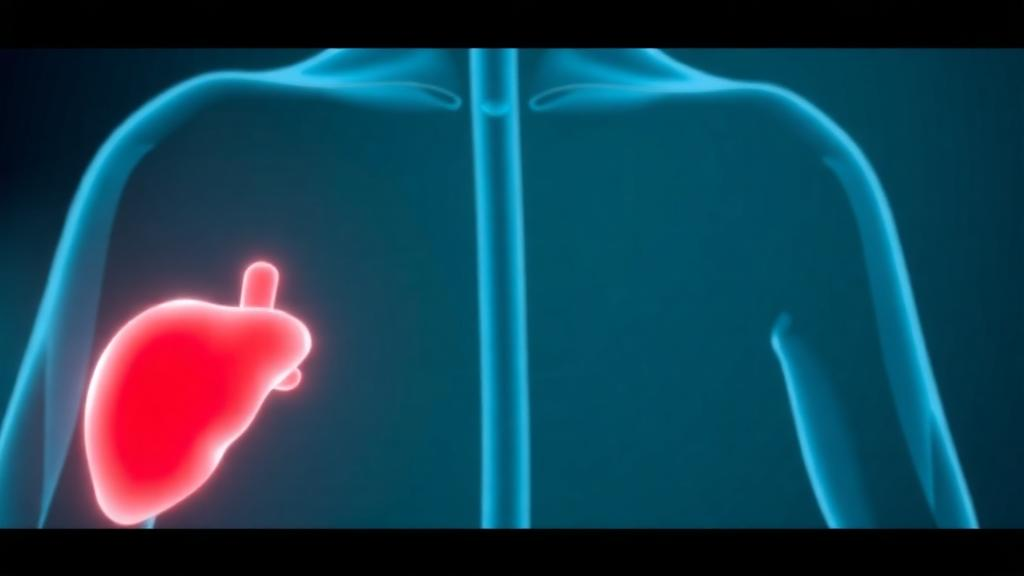
Liver cancer has long been one of the most stubborn enemies in oncology, and hepatocellular carcinoma, which accounts for more than 90 percent of primary liver cancers, sits at the center of that fight. According to World Health Organization data from 2020, liver cancer is the sixth most common cancer worldwide and the third leading cause of cancer-related death. Because early-stage disease rarely produces specific symptoms, many patients are diagnosed only when curative surgery is no longer possible. Now a comprehensive review published in Clinical Cancer Bulletin by researchers at Zhongshan Hospital, Fudan University maps how immunotherapy has moved from the margins of hepatocellular carcinoma care to its very core, transforming outcomes for patients with unresectable tumors.
The story begins with the liver’s peculiar immunological personality. As the body’s largest solid organ and its principal filtration system, the liver constantly processes nutrient- and antigen-rich blood arriving through the portal vein from the intestines, alongside oxygenated blood from the hepatic artery. This relentless exposure to gut-derived antigens, microbial metabolites such as lipopolysaccharide, and pathogens has forced the liver to evolve powerful tolerance mechanisms. Kupffer cells, the liver’s resident macrophages, together with regulatory T cells, suppress excessive immune activation. That tolerance, normally protective, becomes a liability in cancer: it allows tumors to hide in plain sight. When chronic hepatitis B or C infection, alcohol abuse, non-alcoholic fatty liver disease, or aflatoxin exposure drives inflammation year after year, the result is a tumor microenvironment dominated by immunosuppression rather than immune attack.
Within that microenvironment, T cells frequently adopt an exhausted phenotype, and checkpoint molecules such as CTLA-4 and PD-L1 are persistently upregulated. Tumor-associated macrophages are recruited in large numbers and regulatory T cells proliferate abnormally, reinforcing the suppressive state. Cytokines add further complexity. Interferon-gamma, interleukin-2, interleukin-12, and interleukin-15 enhance the cytotoxic activity of lymphocytes and restrain tumor progression, while transforming growth factor-beta, tumor necrosis factor, interleukin-6, and the chemokine CXCL12 can promote tumor survival, inflammation, and angiogenesis. Interleukin-10 suppresses antigen presentation and CD8-positive T cell activity, and interleukin-8 levels correlate with tumor size. Understanding this molecular battlefield is essential, because every immunotherapy strategy in the clinic today is, at heart, an attempt to reverse one or more of these suppressive circuits.
The first and most successful class of weapons is the immune checkpoint inhibitor. PD-1, a transmembrane protein in the CD28/CTLA-4 superfamily, is broadly expressed on activated T and B cells. When tumor cells overexpress PD-L1 and engage PD-1, phosphorylation of PD-1’s intracellular ITSM and ITIM motifs recruits the phosphatase SHP2, which dephosphorylates T cell receptor signaling complexes and dampens CD28 co-stimulation. The result is reduced cytokine production and blunted T cell function. Blocking antibodies interrupt this handshake. Nivolumab, a fully human IgG4 anti-PD-1 antibody, became the first FDA-approved immunotherapy for hepatocellular carcinoma in 2017 on the strength of the CheckMate 040 trial, and although the phase III CheckMate 459 study missed its predefined endpoints, nivolumab is now recommended as a first-line option in NCCN guidelines. Pembrolizumab, tested in KEYNOTE-224, KEYNOTE-240, and KEYNOTE-394, achieved an overall response rate of 18.3 percent in sorafenib-refractory disease in a combined meta-analysis, with significant gains in overall and progression-free survival.
Chinese-developed agents have added momentum. Tislelizumab, evaluated in the RATIONALE-208 and RATIONALE-301 trials, demonstrated non-inferior overall survival compared with sorafenib as first-line therapy, with a hazard ratio of 0.85, higher response rates, and more durable responses, earning National Medical Products Administration approval for unresectable or metastatic disease. On the CTLA-4 front, tremelimumab, the first anti-CTLA-4 agent studied in hepatocellular carcinoma, showed a partial response rate of 17.6 percent and disease control of 76.4 percent in patients with chronic hepatitis C, and is now approved for unresectable disease. Newer targets are following: TIM-3, LAG-3, and TIGIT each mark distinct arms of T cell exhaustion, and bispecific antibodies such as tebotelimab, which targets PD-1 and LAG-3 simultaneously, have shown manageable safety and disease stabilization in advanced disease.
The true revolution, however, has come from combination therapy. The STRIDE regimen, pairing a single priming dose of tremelimumab with regular durvalumab infusions, significantly improved overall survival over sorafenib in the phase III HIMALAYA trial, and four-year follow-up showed that nearly 20 percent of advanced patients survived five years, a milestone once unthinkable in this disease. The CheckMate-9DW trial of nivolumab plus ipilimumab likewise improved median overall survival versus lenvatinib or sorafenib, with Asian subgroup survival reaching 34.0 months versus 22.5 months in controls. Mechanistically, CTLA-4 blockade expands CD4-positive Ki67-positive T cell pools to prime new responses, while PD-1 blockade sustains them, a one-two punch that monotherapy cannot replicate.
Even more striking is the synergy between checkpoint inhibitors and anti-angiogenic therapy. Tumor vessels in hepatocellular carcinoma are structurally disordered, hindering immune cell infiltration, and the VEGF pathway actively drives immune evasion. The IMbrave150 trial of atezolizumab plus bevacizumab changed everything: median overall survival rose to 19.2 months versus 13.4 months with sorafenib, progression-free survival to 6.9 versus 4.3 months, and response rates to 27 percent versus 12 percent, with complete responses of 6 percent versus under 1 percent. FDA approval followed in 2020, and the regimen became a global standard. The ORIENT-32 study, the first phase III trial worldwide to report positive results for a first-line PD-1-based combination in this disease, showed a 43 percent reduction in mortality risk with sintilimab plus a bevacizumab biosimilar, while the CARES-310 trial of camrelizumab plus the small-molecule TKI apatinib set a record for longest overall survival in a first-line phase III study, challenging the assumption that large-molecule anti-VEGF antibodies are indispensable partners.
Beyond checkpoint blockade, entirely new therapeutic modalities are entering the arena. Chimeric antigen receptor T cell therapy, engineered to recognize tumor antigens such as glypican-3, alpha-fetoprotein, and c-MET, has produced remarkable early results: the C-CAR031 trial of a GPC3-targeted, TGF-beta-resistant CAR-T construct achieved a disease control rate of 91.3 percent and an overall response rate of 56.5 percent across dose levels, rising to 75 percent at the highest dose, the first clinical validation of this target in hepatocellular carcinoma. Therapeutic vaccines exploit the virus-derived neoantigens generated by hepatitis B integration, and SCG101, an autologous TCR-T therapy targeting hepatitis B surface antigens, shrank target lesions by 66 percent within 28 days of a single infusion. Oncolytic viruses, including the vaccinia-based Pexa-Vec, selectively lyse tumor cells while converting cold, immune-excluded tumors into inflamed ones, and engineered super-cytokines such as IL-15/IL-21 fusions are revitalizing a class of drugs that dates back to the 1980s.
Significant challenges remain. Resistance arises through immunosuppressive microenvironments, adaptive checkpoint alterations, metabolic reprogramming, and immune escape, and biomarkers to predict response are still unreliable: PD-L1 staining suffers from spatiotemporal heterogeneity, tumor mutational burden failed to predict benefit in IMbrave150 because hepatocellular carcinoma is driven more by inflammation and viral integration than by mutation, and microsatellite instability occurs in fewer than 3 percent of cases. Immune-related adverse events, ranging from rash and colitis to life-threatening myocarditis and hepatitis, demand vigilant monitoring, although intriguingly, a Singapore study found that patients experiencing severe immune-related events who received corticosteroids showed prolonged progression-free and overall survival. Meanwhile, locoregional combinations are flourishing: the EMERALD-1 trial showed that adding durvalumab and bevacizumab to transarterial chemoembolization extended median progression-free survival to 15.0 months versus 8.2 months, and triple therapy with hepatic arterial infusion chemotherapy, lenvatinib, and PD-1 blockade achieved response rates exceeding 60 percent. The field is now converging on a precision paradigm, classifying tumors as immunologically hot or cold and tailoring cold-to-hot conversion strategies accordingly, with multidisciplinary care and personalized protocols pointing toward the ultimate goals of long-term survival and preserved quality of life.
Subject of Research: Immunotherapy strategies, including checkpoint inhibitors, combination regimens, and adoptive cell therapies, for hepatocellular carcinoma
Article Title: Immunotherapy for hepatocellular carcinoma
Article References: Guan, Z., Zhu, G., Liu, W., & Shi, Y. (2025). Immunotherapy for hepatocellular carcinoma. Clinical Cancer Bulletin, 4(1), Article 12. https://doi.org/10.1007/s44272-025-00040-4
Image Credits: AI Generated
DOI: 10.1007/s44272-025-00040-4
Keywords: hepatocellular carcinoma, immunotherapy, immune checkpoint inhibitors, PD-1, combination therapy, tumor microenvironment, CAR-T therapy, oncolytic viruses, cancer vaccines, anti-angiogenic therapy, liver cancer, clinical trials
Cite Scienmag News
Nathaniel Bowman. (October 2, 2026). How Immunotherapy Is Rewriting the Rules of Liver Cancer Treatment. Scienmag. https://scienmag.com/how-immunotherapy-is-rewriting-the-rules-of-liver-cancer-treatment/
Nathaniel Bowman. "How Immunotherapy Is Rewriting the Rules of Liver Cancer Treatment." Scienmag, 2 October 2026, https://scienmag.com/how-immunotherapy-is-rewriting-the-rules-of-liver-cancer-treatment/. Accessed 2 October 2026.
Nathaniel Bowman. "How Immunotherapy Is Rewriting the Rules of Liver Cancer Treatment." Scienmag. October 2, 2026. https://scienmag.com/how-immunotherapy-is-rewriting-the-rules-of-liver-cancer-treatment/


