

Friday, July 17, 2026
Science
No Result
View All Result
  • Login
  • HOME
  • SCIENCE NEWS
  • CONTACT US
  • HOME
  • SCIENCE NEWS
  • CONTACT US
No Result
View All Result
Scienmag
No Result
View All Result
Home Science News Medicine

Brain circuits could explain cognitive symptoms in progressive supranuclear palsy

July 17, 2026
in Medicine
Reading Time: 2 mins read
0
Brain circuits could explain cognitive symptoms in progressive supranuclear palsy

Brain circuits could explain cognitive symptoms in progressive supranuclear palsy

65
SHARES
587
VIEWS
Share on FacebookShare on Twitter
ADVERTISEMENT

Progressive supranuclear palsy (PSP) is defined by the build-up of tau, yet patients often show cognitive and behavioral problems that don’t neatly match where tau accumulates. In most cases, the densest pathology emerges in deep brain regions strongly linked to movement, leaving a puzzle about why attention, decision-making, and emotion regulation are so often impaired.

A team at Japan’s National Institutes for Quantum Science and Technology (QST) used a circuit-focused strategy to address this mismatch. Instead of asking only where tau is located, they asked where tau-affected regions communicate in the brain—and whether those connections help explain symptoms that appear “out of place.”

To visualize tau deposition, the researchers performed tau positron emission tomography (tau PET) in 37 people with PSP using a QST-developed tracer. Each participant’s tau-positive areas were then mapped onto a functional connectivity framework built from data collected in 100 healthy individuals, enabling the team to infer which distant cortical regions were statistically linked to tau-affected sites.

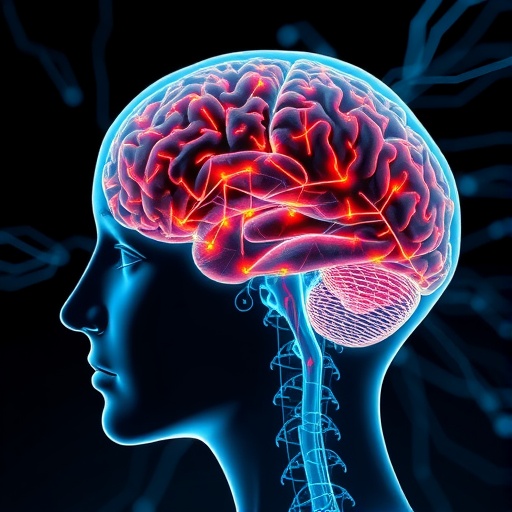
Across participants, the tau distribution varied—one hallmark of neurodegenerative heterogeneity—but the remote connectivity signal converged on a common cortical circuit. This shared network, dubbed the “PSP-tau network,” involved the prefrontal cortex, anterior cingulate cortex, anterior insula, and parietal cortex, regions central to executive control processes such as attention allocation, inhibitory regulation, and planning.

Crucially, the strength of connectivity between an individual’s tau-affected areas and the PSP-tau network tracked with the severity of frontal cognitive impairment. In contrast, tau burden confined to deep regions aligned more closely with motor symptoms, including eye movement difficulties, but did not track the same cognitive profile.

These results support a dual mechanism in PSP: local tau pathology may drive motor-related dysfunction, while remote network disruption may underlie cognitive and behavioral deficits. The study therefore reframes tau-related symptoms as emergent properties of brain communication, not simply consequences of local tissue damage.

“We began with a clinical question that could not be answered by looking only at where tau accumulates,” said QST researcher Toshiyuki Hirabayashi. The findings, he added, point to how local pathology can propagate functional effects across distributed neural circuits.

Beyond PSP, the approach could inform other tau-driven diseases. If cognitive symptoms in disorders such as Alzheimer’s disease also reflect network-level disruption, circuit mapping combined with tau imaging may help identify symptom-relevant pathways and improve prediction of disease course.

Subject of Research: People
Article Title: Remote Network for Cognitive Symptoms Derived from Tau Accumulation in Progressive Supranuclear Palsy
News Publication Date: 10-Jul-2026
Web References: https://www.science.org/doi/10.1126/sciadv.aed0348
References: 10.1126/sciadv.aed0348
Image Credits: National Institutes for Quantum Science and Technology (QST)

Keywords: progressive supranuclear palsy, PSP, tau PET, brain networks, functional connectivity, executive function, cognitive impairment, neural circuits, imaging analysis, tauopathy

Tags: brain circuit analysis in neurodegenerationbrain regions linked to movement and cognitioncircuit-based approach to neurodegenerative diseasecognitive and behavioral symptoms in PSPcortical circuits involved in PSP symptomsemotion regulation impairment in neurodegenerative disordersfunctional connectivity in tauopathiesheterogeneity in tau distributionneural basis of attention and decision-making deficitsneurodegenerative diseasetau PET imaging in PSPtau protein accumulation
Share26Tweet16
Previous Post

ASB2 reduces liver fat accumulation, boosting ILC1 balance and anti-tumor immunity

Next Post

New Layered Crystal Enables High-Efficiency Thermoelectric Energy Conversion

Related Posts

T-box transcription factor misregulation disrupts BNP–NPR1 signaling, causing chronic itch
Medicine

T-box transcription factor misregulation disrupts BNP–NPR1 signaling, causing chronic itch

July 17, 2026
Lancet Definition of Clinical Obesity Applied to MASLD Patients
Medicine

Lancet Definition of Clinical Obesity Applied to MASLD Patients

July 17, 2026
New DNA approach offers a strategy to fight gum disease
Medicine

New DNA approach offers a strategy to fight gum disease

July 17, 2026
ASB2 reduces liver fat accumulation, boosting ILC1 balance and anti-tumor immunity
Medicine

ASB2 reduces liver fat accumulation, boosting ILC1 balance and anti-tumor immunity

July 17, 2026
Extracellular Matrix Stiffness Guides Region-Specific Lung Epithelial Differentiation in Organoids
Medicine

Extracellular Matrix Stiffness Guides Region-Specific Lung Epithelial Differentiation in Organoids

July 17, 2026
Repetitive Neuronal Stimulation Reprograms Mature Neurons Into Immature States
Medicine

Repetitive Neuronal Stimulation Reprograms Mature Neurons Into Immature States

July 17, 2026
Next Post
New Layered Crystal Enables High-Efficiency Thermoelectric Energy Conversion

New Layered Crystal Enables High-Efficiency Thermoelectric Energy Conversion

  • Mothers who receive childcare support from maternal grandparents show more

    Mothers who receive childcare support from maternal grandparents show more parental warmth, finds NTU Singapore study

    27656 shares
    Share 11059 Tweet 6912
  • University of Seville Breaks 120-Year-Old Mystery, Revises a Key Einstein Concept

    1061 shares
    Share 424 Tweet 265
  • Bee body mass, pathogens and local climate influence heat tolerance

    682 shares
    Share 273 Tweet 171
  • Researchers record first-ever images and data of a shark experiencing a boat strike

    546 shares
    Share 218 Tweet 137
  • Groundbreaking Clinical Trial Reveals Lubiprostone Enhances Kidney Function

    531 shares
    Share 212 Tweet 133
Science

Embark on a thrilling journey of discovery with Scienmag.com—your ultimate source for cutting-edge breakthroughs. Immerse yourself in a world where curiosity knows no limits and tomorrow’s possibilities become today’s reality!

RECENT NEWS

  • Protecting marine species while developing cost-effective renewable energy
  • Gamma and beta rhythms and 1/f slope shift with depression severity
  • Japanese Paleolithic should be better represented in Western stories of Asia’s expansion
  • T-box transcription factor misregulation disrupts BNP–NPR1 signaling, causing chronic itch

Categories

  • Agriculture
  • Anthropology
  • Archaeology
  • Athmospheric
  • Biology
  • Biotechnology
  • Blog
  • Bussines
  • Cancer
  • Chemistry
  • Climate
  • Earth Science
  • Editorial Policy
  • Marine
  • Mathematics
  • Medicine
  • Pediatry
  • Policy
  • Psychology & Psychiatry
  • Science Education
  • Social Science
  • Space
  • Technology and Engineering

Subscribe to Blog via Email

Enter your email address to subscribe to this blog and receive notifications of new posts by email.

Join 5,146 other subscribers

© 2025 Scienmag - Science Magazine

Welcome Back!

Login to your account below

Forgotten Password?

Retrieve your password

Please enter your username or email address to reset your password.

Log In
No Result
View All Result
  • HOME
  • SCIENCE NEWS
  • CONTACT US

© 2025 Scienmag - Science Magazine

Discover more from Science

Subscribe now to keep reading and get access to the full archive.

Continue reading
