


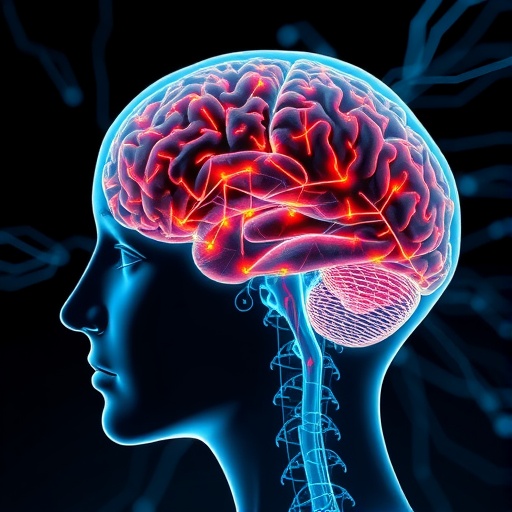
Progressive supranuclear palsy (PSP) is defined by the build-up of tau, yet patients often show cognitive and behavioral problems that don’t neatly match where tau accumulates. In most cases, the densest pathology emerges in deep brain regions strongly linked to movement, leaving a puzzle about why attention, decision-making, and emotion regulation are so often impaired.
A team at Japan’s National Institutes for Quantum Science and Technology (QST) used a circuit-focused strategy to address this mismatch. Instead of asking only where tau is located, they asked where tau-affected regions communicate in the brain—and whether those connections help explain symptoms that appear “out of place.”
To visualize tau deposition, the researchers performed tau positron emission tomography (tau PET) in 37 people with PSP using a QST-developed tracer. Each participant’s tau-positive areas were then mapped onto a functional connectivity framework built from data collected in 100 healthy individuals, enabling the team to infer which distant cortical regions were statistically linked to tau-affected sites.
Across participants, the tau distribution varied—one hallmark of neurodegenerative heterogeneity—but the remote connectivity signal converged on a common cortical circuit. This shared network, dubbed the “PSP-tau network,” involved the prefrontal cortex, anterior cingulate cortex, anterior insula, and parietal cortex, regions central to executive control processes such as attention allocation, inhibitory regulation, and planning.
Crucially, the strength of connectivity between an individual’s tau-affected areas and the PSP-tau network tracked with the severity of frontal cognitive impairment. In contrast, tau burden confined to deep regions aligned more closely with motor symptoms, including eye movement difficulties, but did not track the same cognitive profile.
These results support a dual mechanism in PSP: local tau pathology may drive motor-related dysfunction, while remote network disruption may underlie cognitive and behavioral deficits. The study therefore reframes tau-related symptoms as emergent properties of brain communication, not simply consequences of local tissue damage.
“We began with a clinical question that could not be answered by looking only at where tau accumulates,” said QST researcher Toshiyuki Hirabayashi. The findings, he added, point to how local pathology can propagate functional effects across distributed neural circuits.
Beyond PSP, the approach could inform other tau-driven diseases. If cognitive symptoms in disorders such as Alzheimer’s disease also reflect network-level disruption, circuit mapping combined with tau imaging may help identify symptom-relevant pathways and improve prediction of disease course.
Cite Scienmag News
Cassandra Pierce. (July 17, 2026). Brain circuits could explain cognitive symptoms in progressive supranuclear palsy. Scienmag. https://scienmag.com/brain-circuits-could-explain-cognitive-symptoms-in-progressive-supranuclear-palsy/
Cassandra Pierce. "Brain circuits could explain cognitive symptoms in progressive supranuclear palsy." Scienmag, 17 July 2026, https://scienmag.com/brain-circuits-could-explain-cognitive-symptoms-in-progressive-supranuclear-palsy/. Accessed 4 September 2026.
Cassandra Pierce. "Brain circuits could explain cognitive symptoms in progressive supranuclear palsy." Scienmag. July 17, 2026. https://scienmag.com/brain-circuits-could-explain-cognitive-symptoms-in-progressive-supranuclear-palsy/


