


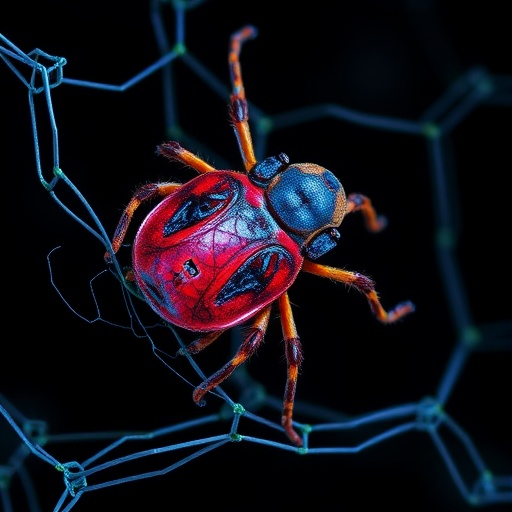
A new study in Nature Communications is turning attention to one of the most fundamental structures in the biology of Babesia divergens, a tick-borne parasite that infects red blood cells and can cause severe disease in humans and animals. The research, led by Gutierrez-Vargas, Izhaki-Tavor, Calvopina-Chavez and colleagues, examines the parasite’s ribosomal architecture alongside the chemical modifications that shape its ribosomal RNA, or rRNA. Together, these features provide the molecular machinery B. divergens uses to translate genetic information into proteins.
Although Babesia divergens is not a virus, its biology is highly relevant to infectious-disease science because it depends on a host organism, is transmitted by ticks and can produce rapidly advancing illness in susceptible people. The parasite belongs to the apicomplexans, a diverse group that also includes the organisms responsible for malaria and toxoplasmosis. Understanding how its cells build proteins may reveal vulnerabilities that are invisible when researchers focus only on the parasite’s genome or on the molecules involved in transmission.
Ribosomes are often described as the “protein factories” of cells, but that phrase conceals their complexity. Each ribosome is a molecular machine made from ribosomal proteins and several RNA molecules. It reads messenger RNA, matches genetic instructions with transfer RNAs and links amino acids into proteins. In eukaryotic parasites, ribosomes are assembled through highly coordinated steps in which precursor rRNAs are processed, chemically modified and combined with proteins. Small changes in this process can influence how efficiently a ribosome translates particular messenger RNAs, how it responds to stress and how it adapts to different environments.
The new work focuses on the architecture of the B. divergens ribosome and maps its rRNA modification landscape. rRNA modifications are chemical alterations added after, or during, the synthesis of ribosomal RNA. Common examples include methylation, in which a methyl group is attached to a nucleotide, and pseudouridylation, in which uridine is converted into the related nucleotide pseudouridine. These changes can stabilize RNA structure, influence the geometry of the ribosome’s functional centers and help ensure accurate decoding of messenger RNA.
For a parasite that moves between ticks and vertebrate hosts, such molecular flexibility may be especially important. The environments encountered during the parasite’s life cycle differ sharply in temperature, nutrient availability, immune pressure and cellular context. Inside red blood cells, B. divergens must acquire nutrients and replicate while avoiding elimination by the host. In the tick, it faces a different set of biological conditions. A ribosome is not simply a static structure in this setting; its composition and chemical state may help determine how efficiently the parasite can produce proteins under changing pressures.
Mapping the modification landscape also adds a layer of information that cannot be obtained from DNA sequence alone. The genes encoding rRNAs indicate the basic blueprint, but they do not fully reveal which nucleotides are chemically modified, when those modifications are installed or how they affect ribosome performance. By combining structural analysis with molecular characterization, studies of this kind can distinguish conserved features shared across eukaryotes from lineage-specific adaptations that emerged during parasite evolution.
That distinction matters for drug discovery. Many antimicrobial compounds work by targeting ribosomes, but differences between pathogen and host ribosomes are essential for achieving selective toxicity. A compound that blocks protein synthesis in a parasite while sparing human cells could provide a powerful therapeutic strategy. The challenge is that ribosomes are ancient and highly conserved, meaning that a drug aimed at a shared functional site may also damage host cells. Parasite-specific architecture or unusual rRNA modifications could point toward more precise targets.
The study may also help explain why existing drugs do not always perform consistently against tick-borne parasites. Resistance can arise through changes in drug-binding sites, altered transport or increased capacity to repair cellular damage. Ribosomal differences could represent another layer of variation, affecting how a compound interacts with the translation machinery or how the parasite maintains protein production during treatment. Detailed structural information can therefore support the design of inhibitors that exploit features unique to B. divergens rather than relying on broad-spectrum mechanisms.
Beyond therapy, the findings contribute to a broader effort to understand how apicomplexan parasites evolved. Their ribosomes are related to those of other eukaryotes, yet parasite lineages have accumulated distinctive molecular traits as they adapted to complex life cycles. Comparing B. divergens with malaria parasites and other apicomplexans could reveal which ribosomal features are ancient and which arose independently. Such comparisons may clarify how changes in RNA processing and ribosome assembly support parasitism, host switching and transmission by arthropods.
The research does not turn the ribosome into a simple answer to the medical challenges posed by babesiosis, and structural discoveries must eventually be tested through functional experiments, drug screens and studies in infection models. Even so, defining the ribosomal architecture and rRNA modification landscape of B. divergens provides a more complete molecular portrait of a pathogen that has received less attention than malaria despite its capacity to cause life-threatening disease. By showing how this parasite’s protein-making machinery is organized and chemically tuned, the study establishes a foundation for future work on parasite-specific therapeutics, diagnostic markers and the evolutionary biology of tick-borne infection.
Cite Scienmag News
Kristina Jarvis. (August 6, 2026). Scientists map ribosome architecture and rRNA modifications in tick-borne parasite Babesia divergens. Scienmag. https://scienmag.com/scientists-map-ribosome-architecture-and-rrna-modifications-in-tick-borne-parasite-babesia-divergens/
Kristina Jarvis. "Scientists map ribosome architecture and rRNA modifications in tick-borne parasite Babesia divergens." Scienmag, 6 August 2026, https://scienmag.com/scientists-map-ribosome-architecture-and-rrna-modifications-in-tick-borne-parasite-babesia-divergens/. Accessed 4 September 2026.
Kristina Jarvis. "Scientists map ribosome architecture and rRNA modifications in tick-borne parasite Babesia divergens." Scienmag. August 6, 2026. https://scienmag.com/scientists-map-ribosome-architecture-and-rrna-modifications-in-tick-borne-parasite-babesia-divergens/


