


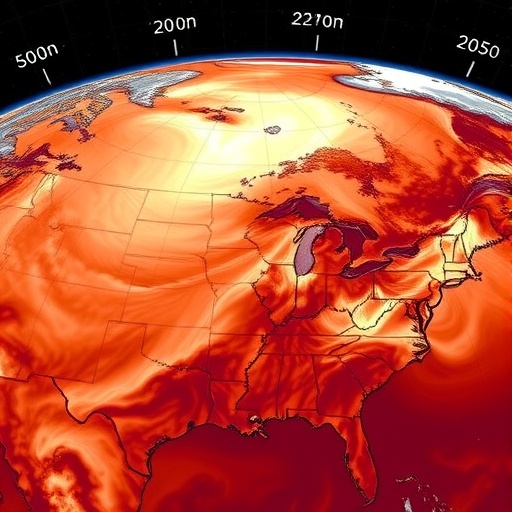
In recent years, marine heatwaves have emerged as one of the most striking indicators of climate change’s profound impact on ocean ecosystems. These episodes, characterized by sudden and extreme rises in sea surface temperatures, can have devastating effects on marine biodiversity, fisheries, and coastal communities. However, groundbreaking research uncovers a crucial dimension often overlooked in earlier studies: the persistent warm water anomalies that precede and follow these heatwaves significantly amplify the intensity and duration of heat exposure, escalating ecological risks far beyond initial estimates.
The study, spearheaded by Nardi, Mazzini, Walter, and collaborators and published in Communications Earth & Environment in 2026, delves deeply into how these protracted warm anomalies interact with marine heatwaves. By deploying a combination of high-resolution oceanographic data and advanced climate models, the authors demonstrate that these prolonged anomalies do not merely serve as background conditions but actively potentiate the severity of heatwaves, leading to a feedback loop of warming events that collectively threaten marine life and ocean stability.
Marine heatwaves have typically been studied in isolation, focusing on abrupt temperature spikes that last for days or weeks. However, this new research shifts the paradigm by evidencing that the temporal windows flanking these heatwaves—both before their onset and after their apparent dissipation—exhibit anomalously warm temperatures that can persist for months or even years. These persistent anomalies exacerbate cumulative heat stress on marine organisms, altering physiological thresholds and increasing mortality rates.
The analysis utilized historical satellite-derived sea surface temperature records spanning several decades. These datasets allowed for the identification and quantification of temperature anomalies that occur outside defined heatwave events. The results reveal that these warm periods surrounding marine heatwaves are not random; instead, they correlate strongly with underlying oceanographic mechanisms including changes in circulation patterns, stratification, and heat content distribution.
One key finding of the research is that these warm anomalies reduce the ocean’s ability to cool between heatwave events, effectively creating a thermal “memory” or lag. This insufficient cooldown inhibits the resilience of marine ecosystems, preventing recovery and increasing the susceptibility of sensitive species such as corals, kelp forests, and pelagic fish populations. The prolonged exposure to sub-lethal but stressful temperatures disrupts feeding behavior, reproduction, and immune responses across many taxa.
Moreover, the persistent temperature elevation influences the frequency and intensity of subsequent marine heatwaves. The study shows evidence that regions exhibiting these warm anomalies are more likely to experience repeating and more severe heatwave episodes, pushing marine systems into a state of chronic thermal stress. This pattern profoundly affects ecosystem structure and function, potentially shifting biogeographic boundaries and triggering species migrations.
From a mechanistic perspective, the research highlights the roles of ocean-atmosphere interactions underpinning these anomalies. Changes in trade winds, altered heat uptake by the ocean, and regional feedbacks related to altered cloud cover and solar radiation absorption appear as vital drivers. These findings emphasize the coupled nature of climate processes and how localized conditions can reverberate through global systems.
The implications of these discoveries extend beyond ecological impacts. Economically and socially, marine heatwaves combined with persistent warm anomalies threaten coastal economies reliant on fisheries, tourism, and aquaculture. The compounded heat exposure risks exacerbating fish stock collapses, harmful algal blooms, and deteriorations in water quality, with ripple effects on food security and human livelihoods.
Ecosystem managers and policymakers face increasing pressure to integrate this emerging knowledge into adaptive strategies. Traditional management approaches that focus on short-term heatwave events may not suffice. Instead, long-term monitoring, predictive modeling, and resilience-building interventions tailored to account for persistent warm water conditions are essential to mitigate future impacts.
In scientific terms, this study opens new avenues for oceanographic and climatological research. Future investigations will need to refine model projections to incorporate sustained thermal anomalies and explore their interactions with other stressors such as ocean acidification and hypoxia. Understanding the thresholds and tipping points associated with these compound heat events could potentially provide early warning systems for marine ecosystem collapses.
Furthermore, the research underscores the urgent need for enhanced observational networks. Expanding autonomous underwater sensors, improving satellite remote sensing capabilities, and fostering interdisciplinary collaborations are critical steps to accurately detect and interpret these persistent thermal patterns on various spatial and temporal scales.
The revelations about persistent warm water anomalies also invite a reassessment of global climate mitigation and adaptation frameworks. They illustrate that marine systems are subject to complex, sustained warming influences that might not be reversible within human-relevant timescales without aggressive greenhouse gas emissions reductions.
Importantly, the public communication of these findings is vital. Raising awareness about the compounded nature of heat exposure in the ocean can galvanize support for ocean conservation initiatives and foster more comprehensive climate action discourse. Scientists and communicators alike must emphasize how these prolonged anomalies, though less visible than sudden heatwaves, silently degrade ocean health.
In conclusion, the study by Nardi and colleagues profoundly reshapes our understanding of marine heatwaves by revealing the critical role of persistent warm water anomalies before and after these events. Through meticulous analysis and innovative modeling, it paints a more interconnected and threatening picture of marine heat exposure that demands urgent scientific, management, and societal attention. As oceans continue to warm, unraveling the complexities of these prolonged thermal phenomena will be essential for safeguarding marine biodiversity and the human communities that depend on it.
Cite Scienmag News
Violet Maxwell. (June 10, 2026). Persistent Warm Anomalies Boost Marine Heatwave Risks. Scienmag. https://scienmag.com/persistent-warm-anomalies-boost-marine-heatwave-risks/
Violet Maxwell. "Persistent Warm Anomalies Boost Marine Heatwave Risks." Scienmag, 10 June 2026, https://scienmag.com/persistent-warm-anomalies-boost-marine-heatwave-risks/. Accessed 3 September 2026.
Violet Maxwell. "Persistent Warm Anomalies Boost Marine Heatwave Risks." Scienmag. June 10, 2026. https://scienmag.com/persistent-warm-anomalies-boost-marine-heatwave-risks/


