

Sunday, July 26, 2026
Science
No Result
View All Result
  • Login
  • HOME
  • SCIENCE NEWS
  • CONTACT US
  • HOME
  • SCIENCE NEWS
  • CONTACT US
No Result
View All Result
Scienmag
No Result
View All Result
Home Science News Earth Science

Ancient Fossil Reveals Where It Lived 200 Million Years Ago

July 26, 2026
in Earth Science
Reading Time: 2 mins read
0
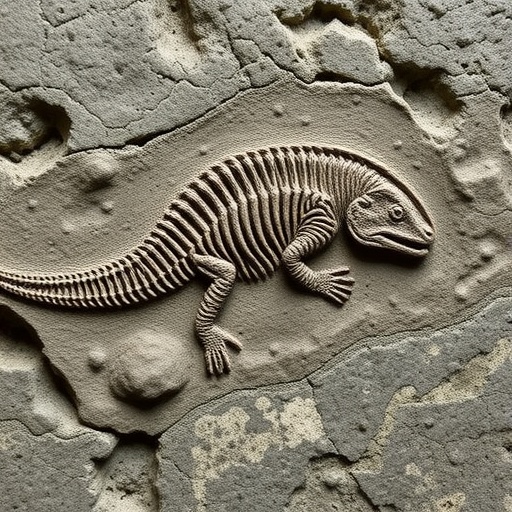
Ancient Fossil Reveals Where It Lived 200 Million Years Ago

Ancient Fossil Reveals Where It Lived 200 Million Years Ago

65
SHARES
587
VIEWS
Share on FacebookShare on Twitter
ADVERTISEMENT

A fossil’s location today tells only part of its story. Reconstructing where that same specimen sat hundreds of millions of years ago requires careful plate-tectonics calculations—tasks that typically demand specialized software, technical expertise, and time. For the public and non-specialist researchers, that barrier has often limited access to high-quality palaeogeographic reconstructions.

Now, researchers at the University of Barcelona’s BIOST3 Research Group have built an open-access web interface designed to make this process fast, transparent, and reproducible. The tool, the Paleocoordinates Calculator (PACA), converts present-day geographic coordinates into palaeocoordinates by using state-of-the-art plate tectonics models—without requiring installations or coding skills.

PACA is presented in a new article in Scientific Reports. The authors—Noa Scholz-Murcia, Alejandro Rodríguez-Mena, Víctor Madarnás-Gómez, and Antonio Monleón-Getino—developed a workflow that starts with simple inputs: users upload a CSV containing modern latitude/longitude pairs and the geological age of the find. In seconds, PACA returns the reconstructed palaeocoordinates.

What makes PACA particularly useful for “real-world” studies is its built-in treatment of uncertainty. Instead of relying on a single tectonic history, the interface runs up to five global plate models and automatically computes variability metrics, including palaeolatitudinal ranges and maximum distances (in kilometres) between model predictions. This helps users quantify how sensitive their results are to tectonic assumptions.

At the technical core, PACA is built around the R package palaeoverse, which connects directly to the GPlates web service. The web platform is therefore closely aligned with established scientific reconstruction pipelines, while still offering a beginner-friendly experience.

To bridge reconstructed points and interpretation, PACA exports tables suitable for statistical analyses and provides an interactive 3D viewer built with React and Blender. It projects calculated locations onto palaeogeographic maps from the PALEOMAP Project, developed by geographer Christopher Scotese and updated for the International Chronostratigraphic Table.

Crucially, the team reports that replacing traditional desktop workflows does not compromise accuracy. Cross-validation using 142 reconstructions distributed globally showed an almost perfect mathematical equivalence, with an average spatial error under 17 metres, no systematic processing bias, and a concordance correlation coefficient (CCC) of 1.000 across all models.

The project is supported by the “Cretaceous Resin Interval” (CREI) initiative, funded by the Spanish Ministry of Science, Innovation and Universities, and coordinated by Antonio Monleón-Getino and Xavier Delclòs. By lowering technical barriers, PACA aims to turn palaeogeographic reconstruction into a tool for education, research, and rapid exploration—setting the stage for viral, shareable science news across classrooms and labs alike.

Subject of Research: Earth sciences
Article Title: A user-friendly online tool for paleocoordinate calculation and 3D visualization
News Publication Date: 15-Jun-2026
Web References: https://biost3.bio.ub.edu/paca/
References: 10.1038/s41598-026-46309-z
Image Credits: UNIVERSITY OF BARCELONA

Keywords: Earth sciences

Tags: fossil reconstructiongeographic coordinate transformationgeological age and location mappingnon-specialist paleontology research toolsopen-access geoscience toolspalaeogeographic visualizationpalaeolatitudinal range estimationpaleontological data analysisplate tectonics modelingreproducible scientific workflowsuncertainty quantification in geological studiesweb-based paleogeography calculator
Share26Tweet16
Previous Post

ACLM Lifestyle Medicine Residency Curriculum Wins 2026 AAMSE Profiles of Excellence Award

Next Post

Parents’ socioeconomic status outweighs prenatal behaviors in shaping future health

Related Posts

Continental fern savannah wildfires driven by end-Triassic greenhouse warming
Earth Science

Continental fern savannah wildfires driven by end-Triassic greenhouse warming

July 26, 2026
Manganese reactive species and enzymes work together to fuel litter hotspots
Earth Science

Manganese reactive species and enzymes work together to fuel litter hotspots

July 26, 2026
Rapid Growth of Enstatite Chondrite-Like Embryos Driving Proto-Earth Impacts
Earth Science

Rapid Growth of Enstatite Chondrite-Like Embryos Driving Proto-Earth Impacts

July 26, 2026
Satellite Sentinel-2 Drought Forecasting in Austria Using Random Forest and Deep Learning
Earth Science

Satellite Sentinel-2 Drought Forecasting in Austria Using Random Forest and Deep Learning

July 26, 2026
Aerosols temporarily intensify deep convection in a new study
Earth Science

Aerosols temporarily intensify deep convection in a new study

July 26, 2026
Fiber array reveals sharp structural variability in the Gorda slab
Earth Science

Fiber array reveals sharp structural variability in the Gorda slab

July 26, 2026
Next Post
Parents’ socioeconomic status outweighs prenatal behaviors in shaping future health

Parents' socioeconomic status outweighs prenatal behaviors in shaping future health

  • Mothers who receive childcare support from maternal grandparents show more

    Mothers who receive childcare support from maternal grandparents show more parental warmth, finds NTU Singapore study

    27656 shares
    Share 11059 Tweet 6912
  • University of Seville Breaks 120-Year-Old Mystery, Revises a Key Einstein Concept

    1061 shares
    Share 424 Tweet 265
  • Bee body mass, pathogens and local climate influence heat tolerance

    682 shares
    Share 273 Tweet 171
  • Researchers record first-ever images and data of a shark experiencing a boat strike

    546 shares
    Share 218 Tweet 137
  • Groundbreaking Clinical Trial Reveals Lubiprostone Enhances Kidney Function

    531 shares
    Share 212 Tweet 133
Science

Embark on a thrilling journey of discovery with Scienmag.com—your ultimate source for cutting-edge breakthroughs. Immerse yourself in a world where curiosity knows no limits and tomorrow’s possibilities become today’s reality!

RECENT NEWS

  • KAIST Finds Molecular Switch Activating Cell Growth Signaling for Anticancer Therapy
  • Plant-Forward Planetary Diet Cuts Heart Disease Risk, Study Finds
  • Modeling Study Finds Ancient Language Diversity Was Far Greater Than Today’s
  • Genetically distinct Nicaraguan avocados reveal South American transport thousands of years ago

Categories

  • Agriculture
  • Anthropology
  • Archaeology
  • Athmospheric
  • Biology
  • Biotechnology
  • Blog
  • Bussines
  • Cancer
  • Chemistry
  • Climate
  • Earth Science
  • Editorial Policy
  • Marine
  • Mathematics
  • Medicine
  • Pediatry
  • Policy
  • Psychology & Psychiatry
  • Science Education
  • Social Science
  • Space
  • Technology and Engineering

Subscribe to Blog via Email

Enter your email address to subscribe to this blog and receive notifications of new posts by email.

Join 5,146 other subscribers

© 2025 Scienmag - Science Magazine

Welcome Back!

Login to your account below

Forgotten Password?

Retrieve your password

Please enter your username or email address to reset your password.

Log In
No Result
View All Result
  • HOME
  • SCIENCE NEWS
  • CONTACT US

© 2025 Scienmag - Science Magazine

Discover more from Science

Subscribe now to keep reading and get access to the full archive.

Continue reading
