


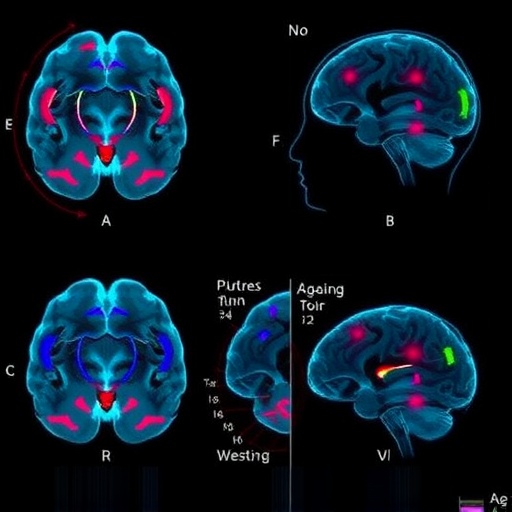
As the global population continues to age, understanding the nuances of how ageing impacts brain function becomes ever more crucial. Among the many domains affected by ageing, motor control deterioration stands out as a significant contributor to reduced quality of life in the elderly. However, less clear has been the precise ways in which ageing influences sensorimotor learning — the brain’s ability to adapt and recalibrate movements based on sensory feedback. New research led by Cisneros, Karny, Ivry, and colleagues published in Nature Human Behaviour in 2026 delivers groundbreaking insights into this question, highlighting a complex but strikingly consistent dissociation between different components of sensorimotor learning as our brains age.
Sensorimotor learning is not a monolithic process. Instead, it consists of at least two distinguishable forms: explicit learning, which involves conscious strategy formation and the active use of stored information to guide movement, and implicit recalibration, which happens largely outside of awareness and reflects an automatic updating of sensorimotor mappings in response to errors. Until now, studies exploring ageing effects on sensorimotor learning have been riddled with contradictions—some suggesting deficits, others showing preserved or even enhanced abilities in older adults. Cisneros et al. hypothesized that many of these inconsistencies arise from methodological issues such as small sample sizes and the use of behavioral tasks that mix the two types of learning, obscuring clear interpretation.
To break through this fog, the team employed a two-pronged approach, combining a meta-analysis of existing literature with a series of four novel, well-powered experiments designed to isolate the explicit and implicit components of sensorimotor adaptation. The meta-analysis sifted through decades of research, focusing explicitly on outcomes that distinctly estimate explicit versus implicit adaptation components. Multiple meta-analytic methods were deployed to guard against biases, and this comprehensive aggregation revealed a notable pattern that had previously been missed due to scattered and underpowered data sets.
The experimental arm of the study took this a step further, employing sophisticated behavioral paradigms in young and older adults. These paradigms were explicitly designed to tease apart the explicit strategies for motor correction — such as consciously aiming to a new target location — from the implicit recalibration that recalibrates sensorimotor mappings below conscious awareness. This rigorously controlled approach allowed the researchers to observe the distinct learning trajectories during adaptation and retention phases with unprecedented clarity.
What emerged was a striking dissociation: older adults displayed a pronounced impairment in discovering and deploying new explicit strategies for motor correction, while simultaneously exhibiting an enhanced capacity for implicit recalibration. This dual pattern of change challenges the long-held assumption that all forms of sensorimotor learning decline uniformly with age. Instead, it suggests that ageing selectively undermines the neural circuits supporting explicit processes while augmenting or preserving those involved in implicit recalibration.
Digging deeper, the researchers investigated the origins of the explicit learning deficit. Their results indicated that the problem was not a failure in implementing parametric algorithms—those complex, continuous computations needed to adjust motor outputs. Rather, the deficit stemmed from impaired ‘caching’ of stimulus-response mappings. In other words, older adults struggled to store and retrieve the explicit associations guiding strategic aiming, diminishing their ability to flexibly adjust motor plans in response to changing environmental demands.
Conversely, the enhancement in implicit recalibration was linked to changes in multisensory integration, particularly of proprioceptive and visual information. The brain’s ability to weigh and combine these sensory inputs dynamically appears to shift with age, leading to stronger implicit updating of sensorimotor maps. This nuanced change may reflect a compensatory process whereby the aging brain relies more heavily on automatic recalibration to maintain motor function in the face of declining explicit control.
The implications of these discoveries are far-reaching, both theoretically and practically. From a neuroscience perspective, they underscore the importance of decomposing sensorimotor learning into its constituent parts for a clearer understanding of how ageing affects brain function. Practically, they suggest that rehabilitation and motor learning interventions for older adults might be optimized by leveraging implicit learning systems while finding ways to support or compensate for explicit strategy deficits.
Moreover, this work provides critical methodological clarity for future research. The clear demonstration that ageing affects explicit and implicit sensorimotor learning differently points to the necessity of task designs and analyses that can disentangle these components. It cautions against lumping all forms of adaptation together, which risks obscuring important age-related changes and possibly misguiding clinical approaches.
This study also opens exciting questions for further exploration. For instance, what neural substrates mediate the observed dissociation? The authors speculate that prefrontal and hippocampal systems supporting working memory and strategy implementation degrade with age, underpinning explicit deficits, whereas cerebellar-dependent automatic recalibration remains intact or is even upregulated. Future neuroimaging and neurophysiological studies will be crucial in validating and expanding these mechanistic insights.
Furthermore, understanding how sensory integration changes with age to enhance implicit recalibration invites interdisciplinary collaboration between sensory systems researchers and motor learning scientists. Exploring whether similar patterns arise in other forms of learning or in pathological ageing, such as Alzheimer’s disease or Parkinson’s disease, will be valuable in determining the generality and clinical relevance of these findings.
Beyond laboratory settings, the research contributes to a broader societal challenge: maintaining functional independence and well-being in an ageing population. By illuminating which aspects of motor learning remain plastic and which decline, targeted interventions can be developed that optimize motor rehabilitation, fall prevention programs, and skill reacquisition in older adults.
The approach taken by Cisneros et al.—combining rigorous meta-analysis with meticulously designed behavioral experiments—sets a new standard for ageing research in sensorimotor control. Their findings clearly demonstrate that ageing does not blunt all aspects of learning uniformly. Instead, it imposes a complex reorganization where explicit strategy formation falters even as implicit recalibration flourishes. Understanding this duality not only enriches our scientific knowledge but also provides a roadmap to harness the brain’s preserved capacities in promoting healthy ageing.
As the neuroscience field moves forward, it is increasingly clear that dissecting the underlying processes of learning is essential to unlocking the mysteries of brain ageing. Sensorimotor adaptation, a fundamental biological function, now stands as a paradigm for revealing how the ageing brain reorganizes its operations—an insight with the power to shape future research, clinical interventions, and ultimately, the quality of life for millions worldwide.
Cite Scienmag News
Beatrice Stafford. (May 19, 2026). Ageing Impacts Implicit, Explicit Sensorimotor Learning Differently. Scienmag. https://scienmag.com/ageing-impacts-implicit-explicit-sensorimotor-learning-differently/
Beatrice Stafford. "Ageing Impacts Implicit, Explicit Sensorimotor Learning Differently." Scienmag, 19 May 2026, https://scienmag.com/ageing-impacts-implicit-explicit-sensorimotor-learning-differently/. Accessed 3 September 2026.
Beatrice Stafford. "Ageing Impacts Implicit, Explicit Sensorimotor Learning Differently." Scienmag. May 19, 2026. https://scienmag.com/ageing-impacts-implicit-explicit-sensorimotor-learning-differently/


