


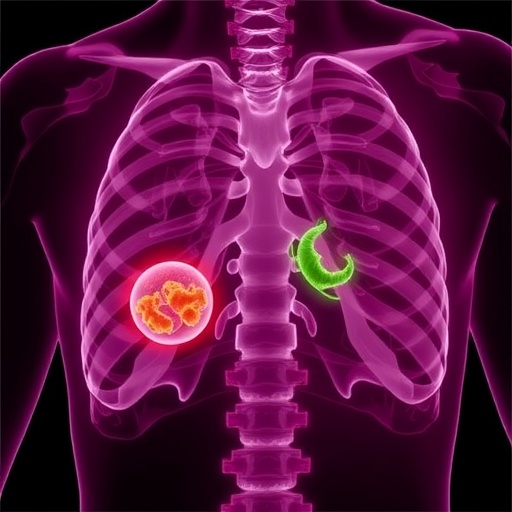
In the ongoing battle against tuberculosis (TB), one of the most formidable challenges has been the emergence and spread of drug-resistant strains of Mycobacterium tuberculosis, the bacterium responsible for the disease. Among these, rifampicin-resistant strains represent a particularly troubling threat, as rifampicin is a cornerstone antibiotic in the treatment of TB. Recent groundbreaking research published in Nature Microbiology unveils novel insights into how transcription attenuation mechanisms in these resistant bacteria could be exploited to uncover new therapeutic vulnerabilities.
Rifampicin’s mechanism of action involves the inhibition of bacterial RNA polymerase, essentially blocking transcription and stalling the production of essential proteins in Mycobacterium tuberculosis. Resistance to rifampicin typically arises from mutations in the rpoB gene encoding the RNA polymerase beta subunit, which reduces the antibiotic’s binding affinity, thereby allowing the bacterium to circumvent the drug’s lethal effect. However, the costs of resistance extend beyond simple target modification, imposing complex changes on the bacterium’s transcriptional machinery that might open new chinks in its armor.
The study led by Eckartt and colleagues rigorously investigates how transcription attenuation, a process where RNA polymerase prematurely terminates transcription, becomes altered in rifampicin-resistant Mycobacterium tuberculosis. By experimentally mapping genome-wide transcriptional changes and polymerase behavior, the team demonstrated that resistant strains show enhanced sensitivity to factors that destabilize transcription elongation, which in turn hampers their fitness and survival under antibiotic pressure.
At the molecular level, the researchers discovered that the transcriptional machinery in rifampicin-resistant bacteria faces increased collateral stress, creating exploitable weak points. Specifically, rifampicin resistance mutants exhibited pronounced transcriptional pauses and premature termination events. These disruptions reduce the efficiency of gene expression and render the bacteria more vulnerable to secondary assaults targeting transcriptional fidelity or RNA stability.
The implications of these findings are profound. Transcription attenuation, which might have been seen simply as a passive consequence of rifampicin resistance, actively magnifies the bacterium’s collateral vulnerabilities. This paves the way for novel drug development strategies aimed not just at inhibiting bacterial growth but specifically at exacerbating these transcriptional weaknesses, potentially restoring treatment efficacy against resistant strains.
Moreover, the study utilized advanced technologies such as genome-wide transcriptional profiling and single-molecule RNA sequencing to obtain a high-resolution picture of how rifampicin resistance reprograms the transcriptional landscape of Mycobacterium tuberculosis. This technology-driven insight allows for pinpointing new molecular targets and understanding the resistance phenotype at unprecedented depth.
Another remarkable aspect highlighted by this research is the potential for combination therapies that synergize rifampicin or rifampicin derivatives with agents that disrupt transcription attenuation. Drug candidates disrupting transcription elongation factors or RNA processing enzymes could be paired with existing antibiotics to produce a synthetic lethality effect, overwhelming resistant Mycobacterium tuberculosis populations.
Furthermore, the study also investigated the broader physiological consequences of altered transcription dynamics in resistant strains. The transcriptional defects contribute to slower growth rates and reduced intracellular survival within host macrophages, suggesting that targeting transcription attenuation could not only impair bacterial survival but also limit its pathogenic potential.
The identification of transcription attenuation amplification as a collateral vulnerability opens a new frontier in TB treatment research. It challenges the prevailing paradigm that resistance mutations solely protect bacteria, instead revealing that such mutations induce vulnerabilities that might be therapeutically exploited. This duality offers hope for rekindling the efficacy of rifampicin-based regimens despite burgeoning resistance.
Importantly, this work underscores how detailed mechanistic understanding of bacterial transcription under stress conditions can illuminate unexpected consequences of resistance evolution. Rational drug design inspired by these molecular insights could lead to the development of next-generation antimicrobials with refined specificity and reduced resistance emergence.
Given the global health burden of tuberculosis and the accelerating rise of multidrug-resistant strains, translation of these findings into clinical interventions is urgently needed. The study advocates for accelerated screening of small molecules targeting transcriptional regulators and polymerase-associated factors, potentially ushering in a new category of anti-TB drugs.
It is worth noting that the study also addresses the genetic and biochemical diversity among clinical isolates of rifampicin-resistant Mycobacterium tuberculosis, highlighting the complexity of resistance mechanisms in natural populations. By characterizing conserved transcriptional vulnerabilities, the authors provide a broadly applicable framework for therapeutic exploitation despite strain heterogeneity.
The interplay between transcription attenuation and antibiotic resistance adds nuance to our understanding of bacterial adaptation. As the research community grapples with antibiotic resistance, this study exemplifies how uncovering hidden trade-offs in bacterial physiology can transform therapeutic strategies and reignite hope against resistant infections.
In conclusion, the discovery that transcription attenuation amplifies collateral vulnerabilities in rifampicin-resistant Mycobacterium tuberculosis represents a paradigm-shifting advance. It invites a reevaluation of resistance biology and encourages the pursuit of transcription-focused therapeutic avenues that could circumvent longstanding hurdles in TB treatment. As tuberculosis continues to threaten millions worldwide, insights such as these fuel optimism for more effective and durable antibiotic regimens in the near future.
Cite Scienmag News
Juliet Wilcox. (May 19, 2026). Transcription Attenuation Boosts Rifampicin-Resistant TB Weaknesses. Scienmag. https://scienmag.com/transcription-attenuation-boosts-rifampicin-resistant-tb-weaknesses/
Juliet Wilcox. "Transcription Attenuation Boosts Rifampicin-Resistant TB Weaknesses." Scienmag, 19 May 2026, https://scienmag.com/transcription-attenuation-boosts-rifampicin-resistant-tb-weaknesses/. Accessed 5 September 2026.
Juliet Wilcox. "Transcription Attenuation Boosts Rifampicin-Resistant TB Weaknesses." Scienmag. May 19, 2026. https://scienmag.com/transcription-attenuation-boosts-rifampicin-resistant-tb-weaknesses/


