


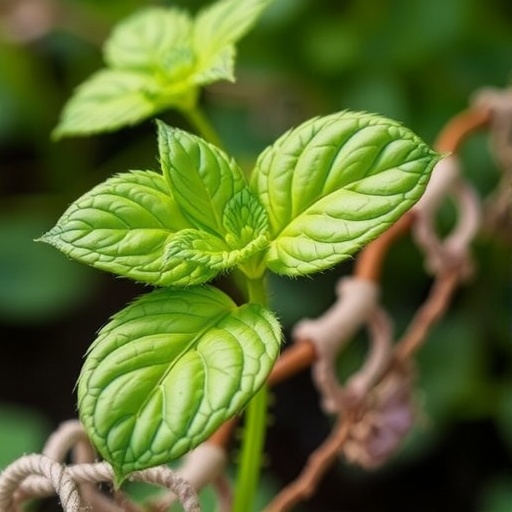
In the relentless battleground of environmental stressors, plants emerge as remarkable survivors, constantly combating the impacts of sunlight, radiation, drought, and soil deficiencies that inflict continuous DNA damage. Unlike animals, plants are rooted in place with no ability to flee from these hazards, placing immense pressure on their cellular machinery to maintain genome integrity. Recent groundbreaking research from the Salk Institute has unveiled a novel mechanism that plants deploy to safeguard their invaluable stem-cell reservoirs during episodes of genomic distress.
This pioneering study reveals the presence of a specialized protein, termed YAF9B, which plants uniquely evolved as an additional defense layer to enhance DNA repair fidelity. Unlike its widely conserved paralog YAF9A, found across yeast, animals, and plants, YAF9B is a plant-exclusive isoform that becomes selectively engaged upon detection of DNA damage. Concentrated predominantly within stem-cell-like tissues responsible for generating roots, shoots, and leaves, YAF9B’s emergence highlights the evolutionary innovations plants have developed to protect their regenerative potential.
At the heart of this discovery lies the complex interplay between chromatin structure and DNA repair accessibility. Plant DNA is intricately wrapped around histone proteins, forming tightly packed chromatin that must be remodeled to expose damaged sites. This packaging, while essential for genomic organization, poses significant barriers to repair enzymes attempting to access and rectify breaks. The YAF9 proteins act as chromatin “readers,” recognizing specific histone modifications and facilitating the recruitment and activation of repair machinery.
This chromatin remodeling capability is crucial because DNA damage repair pathways vary in their speed and precision. The swift but error-prone non-homologous end joining (NHEJ) method rapidly seals breaks but risks introducing mutations, compromising genomic integrity over time. Conversely, homology-directed repair (HDR) meticulously reconstructs damaged DNA sequences by referencing an intact template strand, ensuring accuracy but requiring more time and coordination. The current research demonstrates that YAF9B preferentially promotes HDR, bolstering high-fidelity repair in stem-cell populations critical for sustained plant growth.
By elevating the chromatin accessibility at damaged loci, YAF9B enhances the cell’s ability to detect DNA lesions and engage HDR pathways properly. This function is particularly vital in meristematic tissues that harbor stem cells, where mutation accumulation could have far-reaching consequences on the entire organism. The selective induction of YAF9B following genotoxic stress suggests an evolved safeguard that prioritizes genomic stability when it matters most.
The broader implications of this work extend into agricultural biotechnology and genome editing. CRISPR-based tools widely used for plant genetic modifications currently contend with limitations imposed by the predominance of NHEJ repair, which can introduce unintended mutations and hinder precise editing goals. A deeper mechanistic understanding of YAF9B and its role in promoting HDR opens avenues for refining gene editing techniques to achieve higher accuracy and stability—potentially revolutionizing crop improvement strategies.
Moreover, the distinctive separation of labor between YAF9A and YAF9B underscores the nuanced orchestration of plant DNA repair systems. While YAF9A provides a broad-spectrum response throughout various tissues, YAF9B’s focused deployment in stem-cell niches represents a sophisticated adaptation aimed at the genetic safeguarding of the plant’s developmental foundations. This differentiation offers researchers promising targets for manipulating repair pathways to enhance both stress resilience and genetic engineering precision.
Despite these exciting revelations, many questions remain about the precise molecular mechanisms by which YAF9B modulates chromatin dynamics and coordinates repair protein complexes. Future research will aim at delineating the biochemical interactions, post-translational modifications, and signaling cascades that regulate YAF9B activity. Understanding how YAF9A and YAF9B interact or complement each other during distinct phases of DNA repair will be pivotal in decoding the full landscape of plant genome maintenance.
Julie Law and her team at Salk emphasize that this discovery not only highlights a plant-specific DNA damage response factor but also exemplifies nature’s ingenuity in evolving sophisticated molecular systems tailored to an organism’s lifestyle and environmental challenges. As plants continuously balance growth and genome integrity under fluctuating stress conditions, proteins like YAF9B prove indispensable for their longevity and adaptability.
This study also marks a significant advance in the field of chromatin biology and epigenetics, demonstrating that chromatin readers are integral not only to gene regulation but also to preserving genetic information after damage. The function of YAF9B as a DNA damage-responsive chromatin effector adds a new dimension to our understanding of how plant cells integrate chromatin architecture with dynamic repair processes.
In summary, the identification of YAF9B as a specialized guardian of genomic stability in stem cell compartments provides a critical insight into plant resilience. Through its activation and chromatin remodeling functions, YAF9B empowers plants to perform high-fidelity DNA repair, ensuring continued growth and development despite the persistent threat of environmental genotoxic stress. This landmark discovery not only deepens our fundamental biological knowledge but also seeds hope for transformative advances in agriculture and genome engineering.
News Publication Date: June 8, 2026
Web References:
Cite Scienmag News
Drew Townsend. (June 8, 2026). How Do Plants Withstand Continuous DNA Damage? Scienmag. https://scienmag.com/how-do-plants-withstand-continuous-dna-damage/
Drew Townsend. "How Do Plants Withstand Continuous DNA Damage?" Scienmag, 8 June 2026, https://scienmag.com/how-do-plants-withstand-continuous-dna-damage/. Accessed 4 September 2026.
Drew Townsend. "How Do Plants Withstand Continuous DNA Damage?" Scienmag. June 8, 2026. https://scienmag.com/how-do-plants-withstand-continuous-dna-damage/


