


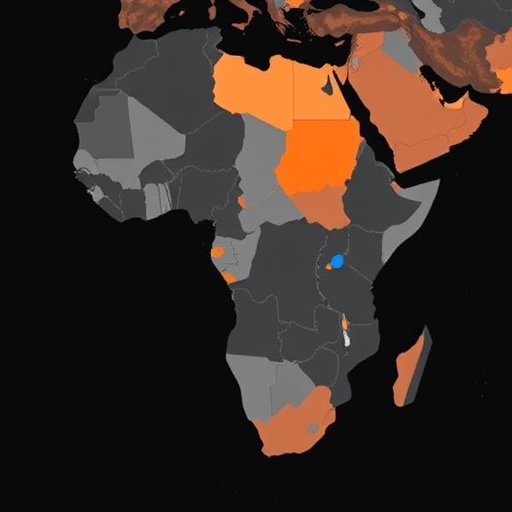
In a groundbreaking advancement poised to transform public health strategies across sub-Saharan Africa, a team of researchers led by Adetunji, Mathema, Kisiangani, and colleagues has developed a novel stratification method to pinpoint subgroups at the highest risk for type 2 diabetes. Published in Nature Communications in 2026, this innovative approach leverages detailed demographic, genetic, and environmental data to uncover nuanced risk profiles previously hidden within the broad population categories used in conventional screening practices. This research not only promises to optimize early detection but also aligns intervention efforts more precisely, suggesting a new paradigm in managing the escalating burden of type 2 diabetes in this vastly heterogeneous region.
The escalating prevalence of type 2 diabetes in sub-Saharan Africa has posed an urgent public health challenge. Historically overshadowed by infectious diseases, non-communicable diseases such as diabetes are now surging, driven by urbanization, shifting diets, sedentary lifestyles, and increasing obesity rates. Despite growing awareness, the identification of individuals at greatest risk remains imprecise, largely due to population diversity and the lack of region-specific predictive tools. The stratification method introduced by the research team represents an unparalleled leap forward, offering a granular understanding of the interplay between genetic predispositions, socioeconomic factors, and environmental exposures in shaping diabetes risk.
At the heart of this stratification approach is the integration of multi-dimensional data through advanced statistical modeling and machine learning algorithms. The researchers collected extensive data sets from diverse cohorts across multiple countries in sub-Saharan Africa, including biometrics, lifestyle parameters, familial history, and genetic markers associated with glucose metabolism. By employing clustering techniques and predictive analytics, the team was able to delineate discrete subpopulations with shared characteristics and heightened susceptibility to type 2 diabetes, beyond the simplistic categorizations of age and BMI alone.
One of the pivotal scientific contributions of this method lies in its ability to account for heterogeneity within sub-Saharan African populations. Unlike previous models relying predominantly on data extrapolated from European or North American cohorts, this approach tailored the risk assessment framework to the unique genetic architecture and environmental contexts endemic to African settings. This localization of risk stratification is critical, as it unravels how specific gene-environment interactions modulate diabetes risk in these communities, an area that has been chronically understudied despite its profound implications for disease management.
Technologically, the stratification method incorporates high-throughput genomic sequencing data and environmental exposure mapping, enabling a multi-layered risk assessment. This fusion of omics data with real-world contextual information represents a landmark in precision epidemiology. The researchers demonstrated that by layering genomic risk scores atop traditional clinical indicators, the predictive power for future type 2 diabetes onset significantly improved, allowing for earlier, more personalized intervention pathways that could ultimately reduce morbidity and healthcare costs.
The implications of this approach for healthcare delivery in sub-Saharan Africa cannot be overstated. Public health infrastructures in many African nations face resource constraints and often rely on generalized screening protocols that may miss high-risk individuals or misallocate resources. By honing in on well-defined subgroups through the stratification model, healthcare providers can tailor screening frequency, lifestyle modification messaging, and pharmacological treatments with far greater specificity. This not only enhances the cost-effectiveness of interventions but also fosters community trust and engagement, as programs resonate more directly with individual risk profiles.
Moreover, the methodology emphasizes a dynamic model of risk stratification that can evolve with time as more data accumulate and populations shift demographically and epidemiologically. This adaptive capacity ensures that health policies and intervention strategies remain responsive to changing landscapes, such as urban migration patterns, nutrition transitions, and emerging genetic findings. The researchers illustrated this by validating their model on longitudinal cohorts, confirming that the identified subgroups retained predictive accuracy across multiple years.
Cognizant of the ethical nuances inherent in genetic and health data collection, the team adopted rigorous protocols to safeguard participants’ privacy and foster equitable data sharing. Collaborative partnerships with local institutions ensured community involvement and transparent communication, setting a standard for future studies targeting chronic diseases in vulnerable regions. This ethical framework is integral to the model’s scalability and acceptability, as trust between researchers and communities is foundational to successful public health initiatives.
The stratification method also carries significant value for global health research beyond sub-Saharan Africa. The conceptual framework and analytic tools developed could be adapted to other regions facing rising burdens of diabetes and metabolic disorders but characterized by diverse genetics and exposures. This scalability enhances the global applicability of the work, facilitating international efforts to combat the diabetes epidemic via personalized and population-specific risk profiling.
Scientific exploration into the pathophysiological mechanisms underpinning the stratification subgroups holds promising avenues for therapeutic discovery. By characterizing subpopulations with distinct metabolic profiles and genetic susceptibilities, drug development can become more targeted. Precision medicine approaches may emerge, whereby interventions are tailored not only to glycemic control but also to individualized risk pathways elucidated through stratification, revolutionizing treatment efficacy and patient outcomes.
This stratification method embodies a visionary intersection of epidemiology, genomics, data science, and public health policy. It exemplifies how harnessing complex, multi-dimensional data can propel infectious disease-framed health systems into the era of chronic non-communicable disease management. The research team envisions the integration of this risk stratification algorithm into national healthcare frameworks, embedded within electronic health records and mobile health platforms, to facilitate widespread, real-time risk assessment and personalized care delivery.
Importantly, the model offers an actionable framework for governments, NGOs, and international agencies aiming to prioritize interventions amidst constrained resources. The ability to identify pockets of high-risk individuals ensures that educational campaigns, nutritional programs, physical activity initiatives, and pharmacologic support can be strategically concentrated for maximum impact, potentially curbing the trajectory of type 2 diabetes at a population scale.
Future research directions outlined by the team include expanding the dataset to incorporate broader environmental variables—such as pollution exposure and food security metrics—and validating the model’s utility across varying healthcare infrastructures. Such efforts will refine the stratification approach further, cementing its role as an indispensable tool in the fight against diabetes and associated complications in diverse African populations.
Ultimately, this transformative research extends a hopeful message amid daunting health challenges—the precision-driven stratification method ushers in a new era where African populations receive tailored, effective, and sustainable diabetes care. By capturing the complex mosaic of risk profiles unique to sub-Saharan Africa, the study lays the foundation for health equity and scientific empowerment that promises to reverberate across the continent and beyond.
Cite Scienmag News
Ophelia Keating. (May 19, 2026). New Method Identifies High-Risk Diabetes Groups in Africa. Scienmag. https://scienmag.com/new-method-identifies-high-risk-diabetes-groups-in-africa/
Ophelia Keating. "New Method Identifies High-Risk Diabetes Groups in Africa." Scienmag, 19 May 2026, https://scienmag.com/new-method-identifies-high-risk-diabetes-groups-in-africa/. Accessed 4 September 2026.
Ophelia Keating. "New Method Identifies High-Risk Diabetes Groups in Africa." Scienmag. May 19, 2026. https://scienmag.com/new-method-identifies-high-risk-diabetes-groups-in-africa/


