


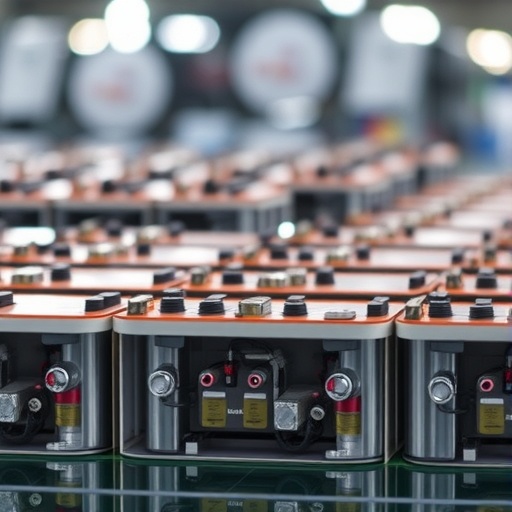
In recent years, the global electric vehicle (EV) market has witnessed exponential growth, driven by an urgent worldwide shift towards decarbonization and sustainable transportation. Against this backdrop, the United States has prioritized expanding domestic production capabilities for critical battery materials to secure and stabilize its EV supply chain. However, new research reveals that this domestic scaling effort, although vital, is insufficient to fully meet the projected demands for essential battery components by 2035. This finding highlights the complex interplay between raw material availability, evolving battery chemistries, and the broader geopolitical landscape influencing the future of US battery manufacturing.
The US government’s ambitious push to build a robust, homegrown EV battery supply chain aims to shield the country from vulnerabilities linked to international dependencies for key materials. While announced projects show promise in covering the demand for certain foundational substances—such as raw lithium, lithium carbonate, lithium hydroxide, electrolytes, and separators—significant deficits remain for other critical elements. These disparities underscore an urgent need to rethink strategies beyond merely increasing production capacities. Efforts that incorporate improvements in material efficiency, battery recycling technologies, and shifts in battery chemistry composition will play an indispensable role in bridging the widening supply-demand chasm.
One of the most striking revelations from the study is the persistent material shortfalls projected for upstream battery inputs, notably cobalt, graphite, and nickel, along with their refined derivatives. Despite technological advancements and diversification efforts, the US supply chain’s ability to fulfill 2035 demand for these materials stands to fall short by an alarming 30% to 70%. This substantial gap reflects both the geological scarcity of certain minerals and the capital-intensive, uncertain nature of mining and refining operations essential to producing battery-grade feedstocks. Without strategic interventions addressing these gaps, the battery manufacturing sector risks bottlenecks that could derail EV growth projections.
Further complicating the outlook is the finding that a significant share of anticipated domestic supply—ranging from 30% to as much as 100% for some materials—is predicated on nascent, early-stage projects that have not yet fully cleared the developmental and permitting hurdles common in mining and chemical processing industries. These early-stage ventures face myriad uncertainties including technological feasibility, environmental compliance, financing challenges, and geopolitical risks, which may impede or delay their realization. This underscores the fragility embedded in overreliance on emerging projects without parallel initiatives to diversify sourcing and reduce material intensity in battery designs.
Downstream material demand adds an additional layer of complexity. Cathode and anode active materials, integral components dictating battery performance and longevity, face projected supply shortfalls in the range of 15% to 75%. This discrepancy threatens not only the volume but the quality and technological advancement of EV batteries that the US aims to commercialize. The constraints in active materials further highlight the interdependence between raw material availability and sophisticated refinement and processing capabilities. Scaling up these downstream processes is crucial to translate raw supplies into competitive, high-performance battery products.
The findings strongly suggest that domestic production expansion must be paired with comprehensive demand-side strategies. Enhanced material efficiency, achieved through innovations in battery design and manufacturing, can significantly reduce the quantity of raw materials required per unit of energy storage, thus alleviating pressure on extraction and refining sectors. Additionally, improving battery recycling rates to reclaim valuable metals and active compounds can create a secondary, circular supply stream that complements primary production. Such integrated approaches are vital to sustain a resilient, environmentally responsible battery supply ecosystem.
Beyond technical solutions, shifts in battery chemistry present a strategic lever for mitigating material supply risks. Moving towards chemistries that reduce reliance on scarce or geopolitically sensitive elements such as cobalt offers a pathway to ease supply constraints. For instance, transitioning from cobalt-rich cathodes to higher-nickel or lithium-iron-phosphate (LFP) alternatives can modulate demand profiles considerably. Nonetheless, these shifts must also balance trade-offs in energy density, cycle life, safety, and cost, underscoring the nuanced challenges in battery innovation and deployment.
International sourcing remains a critical dimension in this multifaceted challenge. Given the limitations of domestic production capacity and uncertainty surrounding project completion, securing reliable and sustainable supply chains globally is indispensable. Collaborative efforts with allied nations rich in relevant mineral deposits and refining infrastructure can bolster supply security. However, such strategies necessitate carefully crafted trade and diplomatic frameworks that emphasize sustainability, ethical sourcing, and resilience against geopolitical shocks, which could otherwise amplify vulnerabilities in the EV battery supply chain.
From an economic standpoint, the persistent material shortfalls and supply chain gaps pose tangible risks to the burgeoning US EV industry. Disruptions or shortages in critical battery components may translate into increased production costs, delayed vehicle rollouts, and diminished market competitiveness relative to nations with more established or diversified supply bases. Ensuring a stable and scalable supply of materials is thus not only an environmental or technical imperative but a fundamental prerequisite for maintaining economic leadership in the global clean transportation sector.
Environmental and social considerations add further complexity. Lithium, cobalt, nickel, and graphite extraction often involve considerable ecological disruption, water consumption, and sometimes adverse human rights conditions in producing regions. Therefore, any strategy aimed at scaling domestic or international mining and refining must rigorously integrate sustainability principles. This includes minimizing environmental footprints, ensuring fair labor practices, and promoting community engagement to foster socially responsible resource development aligned with overarching climate and equity goals.
The research highlights the critical importance of a holistic policy approach that spans the entire battery supply chain, from raw material extraction to battery manufacturing and end-of-life management. Coordinated investments in research and development, infrastructure, and regulatory frameworks are essential to accelerate deployment of advanced recycling technologies, enable diversification of battery chemistries, and streamline permitting for mining and processing facilities. Such multi-dimensional policy frameworks can create synergies that compound gains across the supply chain.
Technological innovation, both incremental and transformative, will be the cornerstone for overcoming supply constraints. Breakthroughs in alternative materials, solid-state battery technologies, enhanced cathode and anode formulations, and system-level integration can dramatically reshape material demand landscapes. These advancements could reduce dependency on critical raw materials, improve battery efficiency and lifespan, and open pathways for circular economy models that prioritize reuse and resource efficiency.
Stakeholder collaboration involving government agencies, private industry, research institutions, and civil society is paramount to developing resilient battery supply chains. Public-private partnerships can catalyze capital flows and accelerate the scaling of pilot projects, commercial ventures, and recycling infrastructure. Simultaneously, transparent communication and data sharing can facilitate adaptive management of supply risks and align efforts across sectors and geographies, reinforcing a unified approach to equity and sustainability challenges.
The timing of interventions is crucial given the rapidly approaching 2035 horizon when EV adoption is expected to surge and corresponding battery material demand will peak. Delayed or fragmented responses could exacerbate supply bottlenecks and constrain the pace of decarbonization initiatives reliant on electrified transportation. This research serves as a clarion call for immediate and concerted action to implement diversified, system-wide strategies that preemptively address looming supply deficits.
In summary, while expanding domestic battery material production in the United States is a necessary pillar of a secure EV supply chain, it alone cannot guarantee sufficiency by 2035. Persistent gaps in upstream and downstream materials, uncertainties in early-stage project maturation, and evolving demand dynamics highlight the need for comprehensive, integrated solutions. Embracing demand reduction through material efficiency, advancing recycling technologies, innovating in battery chemistry, and ensuring viable international sourcing will collectively form a resilient foundation. Only through such a multidimensional approach can the US hope to sustain its electric vehicle ambitions and lead the transition to a zero-emission transportation future.
Cite Scienmag News
Faith Mcneil. (May 19, 2026). Closing US EV Battery Material Supply Gaps. Scienmag. https://scienmag.com/closing-us-ev-battery-material-supply-gaps/
Faith Mcneil. "Closing US EV Battery Material Supply Gaps." Scienmag, 19 May 2026, https://scienmag.com/closing-us-ev-battery-material-supply-gaps/. Accessed 4 September 2026.
Faith Mcneil. "Closing US EV Battery Material Supply Gaps." Scienmag. May 19, 2026. https://scienmag.com/closing-us-ev-battery-material-supply-gaps/


