


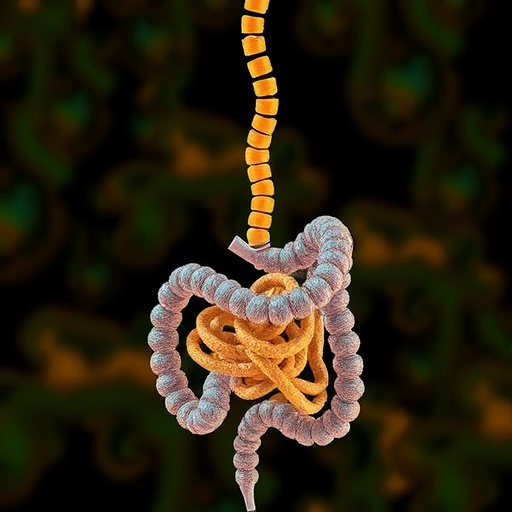
Gut microbes are increasingly being viewed as hidden regulators of brain health, and a new study in Translational Psychiatry adds fuel to that idea by tracing a biochemical pipeline from the gut to stress-related mental disorders. The research, led by Yuan, Qin, Wu and colleagues, reports that metabolites produced—or shaped—by gut microbiota can influence developmental trajectories associated with anxiety- and stress-linked pathology.
Rather than focusing solely on which bacterial species are present, the team examined functional metabolic output. Using integrative approaches that combine microbiome profiling with metabolomic measurements, the researchers identified gut-derived compounds whose levels tracked with downstream markers relevant to stress vulnerability. The results suggest that microbial metabolism may act as an early biochemical “switch,” tuning how stress signals are processed later.
A key finding is that these microbial metabolites do not merely correlate with symptoms; they appear to modulate mechanisms tied to disorder emergence. The study proposes that certain metabolite patterns can reshape host signaling pathways implicated in stress reactivity, including processes that affect neurodevelopment and the maturation of stress-response circuits.
The work also highlights how microbial communities can influence the chemical environment of the gut, altering metabolite availability and thereby changing what reaches the systemic circulation. Once in contact with host tissues, these metabolites may interact with receptors or influence cellular pathways involved in inflammation control and neuronal function—two domains frequently linked to stress-related psychiatric conditions.
Importantly, the paper frames gut–brain communication as a developmentally time-sensitive phenomenon. By emphasizing “development of stress-related mental disorders,” the authors argue that microbial metabolite exposure during critical windows could bias the risk landscape long before clinical symptoms emerge.
Methodologically, the study leverages translational reasoning, connecting microbial metabolites to mechanistic readouts rather than stopping at taxonomic associations. This strategy strengthens the causal plausibility of a microbiota-driven metabolic model and provides candidate compounds that could be targeted in future interventions.
From a public-health perspective, the findings support the growing concept that dietary patterns, probiotics, or precision microbiome therapies might be designed to adjust metabolite production. Such interventions could potentially recalibrate stress susceptibility by shifting the gut’s chemical outputs toward more protective profiles.
As the field advances, the study’s DOI—10.1038/s41398-026-04154-8—marks another step toward metabolite-centered strategies for mental health, where gut chemistry becomes a lever for preventing stress-driven disorders.
Cite Scienmag News
Morgan Morrow. (July 19, 2026). Gut Microbiome Metabolites Shape Development of Stress-Related Mental Disorders. Scienmag. https://scienmag.com/gut-microbiome-metabolites-shape-development-of-stress-related-mental-disorders/
Morgan Morrow. "Gut Microbiome Metabolites Shape Development of Stress-Related Mental Disorders." Scienmag, 19 July 2026, https://scienmag.com/gut-microbiome-metabolites-shape-development-of-stress-related-mental-disorders/. Accessed 3 September 2026.
Morgan Morrow. "Gut Microbiome Metabolites Shape Development of Stress-Related Mental Disorders." Scienmag. July 19, 2026. https://scienmag.com/gut-microbiome-metabolites-shape-development-of-stress-related-mental-disorders/


