

Sunday, July 19, 2026
Science
No Result
View All Result
  • Login
  • HOME
  • SCIENCE NEWS
  • CONTACT US
  • HOME
  • SCIENCE NEWS
  • CONTACT US
No Result
View All Result
Scienmag
No Result
View All Result
Home Science News Medicine

Cognitive reserve helps older adults resist frailty and recover better

July 19, 2026
in Medicine
Reading Time: 2 mins read
0
Cognitive reserve helps older adults resist frailty and recover better

Cognitive reserve helps older adults resist frailty and recover better

65
SHARES
587
VIEWS
Share on FacebookShare on Twitter
ADVERTISEMENT

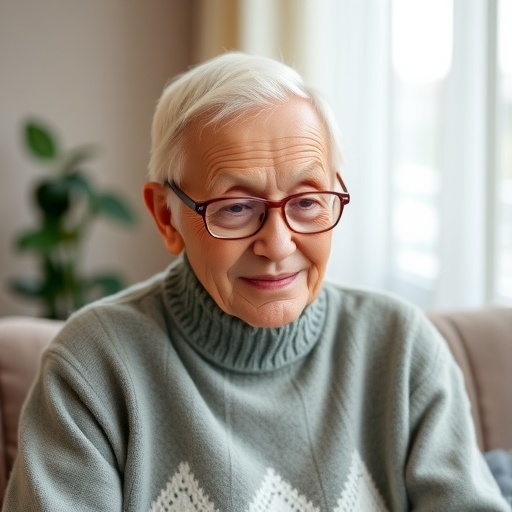
A new study reported in BMC Geriatrics spotlights cognitive reserve—the brain’s lifelong ability to adapt—as a potential resilience factor for how older adults experience frailty. The research frames frailty not as a fixed state, but as a dynamic process that can worsen or improve over time, with cognition playing a key role in that trajectory.

Frailty affects mobility, independence, and health outcomes, and clinicians increasingly treat it as something that evolves. Yet, why some people regain strength after health setbacks while others decline remains an open question. Zhao, Liau, Ma and colleagues investigate whether individuals who build stronger cognitive reserve across their lifespan may be better protected.

The team examines frailty progression and recovery in later life using longitudinal data, allowing participants to move between clinical frailty states rather than being categorized once and followed as static cases. This design is crucial for capturing real-world resilience, where improvement can occur after hospitalization, illness, or functional decline.

Cognitive reserve is often linked to differences in brain structure and function, as well as to lifelong experiences such as education, complex work, and engagement in mentally demanding activities. In the study’s framing, higher cognitive reserve may support more efficient neural processing and compensatory mechanisms, even when aging-related changes begin to accumulate.

Technically, the analysis explores associations between cognitive reserve measures and the odds of frailty worsening or recovering across follow-up. By considering longitudinal changes, the authors aim to isolate whether cognitive reserve is correlated with healthier trajectories, not merely with baseline health.

If validated, these findings could reshape how risk is assessed in geriatrics. Instead of focusing solely on current impairments, clinicians may consider cognitive reserve as part of a broader resilience model that includes cognitive health alongside physical function.

The implications extend beyond individual prediction. Cognitive reserve is influenced by modifiable factors, suggesting that public health strategies promoting lifelong learning and cognitively stimulating environments might contribute to better aging outcomes.

With its 2026 publication in BMC Geriatrics, the study adds to a growing evidence base connecting cognitive aging with systemic vulnerability. The authors argue that resilience is not only physical—brain adaptability may also buffer older adults against the downward cycle of frailty.

Finally, the study offers a viral-science-friendly takeaway: your brain’s “practice” over decades may help determine whether frailty becomes a chronic decline or a condition with room for recovery.

Subject of Research: Frailty progression and recovery in later life; cognitive reserve as a resilience factor.

Article Title: Lifelong cognitive reserve as a resilience factor for frailty progression and recovery in later life.

Article References: Zhao, M., Liau, S.J., Ma, X. et al. Lifelong cognitive reserve as a resilience factor for frailty progression and recovery in later life. BMC Geriatrics (2026). https://doi.org/10.1186/s12877-026-07919-4

Image Credits: AI Generated

DOI: 10.1186/s12877-026-07919-4

Tags: brain resilience in agingcognitive factors in health recoverycognitive reservedynamic frailty progressionfrailty in older adultshealth outcomes in older adultsimpact of lifelong education on aginglongitudinal studies on agingmental activity and agingneural compensation in elderlyrecovery from health setbacksresilience factors in geriatrics
Share26Tweet16
Previous Post

Physical Activity and Health Inequality in China’s Older Adults

Next Post

Gut Microbiome Metabolites Shape Development of Stress-Related Mental Disorders

Related Posts

Sleep Quality Links Synergistically with Frailty to Increase Cardiometabolic Multimorbidity in Elderly Chinese
Medicine

Sleep Quality Links Synergistically with Frailty to Increase Cardiometabolic Multimorbidity in Elderly Chinese

July 19, 2026
Physical Activity and Health Inequality in China’s Older Adults
Medicine

Physical Activity and Health Inequality in China’s Older Adults

July 19, 2026
Factors Influencing Elderly Preference for Dental Services
Medicine

Factors Influencing Elderly Preference for Dental Services

July 18, 2026
Frequency-Dependent Deep Brain Stimulation in Motor Thalamus Alters Speech and Swallowing
Medicine

Frequency-Dependent Deep Brain Stimulation in Motor Thalamus Alters Speech and Swallowing

July 18, 2026
Factors Affecting Fall Prevention for Older Adults With Dementia, Systematic Review
Medicine

Factors Affecting Fall Prevention for Older Adults With Dementia, Systematic Review

July 18, 2026
Gene therapy reverses complete congenital night blindness in mice, improving vision
Medicine

Gene therapy reverses complete congenital night blindness in mice, improving vision

July 18, 2026
Next Post
Gut Microbiome Metabolites Shape Development of Stress-Related Mental Disorders

Gut Microbiome Metabolites Shape Development of Stress-Related Mental Disorders

  • Mothers who receive childcare support from maternal grandparents show more

    Mothers who receive childcare support from maternal grandparents show more parental warmth, finds NTU Singapore study

    27656 shares
    Share 11059 Tweet 6912
  • University of Seville Breaks 120-Year-Old Mystery, Revises a Key Einstein Concept

    1061 shares
    Share 424 Tweet 265
  • Bee body mass, pathogens and local climate influence heat tolerance

    682 shares
    Share 273 Tweet 171
  • Researchers record first-ever images and data of a shark experiencing a boat strike

    546 shares
    Share 218 Tweet 137
  • Groundbreaking Clinical Trial Reveals Lubiprostone Enhances Kidney Function

    531 shares
    Share 212 Tweet 133
Science

Embark on a thrilling journey of discovery with Scienmag.com—your ultimate source for cutting-edge breakthroughs. Immerse yourself in a world where curiosity knows no limits and tomorrow’s possibilities become today’s reality!

RECENT NEWS

  • Rannasangpei crocin-1 improves valproate-induced autism-like behaviors by reducing oxidative stress
  • Sleep Quality Links Synergistically with Frailty to Increase Cardiometabolic Multimorbidity in Elderly Chinese
  • Gut Microbiome Metabolites Shape Development of Stress-Related Mental Disorders
  • Cognitive reserve helps older adults resist frailty and recover better

Categories

  • Agriculture
  • Anthropology
  • Archaeology
  • Athmospheric
  • Biology
  • Biotechnology
  • Blog
  • Bussines
  • Cancer
  • Chemistry
  • Climate
  • Earth Science
  • Editorial Policy
  • Marine
  • Mathematics
  • Medicine
  • Pediatry
  • Policy
  • Psychology & Psychiatry
  • Science Education
  • Social Science
  • Space
  • Technology and Engineering

Subscribe to Blog via Email

Enter your email address to subscribe to this blog and receive notifications of new posts by email.

Join 5,146 other subscribers

© 2025 Scienmag - Science Magazine

Welcome Back!

Login to your account below

Forgotten Password?

Retrieve your password

Please enter your username or email address to reset your password.

Log In
No Result
View All Result
  • HOME
  • SCIENCE NEWS
  • CONTACT US

© 2025 Scienmag - Science Magazine

Discover more from Science

Subscribe now to keep reading and get access to the full archive.

Continue reading
