


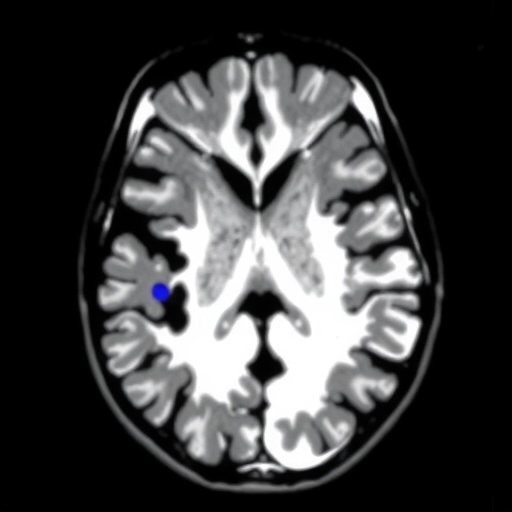
Magnetic resonance imaging has long offered clinicians an extraordinarily detailed view of the human body, but turning those images into a complete and reliable cancer assessment remains a demanding task. A new study published in Nature Communications introduces MRICombo, a deep-learning framework designed to bring several major MRI analysis functions together: volumetric segmentation, disease grading, clinical staging, and malignancy detection. The work by Zhang, Han, Jia and colleagues points toward a future in which one artificial-intelligence system could examine complex MRI data and produce a more unified picture of disease.
The central challenge addressed by MRICombo is the extreme diversity of MRI examinations. Scans can differ in magnetic-field strength, imaging sequences, spatial resolution, contrast settings, acquisition protocols and patient positioning. Hospitals may also use different scanners and software, producing images that look substantially different even when they depict the same anatomical structure. These variations can make it difficult for an algorithm trained on one dataset to perform consistently on another. A model that appears highly accurate in a single research environment may lose reliability when confronted with images from a different institution.
MRICombo is presented as a universal framework for heterogeneous MRI, meaning that its architecture is intended to work across a broad range of imaging conditions rather than being narrowly tied to one scanner or one standardized protocol. In technical terms, such a system must learn disease-related visual patterns while resisting irrelevant changes caused by image acquisition. This is a major distinction: the algorithm needs to recognize the biological signal of a lesion, not simply memorize the appearance of the machines or datasets used during training.
One of the framework’s key functions is volumetric segmentation. Instead of identifying a suspicious region on a single two-dimensional slice, volumetric segmentation attempts to outline the full three-dimensional extent of a structure or lesion across the entire MRI examination. This can provide information about tumor volume, shape, spatial distribution and relationship to surrounding tissue. Three-dimensional analysis is particularly important when abnormalities extend irregularly through an organ, because a slice-by-slice assessment may underestimate their size or fail to capture their complete geometry.
The framework also combines image segmentation with grading and staging, two clinical tasks that answer different questions. Grading generally concerns how aggressive or abnormal a tumor appears under a disease-specific classification system, while staging evaluates how far the disease has progressed. Integrating these tasks with anatomical delineation could allow the system to connect what a lesion looks like with where it is located and how extensively it has spread. In principle, this multitask strategy may help an algorithm learn shared features across related objectives, although the quality of any clinical conclusion still depends on the data, labels and validation methods used to develop it.
Malignancy detection adds another layer to the proposed system. Rather than focusing solely on drawing boundaries around an abnormality, MRICombo is designed to distinguish malignant disease from non-malignant findings. That distinction is often difficult even for experienced radiologists because benign lesions, inflammation, treatment-related changes and early cancers can overlap in appearance. A deep-learning model can analyze thousands of quantitative image patterns simultaneously, including intensity distributions, texture, shape and spatial context. However, such complexity also makes careful evaluation essential, since a prediction is only useful when its accuracy and limitations are understood.
The promise of a combined framework is not simply speed. If one validated model could support several stages of MRI interpretation, it might reduce repetitive manual work and generate standardized measurements for multidisciplinary teams. A consistent three-dimensional lesion volume, for example, could help with treatment planning or monitoring changes over time. Automated grading and staging estimates might also serve as an additional reference during clinical review. Yet these possibilities should be viewed as decision-support applications rather than a replacement for physicians, pathology, clinical history or expert radiological judgment.
The study’s emphasis on heterogeneity is especially timely as medical imaging becomes increasingly distributed across hospitals, regions and healthcare systems. Artificial intelligence that performs well only on carefully curated images has limited real-world value. Universal or general-purpose imaging models must be tested against differences in patient populations, scanner manufacturers, imaging protocols and disease prevalence. They must also be assessed for hidden biases, calibration errors and failures in uncommon cases. For MRICombo, the significance of the work will therefore depend not only on its reported performance, but also on how broadly and transparently the framework is validated.
MRICombo represents a broader shift in medical AI: moving from isolated algorithms built for one narrow task toward integrated systems capable of handling an entire chain of image-based assessment. The concept is compelling because cancer diagnosis and management rarely depend on a single measurement. Clinicians need to know what a lesion is, where it is, how large it is, how aggressive it may be and whether it is malignant. By placing these questions within one deep-learning framework, the study offers a vision of more connected MRI analysis. The next test will be whether that vision can translate across institutions and ultimately improve decisions for patients in everyday clinical practice.
Cite Scienmag News
Nathaniel Bowman. (August 8, 2026). AI Framework Unifies MRI Tumor Segmentation, Grading, Staging, and Malignancy Detection. Scienmag. https://scienmag.com/ai-framework-unifies-mri-tumor-segmentation-grading-staging-and-malignancy-detection/
Nathaniel Bowman. "AI Framework Unifies MRI Tumor Segmentation, Grading, Staging, and Malignancy Detection." Scienmag, 8 August 2026, https://scienmag.com/ai-framework-unifies-mri-tumor-segmentation-grading-staging-and-malignancy-detection/. Accessed 3 September 2026.
Nathaniel Bowman. "AI Framework Unifies MRI Tumor Segmentation, Grading, Staging, and Malignancy Detection." Scienmag. August 8, 2026. https://scienmag.com/ai-framework-unifies-mri-tumor-segmentation-grading-staging-and-malignancy-detection/


