


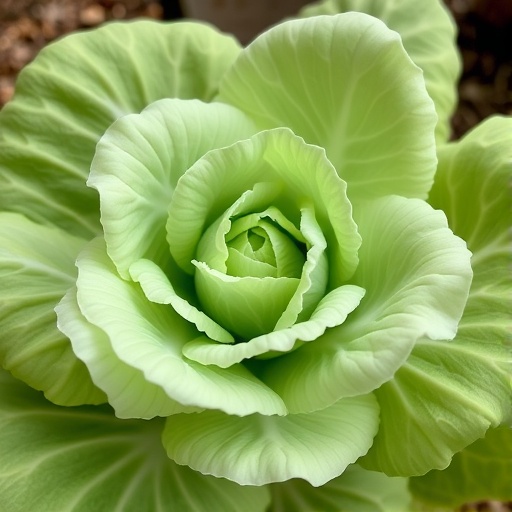
In the kitchens of millions of homes across southern China, choy sum—the tender flowering stalk of Brassica rapa var. parachinensis—is prized for its edible stem, whose height at harvest determines both yield and market value. That stem grows because of a carefully choreographed traffic system of plant hormones, and a team of researchers at Guangzhou University has now mapped one of the key pieces of molecular plumbing that runs it. In a study published in Plant Cell Reports, Yanyan Li, Haobo Yang, Manna Guo and colleagues, led by corresponding author Hongyong Shi, identified and characterized the complete family of ABCB transporter genes in flowering Chinese cabbage, and two of them—BraABCB27 and BraABCB28—stand out as candidate links between hormone transport and one of the most important growth-signaling machines in the plant kingdom.
The ABCB family belongs to the larger superfamily of ATP-binding cassette (ABC) transporters, membrane proteins found from bacteria to humans that burn cellular energy in the form of ATP to pump molecules across membranes. In plants, ABC transporters ferry an astonishing variety of cargo: defense compounds, heavy-metal chelators, waxes and, critically, phytohormones. Within this superfamily, the B subgroup—full-length transporters containing both nucleotide-binding domains and transmembrane domains—has attracted particular attention because several of its members in the reference plant Arabidopsis thaliana are proven hormone movers. AtABCB1 and AtABCB19, for instance, are celebrated auxin efflux carriers that help establish the localized auxin gradients sculpting virtually every organ of the plant, and recent structural work has revealed that AtABCB19 also exports brassinosteroids, the steroid hormones that drive stem elongation, vascular development and stress resilience.
What happens to these functions in crop plants with larger, more complex genomes has been far less clear. The Brassica genus, which includes cabbage, broccoli, oilseed rape and choy sum, descended from a common ancestor with Arabidopsis through extensive whole-genome triplication followed by diploidization and rearrangements, meaning that for every Arabidopsis ABCB gene there may be several Brassica relatives whose functions have diverged, specialized or been lost. Floting Chinese cabbage is an economically important vegetable in southern China, and its tall, succulent stalk is the product of vigorous cell elongation intimately tied to brassinosteroid and auxin action—making it an ideal system in which to ask what the ABCB repertoire is doing.
To answer that question, the team carried out a genome-wide survey of the B. rapa var. parachinensis genome, an effort made feasible by a recent high-continuity genome assembly of the species. Using rigorous bioinformatic screening, they identified 36 BraABCB genes and constructed phylogenetic trees that placed them into four evolutionary groups, consistent with the canonical architecture of ABCB families described in other angiosperms. Conserved domain analysis confirmed that the predicted proteins carry the hallmarks expected of functional transporters:Walker A and Walker B motifs and the signature C-loop within the nucleotide-binding domains, together with the membrane-spanning α-helices that form the translocation pathway. When Arabidopsis ABCB proteins were included in the phylogeny, the BraABCB27 and BraABCB28 proteins clustered tightly with AtABCB1 and AtABCB19, immediately flagging them as the closest functional relatives of the best-characterized hormone transporters in any plant.
Evolutionary forensics added context to this inventory. The researchers mapped each BraABCB gene to its position on the ten chromosomes of the species and examined collinearity—the synteny between genomic regions—to trace how the family expanded. Synonymous and nonsynonymous substitution rates (Ka/Ks) calculated for duplicated gene pairs told a story of constraint: with Ka/Ks values well below one, most BraABCB paralogs have been maintained under purifying selection, meaning that the protein-coding sequences have been preserved largely intact since their duplication. In other words, the family did not balloon through sloppy replication but rather through ancient genome duplication events whose products the plant has carefully conserved—an evolutionary signature typically associated with genes that matter.
But conservation at the sequence level is only a hypothesis about function; the real test lies in where the genes are switched on and what the proteins do. The group focused its experimental attention on Group IV, the clade containing the AtABCB1/19 relatives. Mining the promoter regions upstream of these genes revealed a rich catalog of cis-regulatory elements implicated in hormone responsiveness and abiotic stress, including motifs associated with drought, heat, and both auxin and brassinosteroid signaling. To put these predictions to the test, the researchers grew choy sum seedlings under several perturbations—drought stress, elevated temperature, exogenous application of the bioactive brassinosteroid brassinolide, and treatment with the primary natural auxin, indole-3-acetic acid—and quantified the expression of selected Group IV BraABCB genes by reverse-transcription quantitative PCR using the standard 2^-ΔΔCT method. The results were striking in their diversity: individual family members responded differently and often in opposite directions to the same stimulus, indicating that the Brassica expansion of this family is not mere redundancy but a differentiated toolkit, with distinct transporters likely deployed in different tissues, developmental stages and environmental contexts.
Subcellular localization supplied a further piece of the puzzle. Because ABCB transporters must sit in a membrane to move hormones across it, the team fused Group IV BraABCB proteins to fluorescent reporters and expressed the constructs to determine where the fusion proteins accumulated in living cells. The analyses showed predominant localization to the plasma membrane, exactly where an efflux carrier engaged with extracellular signaling and long-distance hormone movement would be expected to reside. This placement also matters for a second reason: the brassinosteroid receptor itself, BRI1 (BRASSINOSTEROID-INSENSITIVE 1), is a leucine-rich repeat receptor kinase embedded in the plasma membrane, discovered in the 1990s as the cell-surface sensor for the steroid hormones. If ABCB transporters share membrane real estate with BRI1, opportunities for physical and functional crosstalk multiply.
That possibility is precisely where the new study makes its most intriguing contribution. In Arabidopsis, a regulatory protein called TWISTED DWARF1—an immunophilin-like co-chaperone—has been shown to associate physically with BRI1 and to be required for the full activity of the ABCB1- and ABCB19-mediated auxin transport machinery; mutations in the corresponding gene produce pleiotropic, hormone-defective growth phenotypes, and the interplay between ABCB transporters and BRI1-related membrane complexes has become a model of how transport and signaling are coordinated at the cell surface. Using bimolecular fluorescence complementation (BiFC), a technique in which two proteins are fused to halves of a fluorescent protein so that a physical interaction brings the halves together and restores fluorescence, together with a split-ubiquitin yeast two-hybrid assay that is better suited to membrane proteins, the Guangzhou University team tested whether the choy sum homologs could engage BRI1-related proteins. The answer was yes: BraABCB27 and BraABCB28, the two closest relatives of AtABCB1 and AtABCB19, showed detectable physical associations with BRI1-related proteins in both systems.
The authors are careful in their claims—and appropriately so. Detecting an association is not the same as demonstrating a transport function, and the study stops short of showing that BraABCB27 and BraABCB28 actually pump brassinosteroids or auxin in planta. What the work provides instead is a complete, experimentally grounded framework: a full inventory of 36 genes with their evolutionary history, a demonstration that Group IV members are stress- and hormone-responsive, confirmation of plasma-membrane targeting, and two strong candidates whose interaction with BRI1-related proteins now invites direct functional interrogation. The logical next steps—CRISPR knockout or overexpression of BraABCB27 and BraABCB28, followed by measurements of stalk elongation, brassinosteroid distribution and auxin gradients—would test whether these transporters are genuinely part of the machinery that regulates the trait for which choy sum is grown.
The broader implications reach beyond a single vegetable. Brassinosteroids have become a major focus of crop engineering because of their capacity to enhance yield, stress tolerance and architectural traits, and recent structural biology has revealed the atomic details of how the Arabidopsis ABCB1 and ABCB19 transporters export these steroids. Whether the same transport-signaling coupling exists in Brassica crops—and how the triplicated genome has diversified it—remains open, but this study supplies the map on which such questions can now be asked. For breeders seeking taller stalks, denser flowering or improved drought resilience in flowering Chinese cabbage, the BraABCB family just moved from anonymous genomic baggage to a shortlist of actionable targets. And for plant biologists more generally, the finding that ABCB-BRI1 associations are conserved in a distantly related crop reinforces an emerging picture: in plants, hormone transport and hormone perception are not separate layers of regulation but physically intertwined systems working at the same membrane, in the same cells, at the same time.
Cite Scienmag News
Juliet Wilcox. (September 3, 2026). BraABCB transporter genes shed light on hormone responses in Chinese flowering cabbage. Scienmag. https://scienmag.com/braabcb-transporter-genes-shed-light-on-hormone-responses-in-chinese-flowering-cabbage/
Juliet Wilcox. "BraABCB transporter genes shed light on hormone responses in Chinese flowering cabbage." Scienmag, 3 September 2026, https://scienmag.com/braabcb-transporter-genes-shed-light-on-hormone-responses-in-chinese-flowering-cabbage/. Accessed 3 September 2026.
Juliet Wilcox. "BraABCB transporter genes shed light on hormone responses in Chinese flowering cabbage." Scienmag. September 3, 2026. https://scienmag.com/braabcb-transporter-genes-shed-light-on-hormone-responses-in-chinese-flowering-cabbage/


