


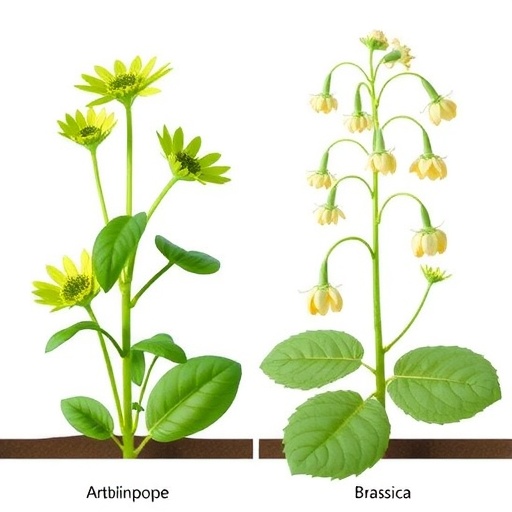
In a finding that could reshape how breeders approach one of the world’s most important oilseed crops, researchers at The University of Western Australia have completed the most comprehensive survey yet of cyclin genes across the mustard family, revealing that whole-genome duplication events—not small-scale mutation—drove the explosive expansion of these master cell-cycle regulators, and pinpointing two cyclin genes whose protein sequences appear to distinguish early-flowering canola varieties from their late-flowering cousins. The study, published in Molecular Genetics and Genomics, examined ten genomes spanning four Arabidopsis species and all six cultivated members of the genus Brassica, and its implications reach from evolutionary theory to the practical breeding of crops that supply the third-largest source of vegetable oil on the planet.
Cyclins are the metronomes of cell division. By binding and activating cyclin-dependent kinases, they usher cells through the checkpoints of the cell cycle, and their influence extends well beyond mitosis into flowering, meristem formation, seed development, and morphogenesis. Previous work in Arabidopsis thaliana had shown that disabling the CYCD3 family delays flowering under standard conditions, while studies in snapdragon demonstrated that D-type cyclins are expressed in precisely the developmental zones where floral organs take shape. Yet despite decades of functional work, the question of how cyclin gene families expand and diversify across whole lineages—especially in polyploid crops—remained largely unanswered. The new analysis, led by Aldrin Y. Cantila and colleagues, was designed to close that gap by treating cyclin evolution as a comparative genomic problem across the entire Brassicaceae family.
The scale of the undertaking is itself notable. The team used 49 well-characterized Arabidopsis cyclin proteins as reference queries and screened ten published genomes using BLASTp with stringent significance thresholds, then validated every candidate through Hidden Markov Model searches against the Pfam protein family database. In the Brassica species, an additional layer of rigor was applied: each putative cyclin was subjected to reciprocal BLASTp against the Arabidopsis proteome, and only sequences that returned the original Arabidopsis cyclins as their top hits were accepted as true homologs. After domain confirmation, 1,087 proteins representing 23 distinct cyclin types stood as the definitive set. A-type and D-type cyclins dominated the census, with 241 and 225 genes respectively, followed by B-type (213), U-type (164), and T-type (112) cyclins. The D-type family proved especially diverse, splitting into seven subtypes with cycD3 alone contributing 78 genes across the ten species.
The numbers tell a striking story about ploidy. The six diploid species in the sample—including B. rapa, B. nigra, B. oleracea, and three Arabidopsis species—averaged 71.5 cyclin genes each, while the four allotetraploids—B. napus, B. juncea, B. carinata, and A. suecica—averaged 164.5, ranging as high as 189 in canola itself. To understand where all these extra copies came from, the researchers deployed DupGen_finder, a computational tool that classifies duplicated gene pairs into five mechanistic categories: tandem, proximal, transposed, dispersed, and whole-genome duplication (WGD). Across all ten genomes they catalogued 1,845 duplication events involving 1,063 cyclin genes, and the dominant mechanism was unambiguous. Of the total, 969 events—more than half—were classified as WGD, the fossil record of ancient genome doubling preserved in chromosomal collinearity.
The Brassica species carried by far the heaviest duplication burden, with B. juncea recording 377 events involving 185 genes and B. napus close behind at 372 events involving 186 genes. In both of these allotetraploids, WGD accounted for 68 percent of all duplication events. By contrast, Arabidopsis species averaged only 90.3 duplication events, and thale cress—whose lineage never experienced the whole-genome triplication that shaped the Brassica genus—showed WGD contributions as low as 22 percent. The authors attribute the Brassica expansion primarily to the lineage-specific whole-genome triplication event documented in earlier sequencing work, which multiplied gene copy numbers three- to six-fold relative to Arabidopsis before subsequent fractionation and differential gene loss sculpted the modern complement. In the allotetraploids, the picture grows more complex still: within B. napus, the team identified 149 intra-genomic duplications occurring within the A and C subgenomes and 214 inter-genomic duplications spanning subgenomes, the molecular signature of the extensive chromosome reshuffling and homoeologous exchange that followed hybridization of the two diploid progenitors.
Orthology analysis added a genealogy to this architecture. Using OrthoFinder, the researchers traced 852 one-to-one orthologous pairs linking cyclin genes in diploid progenitors to their descendants in allotetraploid species, involving 366 genes in total. In B. napus, orthologs inherited from B. rapa showed 67.7 percent retention on the expected A subgenome, with the remaining third exchanged onto the C subgenome; orthologs from B. oleracea showed 68.8 percent retention on the C subgenome. Retention rates across all progenitor-allotetraploid combinations ranged from 66.6 percent to 87.5 percent, with B. nigra orthologs showing the tightest fidelity in B. juncea. This conservation—most orthologs staying put on their ancestral subgenomes while a minority migrate—supports the gene balance hypothesis, which holds that dosage-sensitive genes embedded in protein interaction networks are preferentially retained in stoichiometric proportions, because disruption of copy number can destabilize cellular machinery.
Beyond raw counts, physical organization revealed another layer of complexity. The team identified 120 cyclin gene clusters across the ten genomes, comprising 263 genes, where clusters were defined as two or more cyclin genes within a 200-kilobase window on the same chromosome. Eighty-eight of these clusters were homogeneous, containing genes of a single cyclin type and likely arising through tandem duplication, while 32 were heterogeneous mixtures of different types, products of segmental duplication, ectopic recombination, or transposition. The allotetraploids again led the tally: A. suecica hosted 22 clusters, and B. juncea, B. carinata, and B. napus each carried 19 or 20. Whether such clustering facilitates coordinated transcriptional regulation or simply represents genomic debris of ancient amplification remains an open question, but the pattern mirrors findings in other large gene families such as plant disease resistance genes.
Phylogenetic reconstruction confirmed deep evolutionary conservation. Aligning 1,079 nonredundant cyclin protein sequences and building a maximum-likelihood tree with IQ-TREE under the best-fit Q.PFAM+R3 substitution model, supported by 1,000 ultrafast bootstrap replicates, the analysis resolved three major clades whose compositions match the canonical cyclin classification established across land plants. Clade 1 gathered the seven D-type families together with cycA1; Clade 2, the largest with 401 members, united cycA2 with the B-type cyclins and several minor types; and Clade 3 contained the T-, U-, A3-, H-, and L-type cyclins in a heterogeneous assemblage. This architecture indicates that the major cyclin lineages originated early in plant evolution and have retained their functional identities even as duplication multiplied their members.
The bridge from evolutionary genomics to agronomy came when the researchers cross-referenced their cyclin inventory against flowering-time quantitative trait loci in B. napus. Compiling 174 SNPs previously linked to flowering time from genome-wide association studies using the Brassica 60K Illumina array, they delineated QTL intervals with a 50-kilobase sliding window—a threshold justified by published linkage disequilibrium decay estimates for canola, which show genome-wide half-decay below 45 kilobases. Five cyclin genes fell within these intervals. The team then turned to a pan-genomic comparison, BLASTp-querying the protein sequences of these five candidates against eight fully sequenced B. napus cultivars spanning early (Westar, No2127), intermediate (Gangan, Shengli, ZS11, Zheyou7), and late (Quinta, Tapidor) flowering phenotypes.
Two candidates stood out. In Bna21cycA2, both early-flowering cultivars carry a phenylalanine at amino acid position 411 where all other genomes carry a threonine; in Bna113cycD4, the early group shares a valine at position 100 where the rest carry a leucine. In neighbor-joining phylogenies built from the homologous protein alignments, Westar and No2127 consistently grouped together in the same clade for both genes—a pattern not observed in the other cultivars. The intermediate-flowering genotypes carried their own distinctive variants at other positions. The authors are careful to note that these amino acid polymorphisms are putative candidates whose causal role in flowering-time regulation requires validation through genetic mapping or functional studies, but the consistency of the pattern across independent genomes makes the two genes attractive targets for molecular marker development aimed at tailoring flowering behavior.
Taken together, the study delivers a dual contribution: a definitive evolutionary account of how polyploidization sculpted the cyclin repertoire of one of botany’s most economically important families, and a shortlist of candidate loci that connect cell-cycle machinery to a trait that governs yield stability and environmental adaptation. As the authors note, the finding that cyclins participate in broader developmental networks beyond their classical cell-cycle roles suggests that manipulating these genes could offer breeders a lever for controlling reproductive timing in Brassicaceae crops. In an era when climate variability makes precise flowering control increasingly valuable for canola and vegetable brassicas, the humble cyclin—long the province of cell biologists—may be about to enter the breeder’s toolkit.
Cite Scienmag News
Juliet Wilcox. (September 3, 2026). Cyclin gene evolution in Arabidopsis and Brassica links polyploid duplication to flowering time. Scienmag. https://scienmag.com/cyclin-gene-evolution-in-arabidopsis-and-brassica-links-polyploid-duplication-to-flowering-time/
Juliet Wilcox. "Cyclin gene evolution in Arabidopsis and Brassica links polyploid duplication to flowering time." Scienmag, 3 September 2026, https://scienmag.com/cyclin-gene-evolution-in-arabidopsis-and-brassica-links-polyploid-duplication-to-flowering-time/. Accessed 3 September 2026.
Juliet Wilcox. "Cyclin gene evolution in Arabidopsis and Brassica links polyploid duplication to flowering time." Scienmag. September 3, 2026. https://scienmag.com/cyclin-gene-evolution-in-arabidopsis-and-brassica-links-polyploid-duplication-to-flowering-time/


