


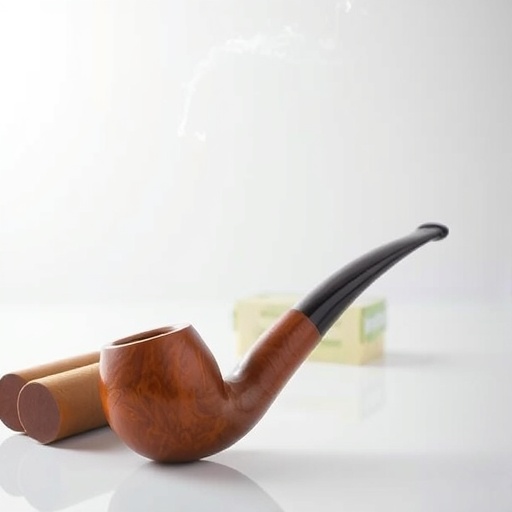
A new study published in the British Journal of Cancer is challenging the way lung-cancer risk is discussed among people who do not smoke conventional cigarettes. Researchers led by S. Vaja, J.L. Dickson and C. Horst examined the effects of cigar, cigarillo and pipe smoking, focusing on two questions with immediate public-health consequences: how these products influence the likelihood of developing lung cancer and whether their users are being identified as eligible for screening.
Lung-cancer prevention strategies have traditionally been built around cigarette consumption, especially the number of cigarette packs smoked per year. This measure, known as pack-years, combines smoking intensity and duration. One pack-year generally represents smoking 20 cigarettes a day for one year. Because cigars, cigarillos and pipes are used differently from cigarettes, their tobacco exposure is harder to convert into the same standardized measurement. That difference can leave regular users outside the systems designed to identify people at high risk.
The study addresses a persistent misconception: that alternative combustible tobacco products are inherently safer because they are not smoked in the same way as cigarettes. Cigar and pipe users may inhale less deeply or less frequently, but the smoke still contains carcinogenic compounds produced by burning tobacco. These include polycyclic aromatic hydrocarbons, tobacco-specific nitrosamines, volatile organic compounds and fine particulate matter. The precise dose entering the lungs can vary substantially, yet repeated exposure can still damage airway cells and contribute to mutations associated with cancer development.
Cigarillos occupy a particularly complicated position because they range from small, cigarette-like products to larger cigars that may be smoked over a longer period. Their nicotine content and smoke volume can also differ widely. Some users inhale cigarillo smoke deeply, while others do not. Pipes introduce another set of variables, including the duration of a smoking session, the amount of tobacco burned and the frequency with which the pipe is used. These differences make simple comparisons difficult, but they do not eliminate the biological hazards of combustion.
According to the research, the central concern is not only whether cigar, cigarillo and pipe smoking increases lung-cancer risk, but also whether current screening rules recognize that risk. Lung-cancer screening commonly relies on age and a history of cigarette smoking measured in pack-years. People who have smoked other combustible tobacco products may therefore be classified as having insufficient exposure, even when their cumulative tobacco use has been substantial. If risk is underestimated at the eligibility stage, some people could miss the opportunity to detect a tumour before symptoms appear.
Screening works by identifying disease at an earlier and more treatable stage, often using low-dose computed tomography, or LDCT. Unlike a conventional CT scan, LDCT uses a lower radiation dose to create detailed images of the lungs. Its effectiveness depends on selecting people whose probability of developing lung cancer is high enough to justify the benefits and potential harms of testing. Those harms include false-positive findings, unnecessary follow-up procedures, anxiety and cumulative radiation exposure. The challenge is to expand access without encouraging indiscriminate scanning.
The researchers’ analysis highlights why tobacco history needs to be recorded in greater detail. A questionnaire that asks only whether someone smokes cigarettes can overlook the frequency, duration and type of cigar, cigarillo or pipe use. It may also fail to capture former users whose exposure occurred years earlier. More comprehensive risk models could incorporate the number of products used, smoking intensity, years since quitting, inhalation patterns and additional factors such as age, occupational exposure, air pollution and family history.
The findings also carry a message for people who use these products socially or intermittently. Risk is not determined solely by whether smoking occurs every day. The biological impact depends on cumulative exposure, the composition of the product and how smoke is inhaled. Occasional use may carry less risk than heavy, long-term use, but “less” does not mean “none.” Combustible tobacco remains fundamentally different from non-combustible nicotine products because burning creates the toxic mixture responsible for much of the damage to the respiratory system.
The study does not suggest that every cigar or pipe smoker should automatically undergo a CT scan. Instead, it points to a gap between real-world tobacco exposure and the simplified categories used in many screening policies. The authors’ work could encourage clinicians and policymakers to assess alternative tobacco use more systematically and to investigate whether existing eligibility thresholds should be adapted. Any change would require careful validation, because screening recommendations must balance earlier diagnosis against the risks of testing people who are unlikely to benefit.
The broader lesson is that lung-cancer risk cannot be reduced to a single cigarette-based number. As smoking patterns evolve and tobacco products diversify, prevention programmes must keep pace with the ways people actually consume tobacco. The study by Vaja and colleagues adds evidence that cigar, cigarillo and pipe smoking deserve a more visible place in lung-health research and clinical risk assessment. For now, the clearest preventive message remains unchanged: avoiding all combustible tobacco products offers the strongest protection, while anyone with a history of substantial use should discuss their individual risk with a healthcare professional.
Cite Scienmag News
Nathaniel Bowman. (August 9, 2026). Cigar, Cigarillo, and Pipe Smoking: Lung Cancer Risk and Screening Eligibility. Scienmag. https://scienmag.com/cigar-cigarillo-and-pipe-smoking-lung-cancer-risk-and-screening-eligibility/
Nathaniel Bowman. "Cigar, Cigarillo, and Pipe Smoking: Lung Cancer Risk and Screening Eligibility." Scienmag, 9 August 2026, https://scienmag.com/cigar-cigarillo-and-pipe-smoking-lung-cancer-risk-and-screening-eligibility/. Accessed 3 September 2026.
Nathaniel Bowman. "Cigar, Cigarillo, and Pipe Smoking: Lung Cancer Risk and Screening Eligibility." Scienmag. August 9, 2026. https://scienmag.com/cigar-cigarillo-and-pipe-smoking-lung-cancer-risk-and-screening-eligibility/


