


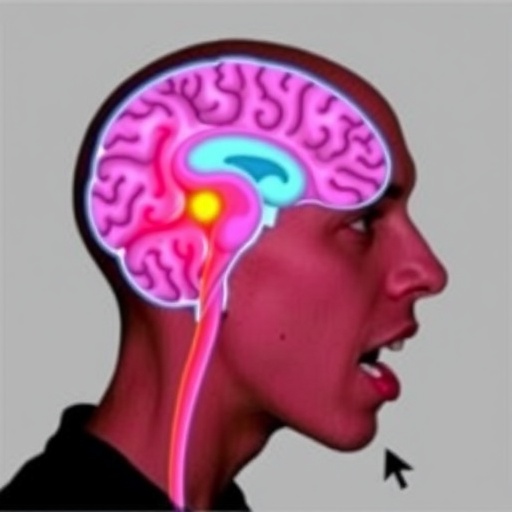
A team of neuroscientists has reported that deep brain stimulation (DBS) targeted to the motor thalamus can reshape how the brain controls both speech and swallowing—and crucially, that the outcome depends on stimulation frequency. The findings, from experiments reported in Nature Communications (2026), suggest that “tuning” DBS parameters may offer more refined control over complex, real-world behaviors than previously possible.
The study centers on motor-thalamus DBS, a strategy explored for movement disorders and related symptoms. Instead of treating stimulation as a single fixed setting, the researchers tested multiple frequencies and monitored changes in speech-related signals and swallowing performance. This frequency sensitivity points to circuit-level dynamics where different stimulation rates engage distinct neural processing modes.
In practical terms, the results imply that higher or lower frequencies may preferentially drive or suppress specific pathways that contribute to oral motor timing. Speech production relies on precisely coordinated patterns of muscle activation, airflow, and sensory feedback; swallowing requires rapid, sequence-based control to protect the airway. Alterations in these timing networks could explain why DBS can influence both functions simultaneously.
The authors describe the effects as frequency-dependent, meaning that the same DBS target produces divergent outcomes when the pulse rate changes. Such divergence is consistent with the idea that stimulation can shift synaptic interactions, firing synchrony, and network oscillations within the thalamocortical loop. When the stimulation rhythm matches intrinsic circuit oscillations, the brain may stabilize certain motor programs; at other rates, it may destabilize them.
Importantly, the work frames DBS not only as a way to modulate symptoms, but as a potential tool for “behavioral steering.” If translated to clinical settings, clinicians could adjust DBS frequency to reduce speech side effects while maintaining or improving swallowing safety, rather than relying on a one-size-fits-all configuration.
The study also highlights an often-overlooked challenge: therapies optimized for movement may inadvertently affect speech and swallowing, both of which share overlapping motor control resources. Frequency tuning could become a lever for mitigating such trade-offs, improving quality of life for patients who already depend on DBS.
While the research is mechanistic, its implications are immediately viral-science-worthy: the possibility that a single hardware intervention can be dynamically optimized for nuanced functions. The next step will be confirming how these frequency effects scale across different individuals and disease states.
As DBS devices become more programmable, the field is moving toward personalized stimulation “dial settings.” This report adds to that momentum by providing evidence that the motor thalamus does not respond uniformly—frequency matters, and the brain appears to treat different pulse rates as different control regimes.
Cite Scienmag News
Cassandra Pierce. (July 18, 2026). Frequency-Dependent Deep Brain Stimulation in Motor Thalamus Alters Speech and Swallowing. Scienmag. https://scienmag.com/frequency-dependent-deep-brain-stimulation-in-motor-thalamus-alters-speech-and-swallowing/
Cassandra Pierce. "Frequency-Dependent Deep Brain Stimulation in Motor Thalamus Alters Speech and Swallowing." Scienmag, 18 July 2026, https://scienmag.com/frequency-dependent-deep-brain-stimulation-in-motor-thalamus-alters-speech-and-swallowing/. Accessed 3 September 2026.
Cassandra Pierce. "Frequency-Dependent Deep Brain Stimulation in Motor Thalamus Alters Speech and Swallowing." Scienmag. July 18, 2026. https://scienmag.com/frequency-dependent-deep-brain-stimulation-in-motor-thalamus-alters-speech-and-swallowing/


