


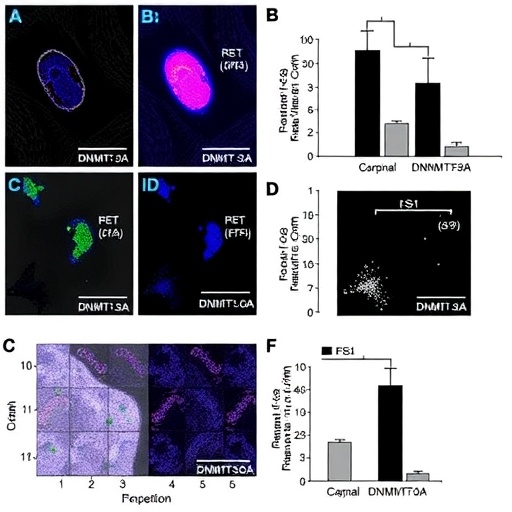
Cervical cancer metastasis may be controlled by an epigenetic pathway involving the endothelial cell-specific molecule 1, the DNA-methylating enzyme DNMT3A, and the transcription factor ID3, according to a study published in Cell Death Discovery. The research by Yu, Lin, Lee and colleagues describes how ESM1-mediated regulation of DNMT3A suppresses the spread of cervical cancer by altering the expression of ID3, offering a molecular explanation for how tumor cells acquire or lose the ability to migrate beyond the primary tumor.
Metastasis is responsible for much of the danger associated with cervical cancer. While early-stage disease can often be treated successfully, cancer cells that invade surrounding tissue, enter the bloodstream or lymphatic system, and establish secondary tumors are substantially more difficult to control. These changes are not driven solely by mutations in DNA sequence. Cancer cells also reprogram the way genes are switched on and off, using epigenetic mechanisms that can reshape cellular behavior without altering the underlying genetic code.
One of the most important epigenetic mechanisms is DNA methylation. In this process, chemical groups known as methyl groups are added to DNA, often at regions rich in cytosine and guanine nucleotides called CpG sites. Depending on their location, these modifications can reduce or enhance gene activity by changing how transcription factors and chromatin-regulating proteins interact with the genome. DNMT3A is an enzyme involved in establishing new DNA-methylation patterns, making it a potential controller of gene programs linked to cancer invasion and metastasis.
The study focuses on ESM1, a secreted proteoglycan associated with endothelial cells and blood-vessel biology. ESM1 has previously attracted attention because abnormal levels of the molecule have been observed in several cancers, where it may influence tumor growth, vascular remodeling, inflammation, and interactions between malignant cells and their surrounding microenvironment. The new work places ESM1 within an epigenetic regulatory pathway, connecting it to DNMT3A and, ultimately, to the activity of ID3.
ID3, or inhibitor of DNA binding 3, belongs to a family of regulatory proteins that influence cell differentiation, proliferation, and responses to signals from neighboring cells. Rather than binding directly to DNA in the same way as many conventional transcription factors, ID3 can regulate gene expression by interacting with basic helix-loop-helix transcription factors and limiting their ability to activate specific genetic programs. In cancer, the consequences of altered ID3 activity can vary depending on the tissue and molecular context. In cervical cancer, the findings reported in this study identify ID3 expression as a key component of a pathway that restrains metastatic behavior.
The proposed mechanism is that ESM1 influences DNMT3A, which then contributes to epigenetic regulation of the ID3 gene. By controlling the methylation environment surrounding ID3, this pathway can determine how much ID3 is produced by cervical cancer cells. When ID3 expression is maintained at levels that oppose invasion, tumor cells may become less capable of moving through surrounding tissues, invading blood vessels, or colonizing distant organs. Conversely, disruption of this regulatory relationship could create a cellular state more favorable to metastasis.
This type of mechanism is significant because it links an extracellular or microenvironment-associated molecule with a durable change in gene regulation inside the cancer cell. ESM1 is positioned outside or at the interface of cells, where it can participate in signaling and tissue organization, while DNMT3A operates in the nucleus, writing methylation patterns onto DNA. The connection between the two suggests that signals associated with the tumor environment may be translated into long-lasting epigenetic instructions that affect metastatic potential.
The findings also highlight why metastasis cannot be understood by examining cancer-cell mutations alone. Two tumors with similar genetic alterations may behave differently if their epigenetic landscapes differ. DNA methylation can function as a reversible regulatory layer, meaning that the activity of genes such as ID3 may potentially be modified by changes in signaling, enzyme activity, or therapeutic intervention. However, the reversibility of epigenetic marks does not automatically make them easy or safe to target. DNMT enzymes regulate many genes in normal cells, and broad interference with their activity could produce unwanted effects.
From a treatment perspective, the ESM1–DNMT3A–ID3 axis may eventually serve several purposes. Its components could help identify patients whose tumors have a higher risk of metastatic spread, provided the relationship is confirmed in larger clinical cohorts. The pathway might also guide the development of therapies designed to restore protective gene expression or interfere with signals that promote invasion. At present, the study represents a mechanistic advance rather than a clinical treatment recommendation. Further research will be needed to determine how consistently the pathway operates across cervical cancer subtypes, whether it predicts patient outcomes, and whether manipulating it can prevent metastasis in animal models or human trials.
The report adds a new layer to the rapidly expanding picture of cervical cancer biology, in which tumor cells, blood vessels, immune signals, and epigenetic enzymes communicate as part of a dynamic system. By identifying ESM1-mediated DNMT3A regulation of ID3 as a suppressive pathway, the researchers provide a potential explanation for how metastatic behavior is restrained at the molecular level. If future studies validate these findings, the pathway could become a focal point for biomarker research and precision strategies aimed not merely at shrinking cervical tumors, but at stopping them from spreading.
Cite Scienmag News
Nathaniel Bowman. (August 8, 2026). ESM1-Mediated DNMT3A Suppresses Cervical Cancer Metastasis via ID3 Epigenetic Regulation. Scienmag. https://scienmag.com/esm1-mediated-dnmt3a-suppresses-cervical-cancer-metastasis-via-id3-epigenetic-regulation/
Nathaniel Bowman. "ESM1-Mediated DNMT3A Suppresses Cervical Cancer Metastasis via ID3 Epigenetic Regulation." Scienmag, 8 August 2026, https://scienmag.com/esm1-mediated-dnmt3a-suppresses-cervical-cancer-metastasis-via-id3-epigenetic-regulation/. Accessed 3 September 2026.
Nathaniel Bowman. "ESM1-Mediated DNMT3A Suppresses Cervical Cancer Metastasis via ID3 Epigenetic Regulation." Scienmag. August 8, 2026. https://scienmag.com/esm1-mediated-dnmt3a-suppresses-cervical-cancer-metastasis-via-id3-epigenetic-regulation/


